

The art of burlesque has long been a stage for bold self-expression, dazzling creativity, and fearless individuality. Yet, beneath the sequins and spotlight, history often overlooks the contributions of Black performers who defied societal norms to carve out their place in this glamorous world. While names like Josephine Baker may shine brightly in the pantheon of burlesque, many other talented Black dancers remain in the shadows of history—unheralded yet no less revolutionary. This article celebrates those unsung artists, delving into their stories, performances, and the cultural legacies they left behind. In doing so, we aim to honor their resilience, artistry, and impact on the burlesque world and beyond.
“Little Egypt” | 1890s-1910s

“Little Egypt” was the nickname of Fahreda Mahzar Spyropoulos who performed a “hoochee-coochee” dance or the “shimmy and shake”at the 1893 World’s Colombian Exposition in Chicago. Spyropoulos was Syrian born and actually performed under the name “Fatima Djemille”, but because of her size, she was given the nickname “Little Egypt.” Her “danse du ventre” (literally meaning ‘dance of the belly’) caused an uproar among the visitors of the Exposition–propelling her likeness to explode on a national stage, much larger than she anticipated.
Amy Spencer | The Lady with the Fan | 1920s-30s

Amy Spencer was a Black actress and dancer born around 1909 in East Orange, New Jersey. Her father was also from New Jersey, while her mother was born in the British West Indies. She lived most of her life in New York City. She graduated high school from Wadleigh High school and had been performing on stage for 2 years by 1926. Spencer remarked, ‘When I got out of school I got stage-struck, so I have been on the stage ever since. I like the stage very much.’ Newspapers often remarked on her auburn hair.
The Three Whirlwinds and Madeline | 1923
A black burlesque and vaudeville group called “Three Whirlwinds & Madeline” performed at the Gayety Theatre in Omaha, Nebraska in February 1923. They were billed as “An importation from London”. The Gayety advertisement stated, “Those who will be fortunate enough to see these celebrated Colored Dancers and Singers will find a kindred thrill in the art of dancing.” They also appeared with Sliding Billy Watson, a Black vaudeville comedian.

(The Monitor. “Three Whirlwinds and Madeline.” February 23, 1923) The caption reads, “A quartette of wonderful colored dancers with ‘Sliding’ Billy Watson and his Hilarious Jubilee at the popular Gayety twice daily all next week. In Kansas City last week they actually stopped the show at every performance.”
It seems the troupe toured on the Columbia burlesque circuit.
A Baltimore newspaper at the time noted, “The great number of colored theatre-goers who visit the Gayety this week to see ‘Sliding Billy Watson’s Big Show,’ will be surprised but pleased to note that the colored performers in the company are conspicuous throughout the show and take the front row with the other principals in the company ensembles. It is due credit to a quartet of the most remarkable dancers on the stage. The little lady is a graceful artist with a sweet voice and is well supported by three wonderful dancers. They are the center of attraction, although the entire show is top-notch. Especially the comical Watson himself. Among the many features is a burlesque on ‘The Trenches,’ an apparently realistic but comic on those days in France.” (“Madeline and the Three Whirlwinds are Wonderful.”)
Neryda | 1920s-30s

Neryda was an exotic dancer who performed with a 6-foot python named “Allah.” She danced in night clubs in New York City and Chicago during the 1920s. In 1926 she went on a national tour showcasing her snake dance as the “Maiden of the Mist.” She was an excellent dancer and contortionist who utilized snakes in her unique acts.
Queenie Seals & Irene Jones | 1930
The Saturday World Herald in Omaha, NE released a short tid-bit about Queenie Seals and Irene Jones, two cabaret dancers, in November 1930. A fight broke out over Queenie’s husband, apparently, which resulted in Queenie being arrested for stabbing Irene and Irene being taken to the county hospital. Unfortunately, this article is the only mention I can find of Queenie Seals and Irene Jones.

(Omaha World Herald. “Cabaret Dancers Quarrel.” November 29, 1930)
Gertrude “Baby” Cox | 1934
Baby Cox was listed as an “exotic dancer” in Connie Immerman’s “Hot Chocolate’s”, a Harlem revue. She also sang in the production. Before Connie went on the road, Cox was a featured dancer at Connie’s Inn for 5 years before going on tour.
Corrina | Fan Dancer | 1934
In 1934, Club Harlem advertised for a black fan dancer named “Corrina.” 1934 was the same year Sally Rand performed her nude fan dance at the Chicago World’s Fair. The advertisement for Corrina stated, “Corrina, the Most Sensational Fan Dancer; Dancing without a curtain and A Brand New Floor Show.”

(Press of Atlantic City. Ads for the Wonder Bar and Club Harlem. Page 6. July 21, 1934)
Noma | Fan Dancer | 1933-1961
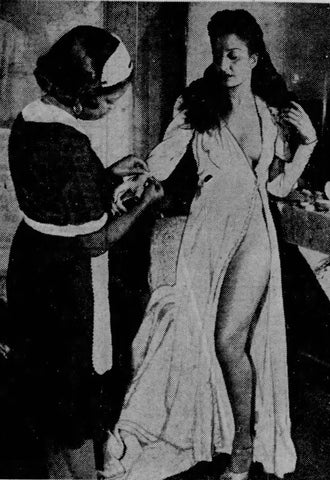
Next to the advertisement for Corrina, is a similar ad for “Noma”, another fan dancer of color. In November 1933, Noma’s manager, Walter Klein, a white man, was charged with “unfair professional principles” by the dance team “Margot & Norton.” After Noma broke with her manager, he went on to manage another fan dancer of color- Daisy DeLeon.
Daisy DeLeon | Fan Dancer | 1933-1936
Daisy DeLeon was originally from Detroit and was discovered by Walter Klein. She performed a “different” fan dance, though it was still graceful. She was given the moniker “the Sepia Fan Dancer” which was also being used to describe Noma at the same time.

(New Pittsburgh Courier. Page 19. February 10, 1934)
She toured the country in Irvin Miller’s “Brown Skin Models”, performing her own fan dance. (New Pittsburgh Courier. “The Week’s Personals.” Page 7. November 11, 1933)
Margo | Bubble Dancer | 1934
Margaret Gosby was a burlesque dancer who was billed as “Margo” (similar to another dancer at the time named Margot). In November 1934, “Margot and Norton” protested against Margo’s billing since their names were so similar. She performed a nude dance under dark lights which hid her figure as she danced in front of a large balloon. Her act was, reportedly, short and not enjoyed by the black theater goers, according to the New Pittsburgh Courier. She performed for a full theater at the Metropolitan theater in Chicago in 1934.

(New Pittsburgh Courier. Page 5. “Billed as ‘Margo’.” November 10, 1934)
In 1933, it was reported that Margo was “the cause” of two men having a dueling gun fight which ended fatally for both men. During the summer of 1934, Margo was the featured entertainer at the 205 Club.
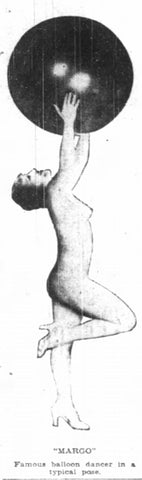
(“Margo” New Pittsburgh Courier. Page 18. November 10, 1934)
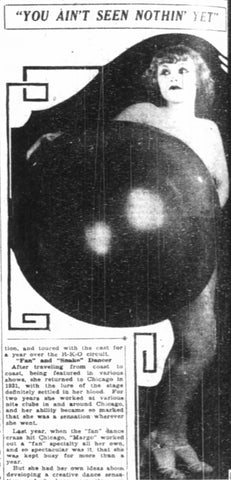
(“You Ain’t Seen Nothin’ Yet” Page 18. November 10, 1934)
Thida Loy | 1930s
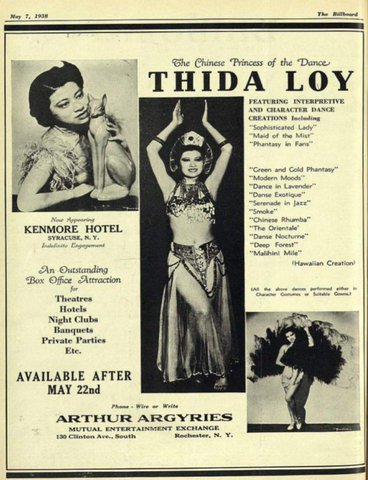
Thida Loy began performing as a burlesque dancer in San Francisco in the 1930s. The earliest newspaper advertisements for Loy were in December 1935, though she could’ve been performing under a different name before.
When she started performing her own fan dance, she received the racist moniker “The Chinese Sally Rand of Hollywood”. Being compared to Sally Rand would follow her her entire career. The Oregon Daily Journal stated, “Thida Loy, said to be Sally Rand’s only rival from the Orient.” Thida Loy was a petite dancer in a league of her own. She created many more dance routines than other fan dancers of the time.
Lovey Lane | Burlesque Dancer | 1934
Lovey Lane was an “exotic dancer” who performed in the revue “Hawaiian Moon” at the Apollo Theater in Pittsburgh, PA. She had recently toured the Eastern circuit theaters and was deemed a hit!
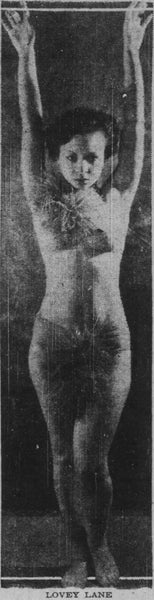
(New Pittsburgh Courier. “Sepia Gilda.” Page 18. May 5, 1934)
Zita | Exotic Dancer | 1934
Zita was a black burlesque dancer. She toured with Baron Lee’s Cotton Club Revue in 1934. She performed a “scarlet nudity act.” In the Shamokin News Dispatch, Zita was listed as a “dancing sensation of London and Paris, where she was one of the big features with Josephine Baker’s Revue. She is an exotic creole beauty known in the profession as the ‘Sepia Sally Rand’–minus the fans, and her sensational ‘ritual’ dance creation. ‘Scarlet Nudity,’ is a perfect symphony of alluring and fascinating rhythm. She is ‘sizzling’ hot.” (“Baron Lee Opens at Capitol Sunday Midnight.” Shamokin News Dispatch. June 16, 1934)

(Photo of Baron Lee’s Cotton Club Revue. 1934)

(Shamokin News Dispatch. June 16, 1934)
Lucille Love | Fan Dancer | 1935
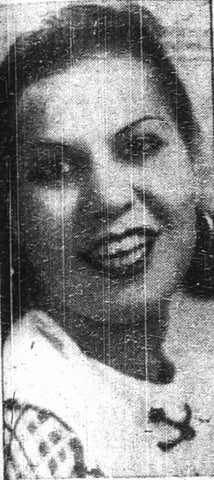
(Lucille Love. New Pittsburgh Courier. “Daughter of Handy Files for Divorce.” Earl J. Morris. Page 1 & 4. September 21, 1935)
Lucille Love was a former fan dancer, who in 1935, was named co-respondent in a divorce suit by Mrs. Elizabeth Handy, daughter of W.C. Handy, who was married to Morris White, the guitar player for Cab Calloway’s orchestra. Elizabeth admitted she named Love on her own suspicions. Lucille performed as a fan dancer under the name “Talande” in a Larry Steele revue.
Creola | Fan Dancer | 1935
Creola was a black fan dancer who performed in St. Louis, MO where her dance was not only censored, she was “forced to discontinue her act.” (New Pittsburgh Courier. Page 16. July 13, 1935)
Katherine Scott | Fan Dancer | 1935
Katherine Scott performed in St. Louis, MO on October 3, 1935. She then performed her fan dance at the Cedar Gardens in Cleveland, OH. (New Pittsburgh Courier. “Grand Town Day and Night.” Earl J. Morris. Page 16. October 5, 1935)
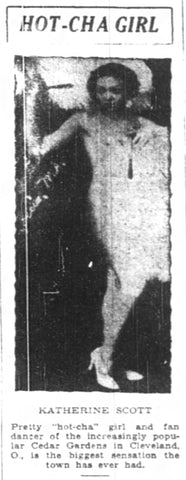
(New Pittsburgh Courier. “Hot-Cha Girl.” Page 12. November 9, 1935)
Caption reads, “Pretty ‘hot-cha’ girl and fan dancer of the increasingly popular Cedar Gardens in Cleveland, OH., is the biggest sensation the town has ever had.”
Daisy Boone | Burlesque Dancer | 1935-1937
Daisy Boone was a songstress and shake dancer. She toured throughout the United States. Boone had even performed internationally, in night clubs all over the world. She was discovered for her unusual voice when she sang “Golden Dawn” in 1935.
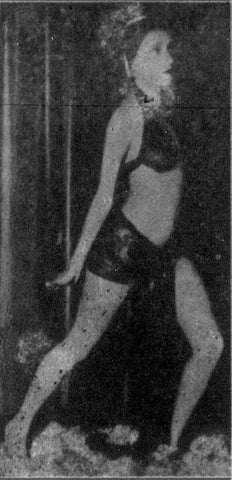
(The Omaha Guide. Page 4. June 12, 1937)
Noma and Boone were listed together in the New Pittsburgh Courier, performing together in Buffalo, NY in June 1935. By 1937, Boone was featured in Omaha, NE when she performed at Jim Bell’s Club Harlem.
Fanchitta “Kitty” Ablaunche | Fan Dancer | 1936
Fanchitta was a burlesque dancer at the Spanish Capitol Theater in New York City. She introduced New York to a new dance craze called the “Panama Hat Dance.” Fanchitta was a native of Panama and performed several times a night in “Spanish” costumes.

(New Pittsburgh Courier. “New Dance a Hit.” Page 17. January 11, 1936)
Valda | Fan Dancer | 1934-1936
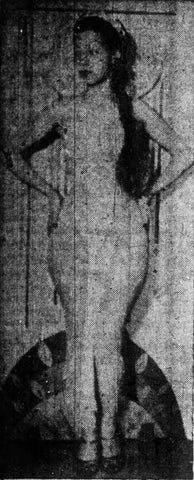
(Valda. New Pittsburgh Courier. Page 16. January 14, 1936)
Valda was a fan dancer in the 1930s. She also performed a “bubble dance.” She was also nicknamed “the Sepia Fan Dancer” at the time. Her Bubble Dance included 4 large balloons that could conceal her body. An assorted amount of colored bubbles were around her waist. She would dance and then one by one discard the balloons until she left the stage nude. She performed at The Harlem Nut House, which only allowed white patrons. Valda also performed at the Club Delisa in Pittsburgh, PA and Cedar Gardens in Cleveland, OH.
Lodi | Fan Dancer | 1936
“Lodi” was a black fan dancer who was reported on by the Black Dispatch Newspaper (Oklahoma). In August 1936, they reported, “‘Lodi,’ new fan dancer at the Club DeLisa, would go across better if she had not followed Valda into this cafe…” This one sentence says quite a bit as to how popular fan dancing was in the 1930s. (The Black Dispatch. “Chicago’s Congo.” Page 4. August 27, 1936)
Gladdis | Shake Dancer | 1937

(New Pittsburgh Courier. “Virgin Island Artist.” Page 20. September 11, 1937)
Gladdis was a 20 year old dancer from the Virgin Islands. She starred in Larry Steele’s “Harlem Casino” Revue, which toured the US in 1937.
Willie Mae Lane | Fan Dancer | 1939
The Washington Afro American reported on a performer dubbed a “sepia Sally Rand” in April 1939 by the name of Willie Mae Lane. She performed at the Crystal Caverns in Washington D.C. in 1939.
Princess LaHoma | Chickasaw Princess | 1940s

Princess LaHoma was often billed as an “Exotic Indian Dancer” in the 1940s and 50s. Her name was spelled “LaHoma”, “La Homa”, or “Lahoma” by journalists. She gained the nickname “The Beautiful Chickasaw Chick”. She became one of the highest paid burlesque dancers of the 1950s, performing on renowned stages like Minsky’s.
Paula Moore | Fan Dancer | 1946
A performer of color named Paula Moore danced a fan dance at the All-Star Sepia Revue at the Bal-Tabarin Club in Los Angeles, CA in October 1946.

(The Southwest Wave. Ad for Paula Moore at the Bal-Tabarin. Page 78. October 24, 1946)
Gertrude “Baby” Banks | “Burlesque in Harlem”
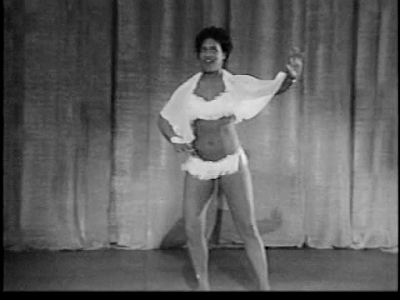
(Gertrude “Baby” Banks. Film Still from “Burlesque in Harlem” 1947)
Mabel Hunter | “Burlesque in Harlem”
Mabel Hunter was a comedian and singer. She performed in the 1947 movie “Burlesque in Harlem”.
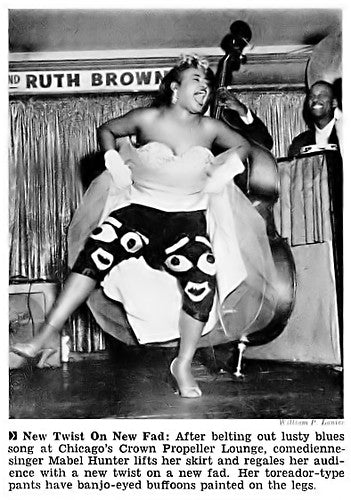
(Mabel Hunter. c. 1950)
Caption reads, “New Twist on New Fad: After belting out lusty blues song at Chicago’s Crown Propeller Lounge, comedienne-singer Mabel Hunter lifts her skirt and regales her audience with a new twist on a new fad. Her toreador-type pants have banjo-eyed buffoons painted on the legs.”
Iretha “Pepper Pot” Tucker | Shake Dancer | 1949

(The Omaha Star. Ad for Carnation Lounge. March 31, 1949. Page 8)
Iretha was a shake dancer who performed at the Carnation Lounge in Omaha, Nebraska in 1949. She was billed as “A Nationally Famous Dancer” and “A Fine Shake Artist” in advertisements.
Tarza “The Young” | Shake Dancer | 1949
Tarza was a black shake dancer who performed around the country and in “Burlesque in Harlem.”
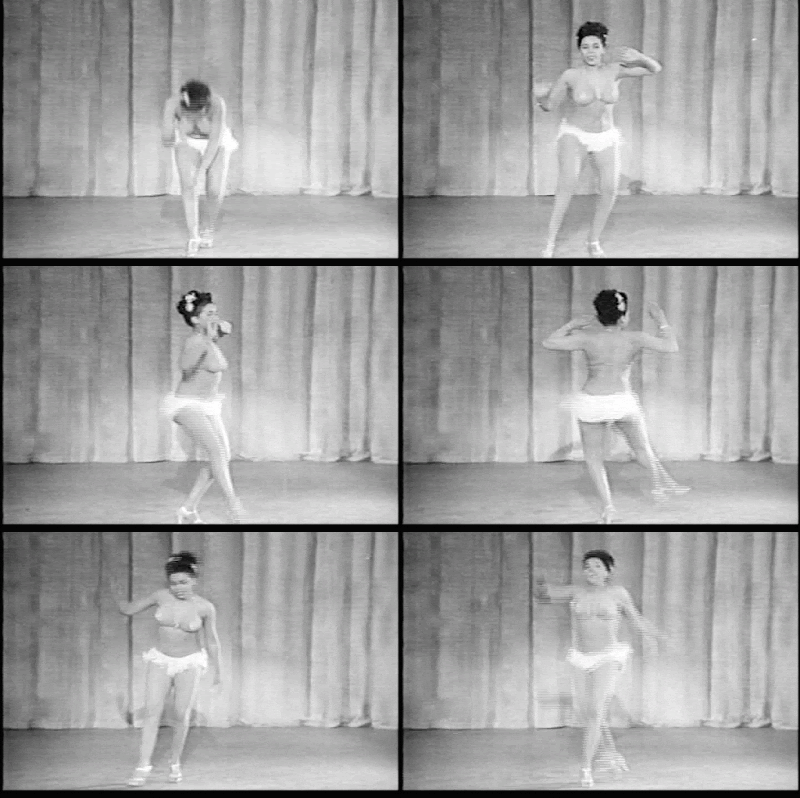
Iretha Tucker, Barbara Fitch, Jean Johnson, & Ada Jean Leake | 1952
Iretha Tucker starred in a group of shake dancers that performed at the Fox Theater in Kansas City, MO in 1952. The dancers were dubbed “fine shake artists’ and interpretive dancers. (The Call. “Running the Scale.” Bee Flatt. Page 9. October 3, 1952)
The Spence Twins | 1950s
Jean and Joyce Spence were Black burlesque shake dancers in the 1950s. Read more about their careers in their performer spotlight by clicking ‘read more’ below.
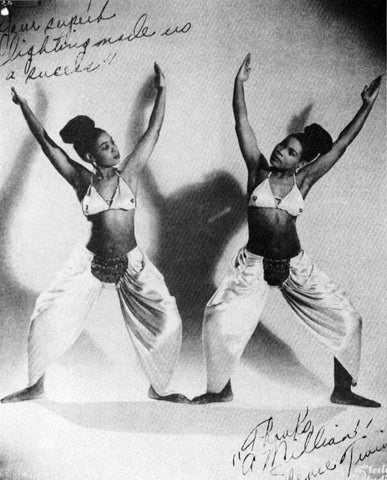
(The Spence Twins. Photo Courtesy of Silky the Body)
Vampira | Exotic Dancer | 1965

(The South Omaha Sun. August 26, 1965)

(Vampira. The South Omaha Sun. August 26, 1965)
Vampira was an exotic dancer in Omaha, Nebraska. She performed at Yano’s New Yorker and was arrested for obscene and lewd dancing during the summer of 1965.
Carmen Holiday | 1971-1981
Carmen Holiday was of Latinx descent, born and raised in Los Angeles as an orphan. She left Los Angeles as a teenager in the 1960s for Las Vegas where she entered an amateur go-go contest. She improvised a striptease on stage that won her the first prize of $50. She then worked as a topless go-go dancer while studying dance–modern jazz, belly dancing, and ballroom.
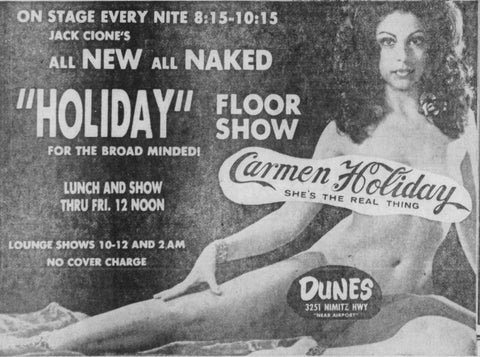
Read about Carmen Holiday in her performer spotlight.
Lisa Scott | 1972
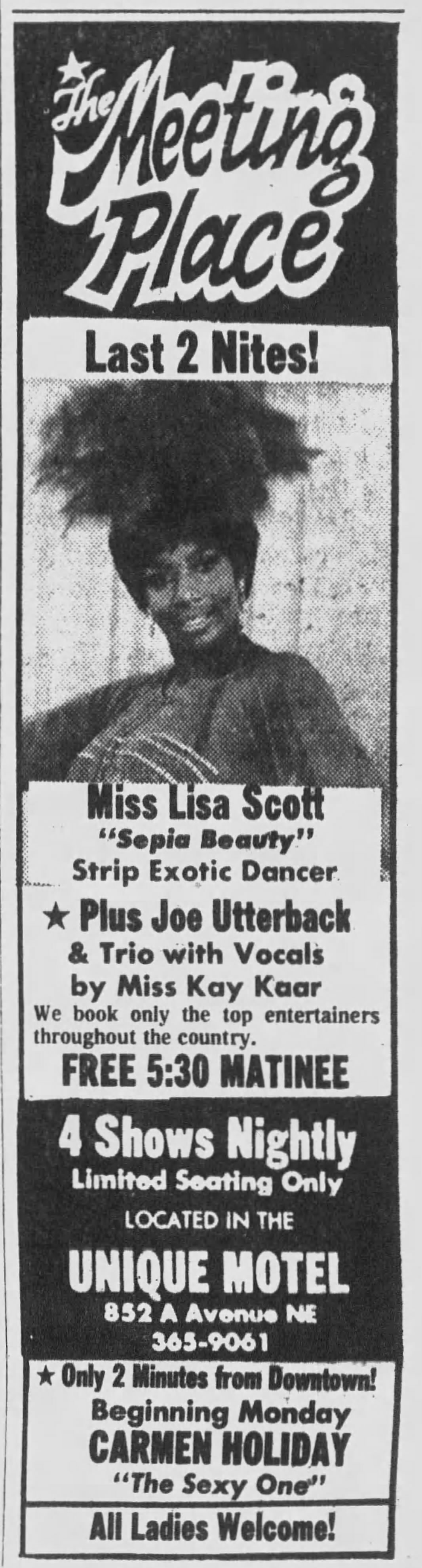
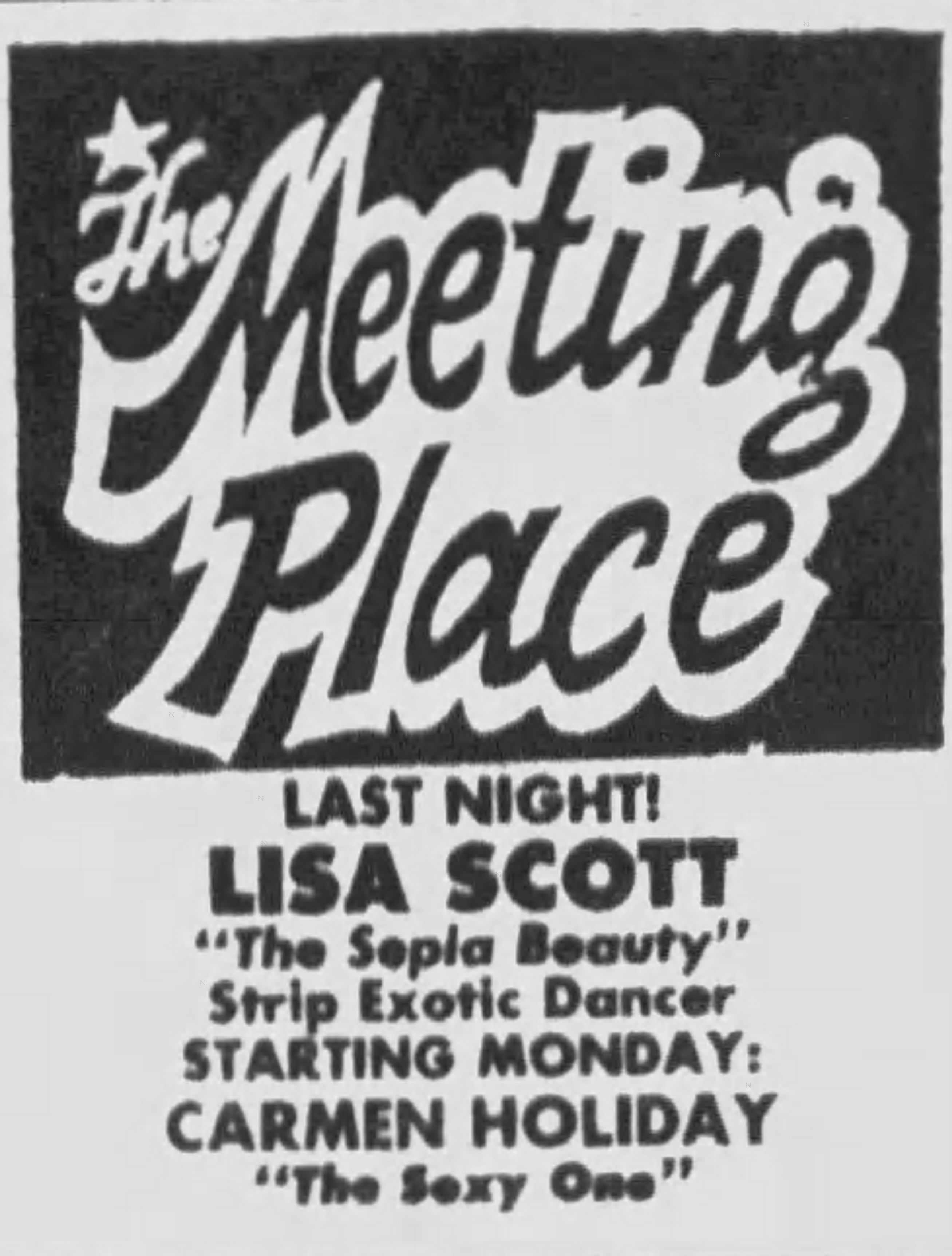
Lisa Scott was advertised as a “Sepia Beauty” and performed in Cedar Rapids, IA in 1972 at The Meeting Place inside the Unique Motel. She performed along side the Mexican-American burlesque dancer Carmen Holiday.
The Ebony Dancers of Kansas City
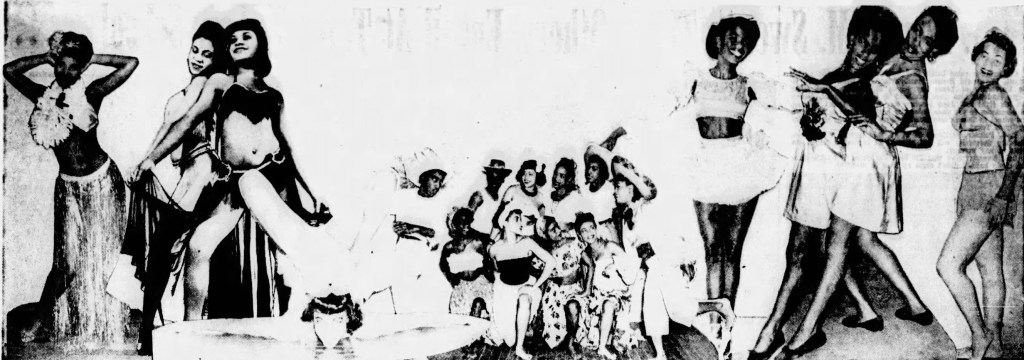
In the heart of Kansas City’s vibrant Black entertainment scene, a dazzling troupe emerged in 1950 that blended rhythm, spectacle, and unapologetic showmanship: The Ebony Dancers. Composed of eight to ten dynamic performers—including singers, acrobats, and shake dancers—this ensemble captivated audiences with their electrifying stage presence and genre-blurring acts. From Kansas City nightclubs to cabaret stages in Minneapolis and Texas, they were more than a local sensation—they were a traveling showcase of Black excellence, glamour, and grit.

Leave a comment