

During the 1930s, burlesque in Columbus, Nebraska, found a home in local theaters, captivating audiences with its lively performances and daring artistry. As part of the broader burlesque movement sweeping across America during the Great Depression, these shows combined comedy, musical numbers, and provocative dance routines, offering a form of escapism and entertainment to struggling communities. While the heyday of burlesque in Columbus has faded, its impact remains a fascinating glimpse into the town’s cultural history during a tumultuous era.
Despite its modest settings compared to grand urban theaters, small-town burlesque often boasted talented performers who infused their shows with charm and creativity. These performances also helped foster a sense of community, as locals gathered to experience a night of laughter and wonder under the glow of stage lights.
Fan Dancing at The Swan Theatre
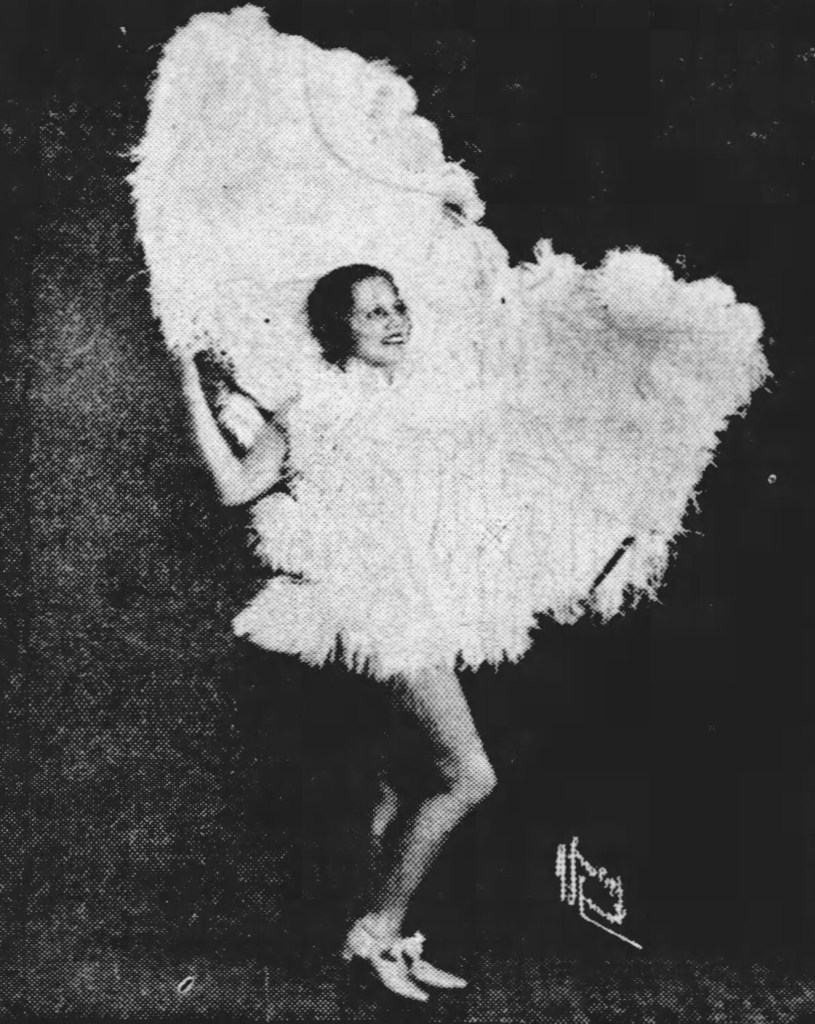
Fay Baker was the first to grace Nebraskan audiences with an erotic fan dance during her 1933 national tour. She performed for one week in October 1933 at the Orpheum Theater in Lincoln and then traveled to perform in Columbus. According to the Lincoln Nebraska State Journal, she came directly from her engagement at the World’s Fair in Chicago.
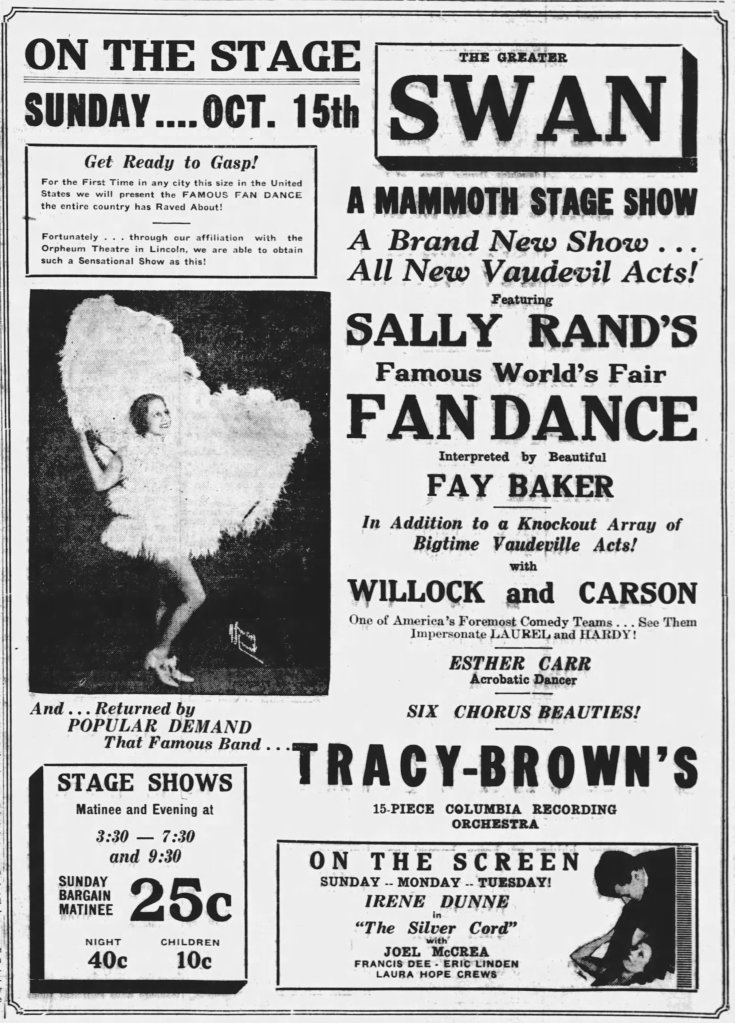
Fay Baker performed her fan dance with a comedy team named Willock and Carson, along with an acrobatic dancer named Esther Carr. All performed to Tracy-Brown’s 15 piece orchestra.
Rosita Royce at the Columbus Theatre
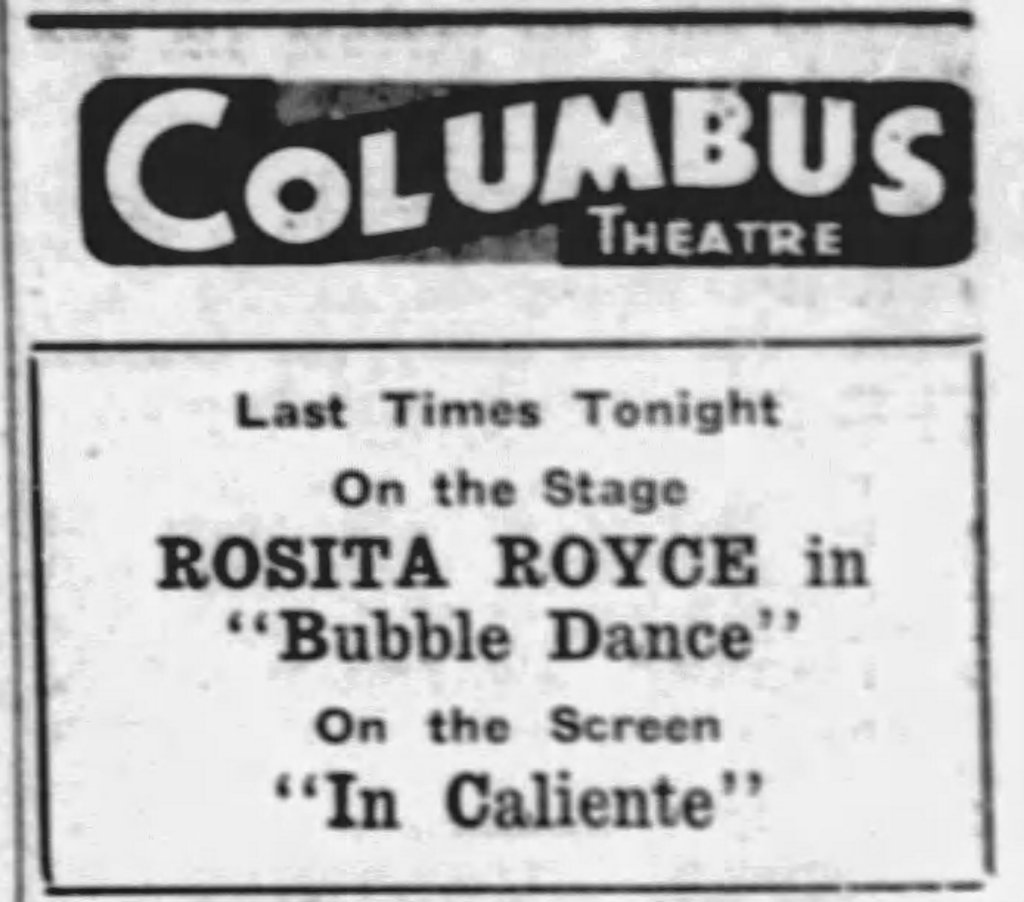

Rosita Royce, a Nebraska born burlesque dancer, performed at the Columbus Theatre in June 1935. She presented her “bubble dance” live on stage. A screen was then dropped and the motion picture In Caliente was shown.
Billyroy’s Comedians Tent Theatre

Billroy’s Comedians Tent Theatre was part of the rich tradition of traveling tent shows that brought entertainment to rural communities across the United States. These tent shows often featured a mix of comedy, drama, and vaudeville acts, providing a lively escape for audiences during the early 20th century. Billyroy’s Comedians were known for their engaging performances and ability to connect with local audiences, making them a cherished part of the national carnival scene. Their legacy reflects the golden age of tent theatre, a time when live entertainment under canvas was a staple of American culture.
In August 1938, Billroy’s Comedians performed in Columbus for one night only! The tent was set up on the Show grounds of 21st St. and 27th Ave. Ladies entered free that evening to see “Yolanda” in her bubble dance.
The Bunny Club at the Evan’s House | 2204 14th St. | 1964-1972
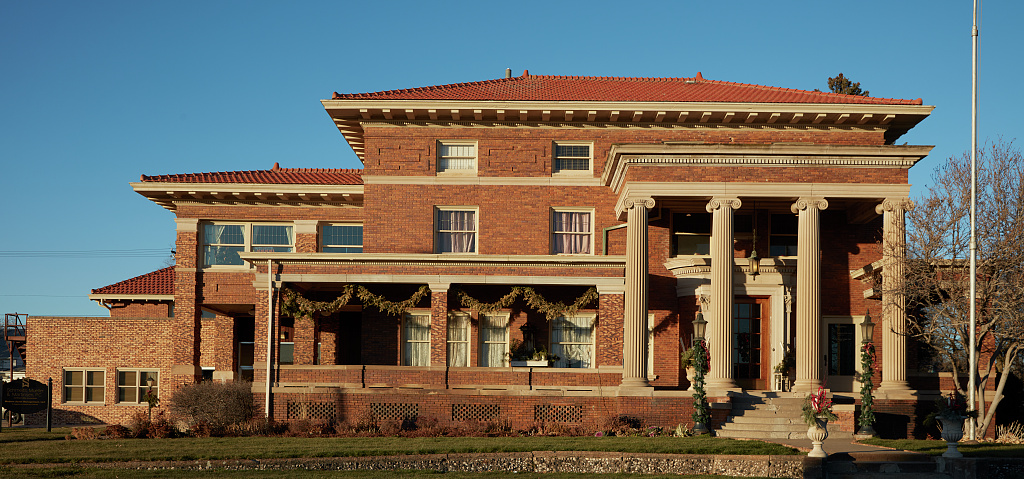
The Evans House in Columbus, Nebraska, is a historic landmark built in 1908 by Walter L. Roth for Dr. Carroll D. Evans and his wife, Lorena Rose North. Designed by architect Charles H. Wurdeman, the house showcases a blend of Renaissance Revival, Greek Revival, Colonial Revival, and Spanish Colonial Revival styles.
The Bunny Club, located within the historic Evans House in Columbus, Nebraska, was an upscale adult entertainment venue that opened in 1964. It featured a sunken bar on the west side of the room and a dance floor on the east, creating a sophisticated atmosphere for its patrons. The club was frequented by both men and women, offering a unique nightlife experience in the area.
The Bunny Club originally opened as a membership club “for members and their wives.” It was located on the bottom floor of the Evan’s House, with a steakhouse on the first floor. Edwin Pieper was the owner of the club. The Bunny Club boasted a Playboy vibe while providing dancing, dining, drinking, and even Swedish-style steam baths! The cocktail waitresses even wore bunny costumes at one point in time. The Bunnies were women, aged 21-35, and had to be conventionally attractive.
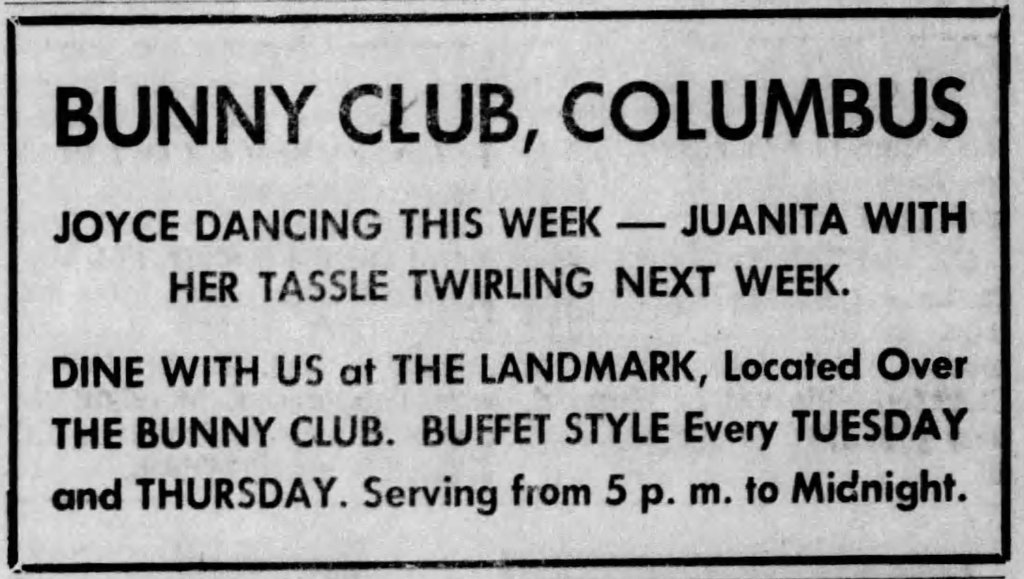
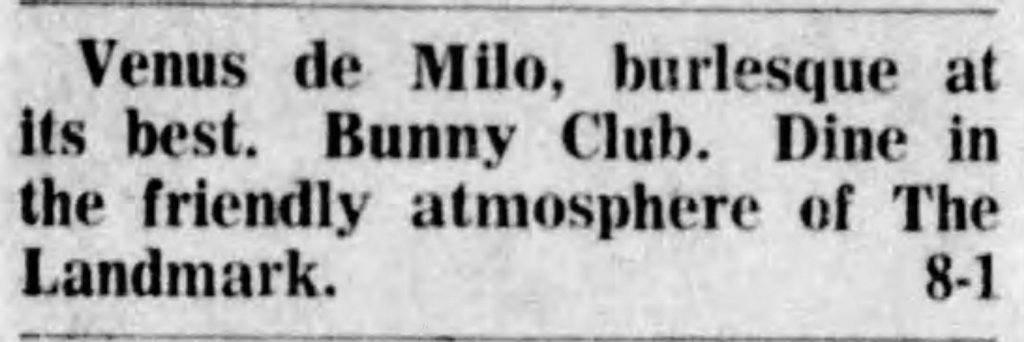
The Bunny Club advertised in the local newspapers their upcoming burlesque and go-go dancers like ‘Suzanna’. The Club was famously raided for illegal gambling. The manager claimed the dancers were apart of a “bare-bosom ballet.” Dancers were advertised in the newspapers in short blurbs.
The Bunny Club Dancers:
- Misty and Joyce performed in January 1968
- Eva Novak performed in September 1969
- Diane performed in September 1969
- Pat performed in December 1969
- Bobbie the Body, performed in June 1970
- Anna Lisa, “the body painter”, performed in July 1970
- Joyce performed in August 1970
- Juanita with her Tassel Twirling, performed in August 1970
- Venus de Milo performed in November 1970
- Georgette Dante performed in December 1970
- B. B. Bardot performed in September 1971
- Swinging Jeannie performed in October 1971
- Lisa Riveria performed in December 1971
- Sonja Gibson, “A Gibson Girl”, performed in February 1972
- Kelly Farrell performed in February 1972
The Club even coordinated a trip to Las Vegas for members who paid $105 a person, which covered meals, lodging, and airfare.
In December 1969, a city ordinance was passed, permitting dancing at places that served liquor. At this time, the Bunny Club submitted a dance application (along with 3 other venues), which they were granted without opposition. By 1971, the City Council enacted a “topless ban.”

In 1972, the Nebraska State Liquor Control Commission deferred the renewal of the Bunny Club’s liquor license. Edwin Pieper, the owner of the club, was arrested the year prior due to a police raid which revealed “gambling devices and fixtures.” Edwin pleaded no contest to the charges. The Club then suffered a 30 day license suspension in the wake of the incident. It did not receive its liquor license, sealing its closure in 1972.
1965 Citizen’s Opinion on Nude Dancing

This short opinion article was in response to Sally Rand performing in Omaha and her subsequent arrest by morals police for indecent exposure. Read more about Sally Rand in Nebraska below:
Interview with “Cin-a-men” a Columbus Burlesque Dancer
The Omaha World Herald interview a burlesque dancer from Columbus, who wished to be referred to as her stage name, “Cin-a-men.” She stated, ‘I prefer to wear pasties and a G-string. Without them, I’d feel naked. But it’s important that we dancers get a response from the audience. I’d go as far as I had to. I’d go bare naked if that’s what it would take — but not in front of women. If women don’t like a show, their husbands aren’t likely to get to come back. I couldn’t do it (go-go dancing) in an empty room.” Cin-a-men performed throughout Iowa and Nebraska. She commented, ‘Omaha doesn’t pay nothing’ and the reason performers seek rural venues is ‘because the money’s better.’ (Omaha World Herald. “‘The Day of the Hick Farmer is Gone’ So Outstate Nebraska Goes Go-Go.” Don Pieper. Page 57. October 20, 1971)
Weavers Inn | “Two Different Places in One” | 1973
In 1973, the Weavers Inn advertised two lounges under one roof. One room had exotic dancers from Thursday through Saturday. They held amateur go-go contests every Wednesday evening, “none topless.” It was $5 to enter and the winner received $35. The second room would host bands such as various rock and roll groups, like Fragile and Casinos.
Galaxy Productions Legal Battle | 1973
Galaxy Productions was originally called Lotus Management, and acted as a booking agent for exotic dancers in Nebraska. The company was owned by Edward M. Cialkowski, 29 years of age, who was arrested at the Bunny Club in Columbus on the charge of “contributing to the delinquency of children under 18” by encouraging two underage girls to perform in the amateur go-go dancing contest at the Bunny Club. Both girls were from Fremont, NE.
Galaxy Productions was located in Fremont, NE. Edward’s booking agent name was “Ed Hall.” One girl was only 16 years old and was placed on probation and forbidden from exotic dancing or associating with Galaxy Productions in the future. The second girl was only 14 years old (no punishment was noted in the papers for her). Both were released after Juvenile Court appearances. Edward was also charged for the same crime in Platte County.
Edward pleaded guilty and was sentenced to 90 days in jail. This was immediately appealed, his lawyer stating the decision was unconstitutional, which took the case to the Nebraska Supreme Court in October 1974. Douglas Milbourn, the Platte County Attorney, appealed stating, ‘a defendant’s criminal liability to contributing to a child’s need for special supervision is unaffected by the fact the minor child neither committed a crime nor was encouraged to commit a crime.” His conviction was reversed.
Topless Dancing Not Welcome | 1992
In September 1992, the Columbus City Council voted to not allow the citizens to vote to decide on topless dancing. Leaving the decision to the citizens was not panning out how the politicians had wanted. Months earlier, Fremont had voted FOR topless dancing and so did Kearney. In the end, 7 out of 8 Columbus council members voted to prohibit nude dancing within city limits.
Burlesque History in Columbus
The history of burlesque in Columbus, Nebraska, offers a fascinating glimpse into a bygone era of entertainment that brought laughter, music, and bold performances to small-town theaters. During its peak in the 1930s, burlesque served as a vibrant cultural outlet, blending humor and artistry to captivate audiences. Though its presence has faded over time, the legacy of burlesque in Columbus remains a testament to the town’s rich and diverse cultural history, reflecting the enduring human desire for connection and escapism through performance.
Sources
- https://iowahistoryjournal.com/canvas-creativity-tent-shows-reigned-supreme-bringing-shows-to-the-masses/
- https://www.tshaonline.org/handbook/entries/tent-shows
Newspapers
- Columbus Telegram. Advertisement for Billroy’s Comedians. Page 8. August 26, 1938
- Evening World Herald. “Bunnies or Columbus?” Page 4. April 39, 1964
- The Schuyler Sun. “Local Briefs.” Page 5. November 27, 1969
- Omaha World Herald. “‘The Day of the Hick Farmer is Gone’ So Outstate Nebraska Goes Go-Go.” Don Pieper. Page 57. October 20, 1971
- Omaha World Herald. “Judge to Rule Friday in Topless Test case.” September 2, 1971
- Omaha World Herald. Ad for the Bunny Club, Inc. July 27, 1965
- The Alliance Daily Times Herald. “Columbus Bunny Club.” Lincoln, NE. April 28, 1964
- The Banner Press. “Bunny Club Special.” Columbus, NE. Page 6. July 9, 1970
- The Banner Press. Ad for Lisa Riveria at the Bunny Club. Columbus, NE. Page 7. December 12, 1971
- The Columbus Telegram. Ad for the Bunny Club. Page 5. June 8, 1970
- The Columbus Telegram. Ad for the Bunny Club. Page 21. July 8, 1970
- The Columbus Telegram. Ad for Pat at the Bunny Club. December 5, 1969
- The Columbus Telegram. “Evans House.” Page A6. February 24, 2023
- The Columbus Telegram. “Let’s take another look: Evans House to Hose Muralist Event.” Jared Barton. February 24, 2023
- The Columbus Telegram. “Defer action on Bunny Club Liquor license renewal.” Lincoln, NE. April 6, 1972
- The Columbus Telegram. “Ordinance on dancing is changed.” December 18, 1969
- The Columbus Telegram. Ad for the Grand Opening of the Landmark Restaurant at the Bunny Club. May 12, 1970
- The Columbus Telegram. Ad for the Bunny Club. December 31, 1969
- The Schuyler Sun. “Bunny Club.” Page 5. January 11, 1968
- The Schuyler Sun. “Bunny Club, Columbus.” Page 7. August 20, 1970
- The Schuyler Sun. Ad for the Bunny Club. Page 5. November 12, 1970
- The Schuyler Sun. Ad for the Bunny Club. Page 5. December 31, 1970
- The Schuyler Sun. Ad for the Bunny Club. Page 5. September 30, 1971
- The Schuyler Sun. Ad for the Bunny Club. Page 20. February 3, 1972
- The Schuyler Sun. Ad for the Bunny Club. Page 3. February 17, 1972
- The Schuyler Sun. “Bunny Club.” January 1, 1968
- The Schuyler Sun. Ad for Eva Novak at the Bunny Club. September 11, 1969
- The Columbus Telegram. Ad for Rosita Royce at the Columbus Theatre. Page 6. June 11, 1935
- Fremont Tribune. “Case against Fremonter continued indefinitely.” December 15, 1973
- Lincoln Journal Star. “No Crime Needed? Go-Go Girl Sparks Court Controversy.” United Press International. Page 13. October 26, 1974
- Omaha World Herald. “Minor Go-Go dancer Case appealed to Supreme Court.” Page 2. October 28, 1974
- The Columbus Telegram. “Sally Rand’s Fan Dance at Swan Theatre.” Page 3. December 12, 1933
- The Columbus Telegram. Ad for Fay Baker at the Swan Theatre. Page 6. October 13, 1933
- Omaha World Herald. “Topless Dance Not Welcome in Columbus.” Page 26. September 19, 1992
- Evening World Herald. “The Public Pulse-Nudity Not Innocent.” E.J. Lee. Columbus, NE. Page 14. August 23, 1965
- The Banner Press. Ad for the Weavers Inn. August 2, 1973
- The Banner Press. Ad for the Weavers Inn. July 26, 1973

Leave a comment