

Council Bluffs has always been a city of crossroads — a place where travelers, traders, and dreamers converged along the Missouri River. By the late 19th and early 20th centuries, its theaters and dance halls became stages for vaudeville, cabaret, and burlesque. These performances weren’t just entertainment; they were part of a larger cultural current sweeping across America, where humor, music, and sensuality collided in ways that challenged social norms. Burlesque in Council Bluffs reflected the city’s dual identity: respectable civic order on one hand, and a thriving nightlife that drew audiences eager for spectacle on the other.
1860s-1900
In the late 19th century, Council Bluffs was a frontier city with ambitions of refinement, and its opera houses became the heart of local culture. Between the 1860s and 1900, these venues hosted traveling troupes, vaudeville acts, and burlesque performances that blended comedy, music, and risqué spectacle. What began as “high culture” spaces for opera and drama quickly expanded to include popular entertainments that drew diverse audiences, reflecting the city’s position as a crossroads of the Midwest. Burlesque in this period was playful and satirical, often poking fun at social norms, and it laid the groundwork for the more provocative performances that would follow in the 20th century.

The “Nightingales”, a group of Ethiopian Minstrels, performed for two nights in Council Bluffs before heading to Omaha. Their show was ‘fun without vulgarity.’
Bloom and Nixon’s Opera House
The Bloom and Nixon’s Opera House hosted the Hyers Sisters Combination, “the only colored burlesque company in the world” on January 30, 1879. Their production was called “Urlina, the African Princess.”

The Daily Nonpareil said, “This company is meeting with great success wherever it appears and is doubtless one of the best burlesque troupes now traveling.”
Madame Rentz’s famous female minstrels and Mable Stantley’s London Burlesque Troupe performed to a full house at Bloom and Nixon’s Opera House on December 27, 1878. The female minstrels included principal performers who were witty, fine actors, and full of clever jokes. Mable Stantley’s Troupe gave a burlesque called “Paris” featuring variety acts.

Burhop’s Opera House

Flora Belle’s Sensational Burlesque Troupe appeared at Burhop’s on September 16, 1872. Flora Belle and her comedic opera troupe, performed for a full house. Her show featured a chorus of female burlesquers and a “great change artist” named Fred D. Harris. (The Daily Nonpareil. Page 4. September 14, 1872)
Burtis Opera House
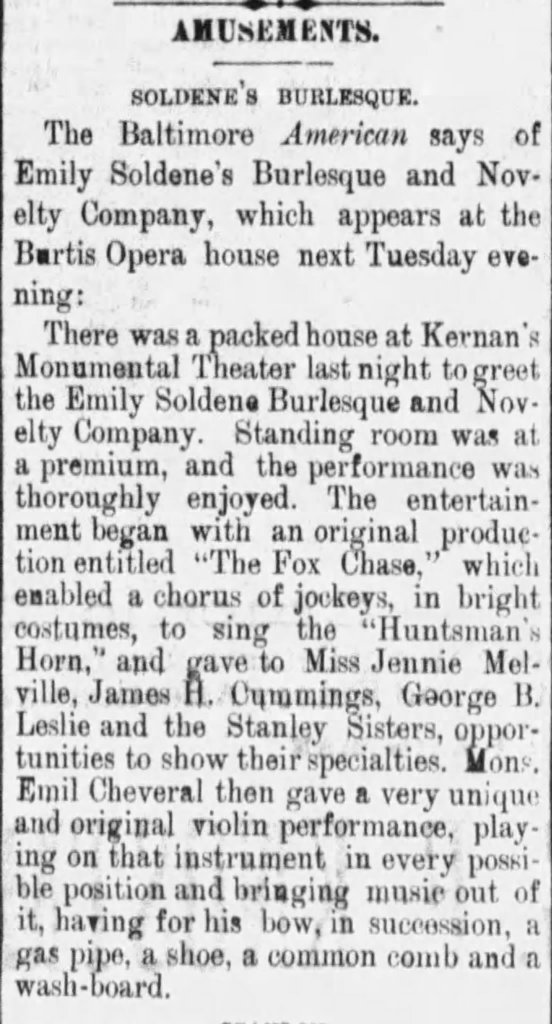
Emily Soldene’s Burlesque and Novelty Company appeared at the Burtis Opear House in November 1887. The group produced “The Fox Chase” in which a chorus of jockeys in bright costumes sang the “Huntsman’s Horn.” Variety acts of musicians and dancers ensued after the operetta.
Dohany’s Opera House
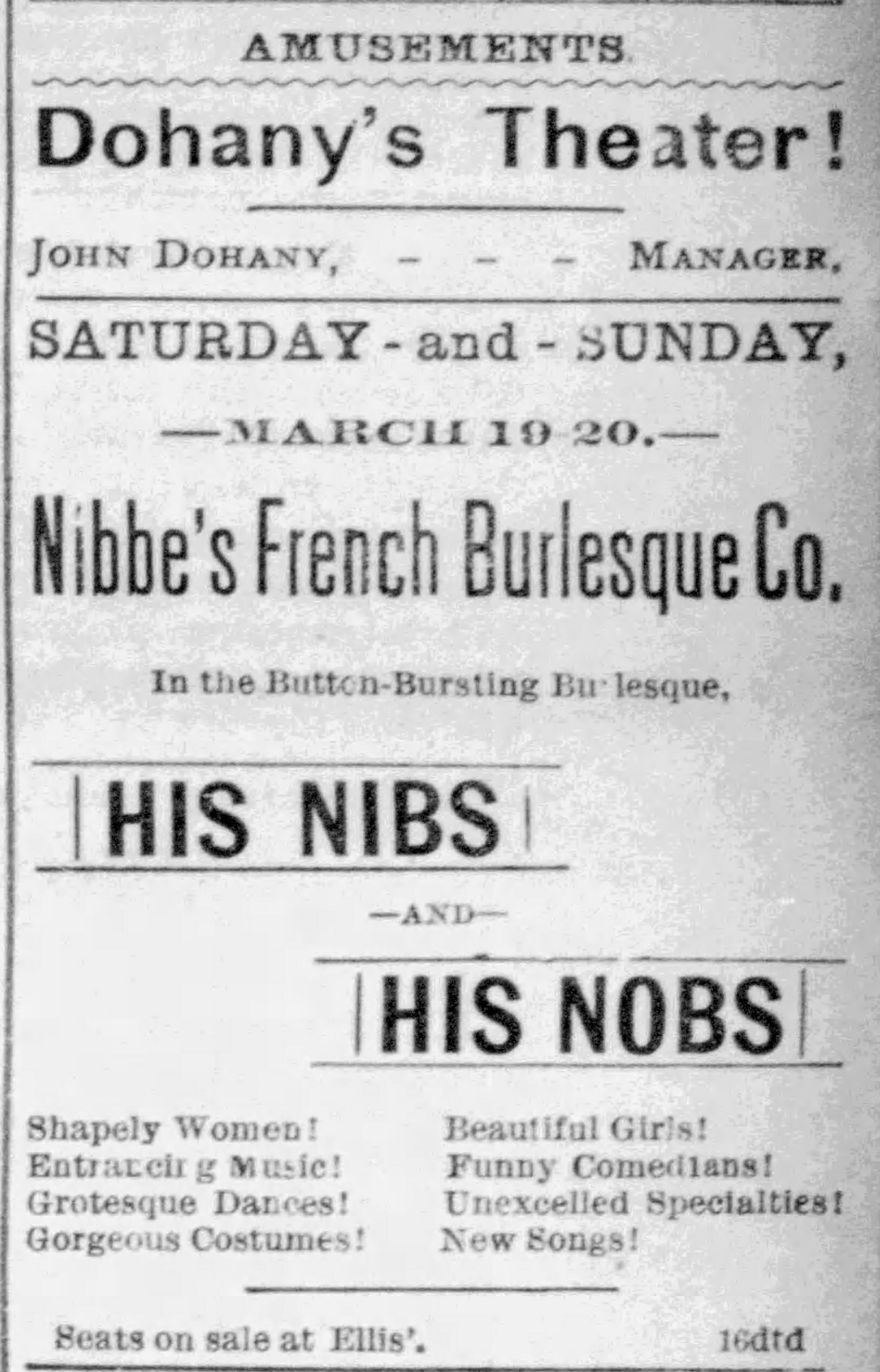
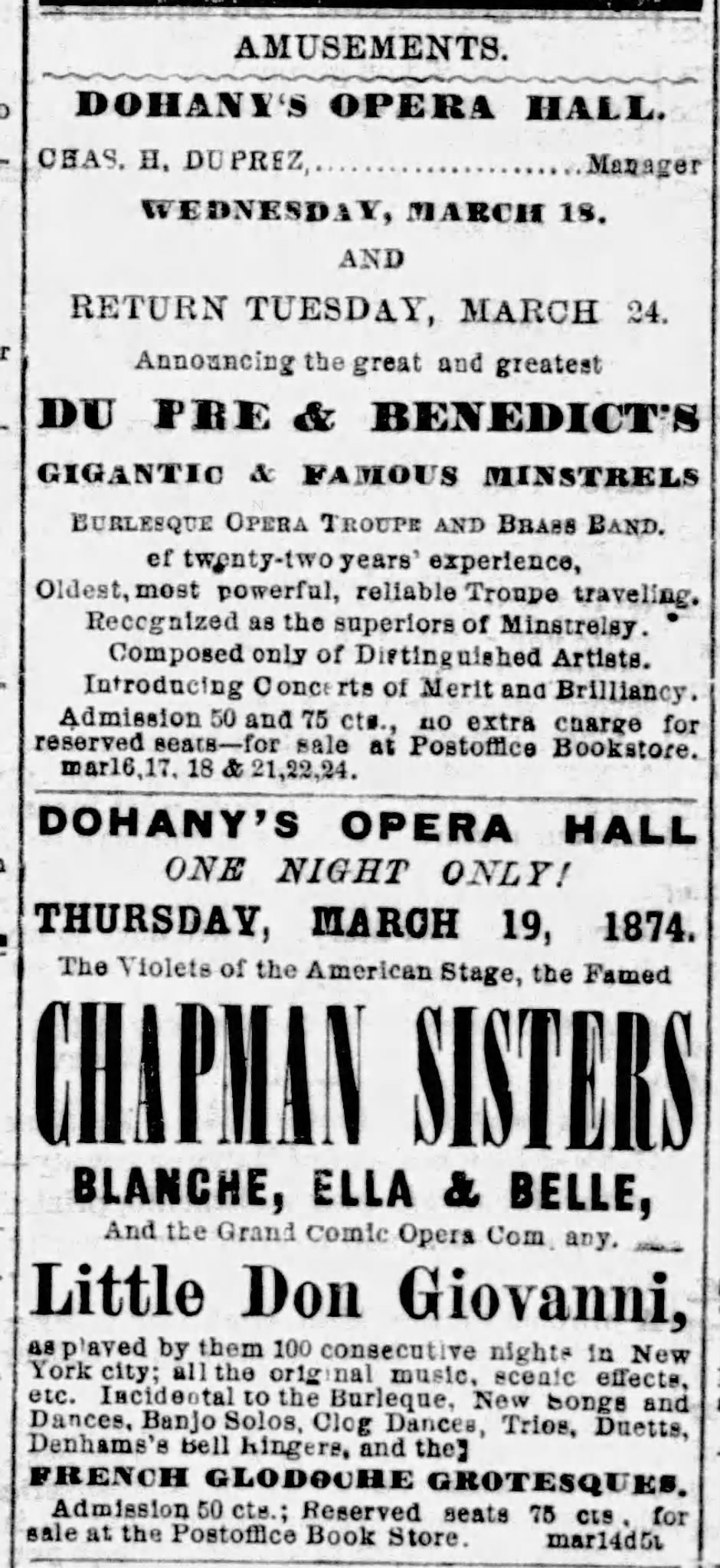
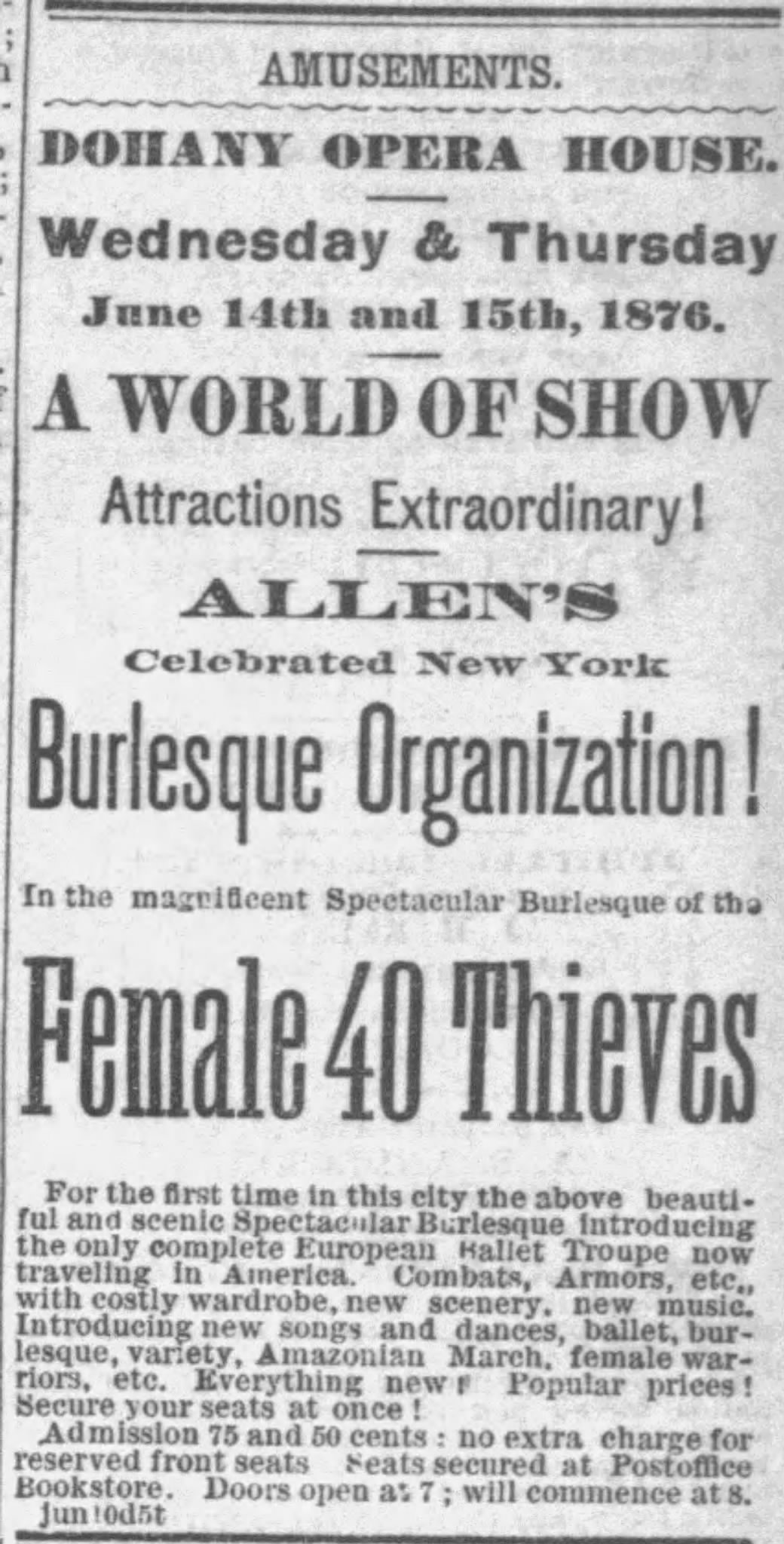


Dohany’s Opera House was a cornerstone of Council Bluffs’ theatrical life in the late 19th century, hosting a dazzling array of performances that ranged from operatic spectacles to traveling burlesque troupes. Managed by John Dohany, the venue became known for its bold programming and ornate productions, drawing crowds with acts like the Chapman Sisters, Allen’s Female 40 Thieves, and Rice’s Surprise Party. These shows blended music, comedy, dance, and satire, often pushing the boundaries of respectability while captivating audiences with glamour and wit. As a cultural hub, Dohany’s Opera House helped shape the city’s early relationship with burlesque, offering a stage where spectacle and social commentary danced hand in hand
The Dohany Opera House was renamed Strand Theatre in 1916 and became owned by A.H. Blank Theaters (Paramount Publix).
1900-1910
The “New Theater” | 1904

The “Dainty Paree Burlesquers” performed in Council Bluffs on May 25, 1904, at the “New Theater.” The opening show was called “A Night at the Hotel Waldrough” and included 20 chorus girls. A three-act burlesque was ended with “The Wrong Mr. Corbett.” Acts were listed as follows:
- Miss Flossie LaVan – vaudeville
- Rich and Wilbur – singing, talking and dancing
- Sisters Ward – vocalists
- Honan, Kearney, and Thomas Breen – “favorite Irish comedians”
- Miss Carroll and Master Johnnie Breen – burlesque juggling act
1920s-1930s
Dance Ordinance | 1925
In 1925, the Council Bluffs city council introduced a dance ordinance aimed at taming the perceived wildness of public dance halls. The proposed law mandated police supervision, banned “immoral or obscene dances,” and required venues to be brightly lit with unlocked doors — even the restrooms. Dances had to end by midnight, and at least one police matron was to be present at every event to monitor behavior. Violators faced fines ranging from $1 to $100. These rules weren’t just about safety; they reflected a broader anxiety about youth culture, gendered freedom, and the shifting social norms of the Jazz Age.
The Roper Theater | 537 Broadway
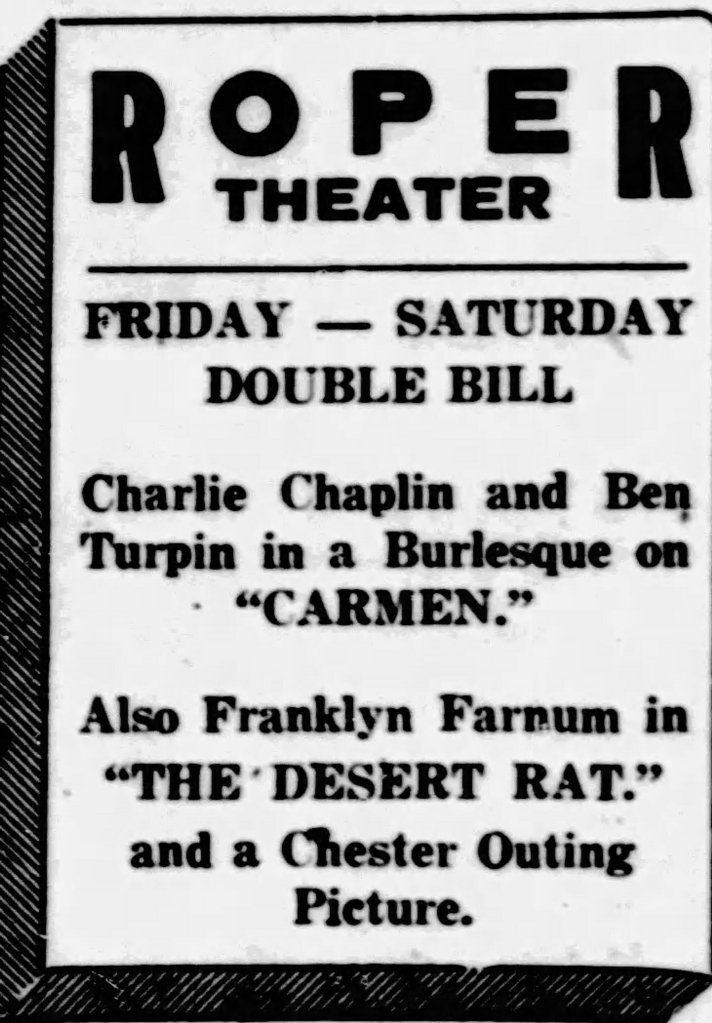
The Roper Theater opened in 1912 at 537 Broadway. The Theater boasted 750 seats and began showing photoplays and motion picture reels, usually 4 reels a day. By the 1920s, the Roper was showing burlesque films such as “A Burlesque on Carmen” starring Charlie Chaplin. The film was made of four reels in length. The story imitated the style of the world-famous opera “Carmen.”
Parker Brothers Circus | Council Bluffs Auditorium
The Parker Brothers Circus performed a “Winter Circus” in Council Bluffs in March 1921. The auditorium was filled with patrons eager to see tricks and spectacle of the circus. The Daily Nonpareil stated the show “was mostly burlesque.” The acts included Bosco, the Snake Charmer, Jensen, the Soap Vendor, and Lee Evans, a Juggler.
Dancing Coliseum
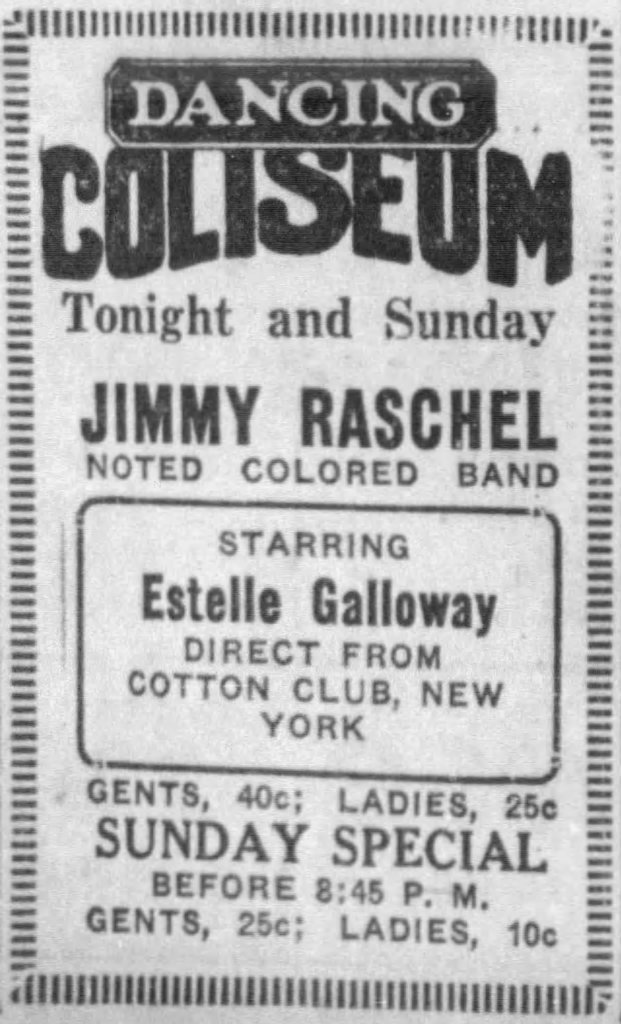
In 1932, Council Bluffs’ Dancing Coliseum hosted Jimmy Raschel and his orchestra along with dancer Estelle Galloway, from the Cotton Club, New York.
Ted Lewis & Nadja | The Capitol Theater
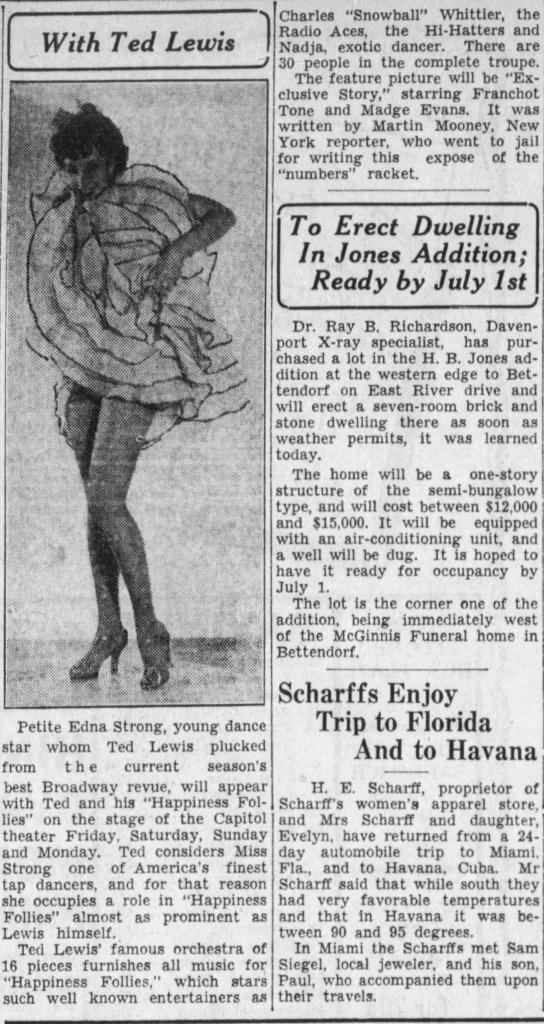
Ted Lewis performed at the Capitol Theater in Council Bluffs in February 1936. Among him was a group of dancers called his “Happiness Follies”, which starred Nadja, an exotic dancer, Charles “Snowball” Whittier, the Radio Aces, dancer Edna Strong, and the Hi-Hatters. 30 people completed the troupe. After the show, a motion picture was shown in the theater.
1940s-1950s
Mississippi Valley Fair | 1949
The Mississippi Valley Fair opened in Council Bluffs in the summer of 1949. The Fair featured two special shows: Ethel Hanley’s marionettes from Muscatine and the Warren family’s acrobatic acts.
“The marionette show was patterned along the lines of a vaudeville presentation, and the children yelled their approval of various acts that included numbers by “Miss Whoopandholler,” a trapeze artist, exotic dancers and other acts from the “Bingling Brothers” Circus. Opening day of the Fair saw 5,397 patrons.
The Tri-City Theatrical Booking Exchange
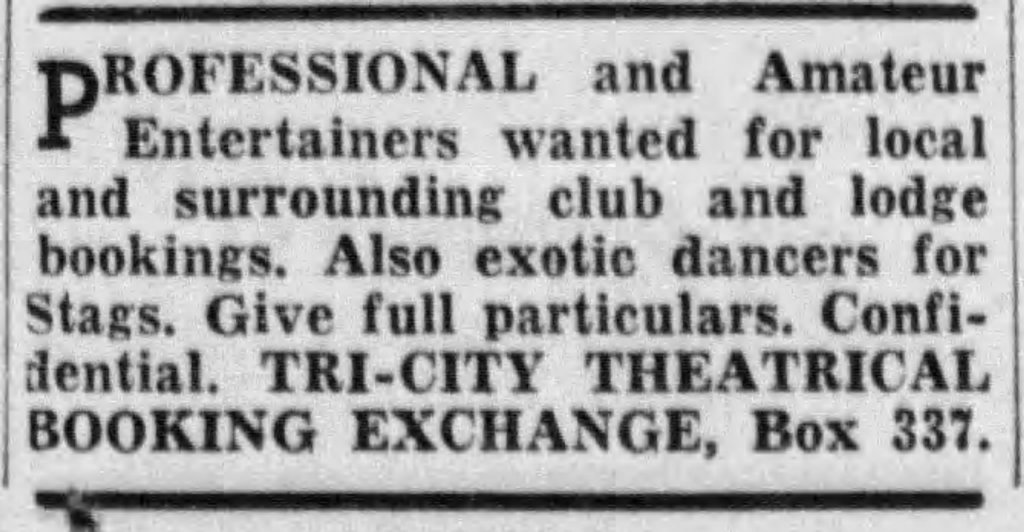
A brief advertisement sheds light on the “Tri-City Theatrical Booking Exchange” program. The wanted ad lists the need for professional and amateur entertainers for night clubs and lodges, AND exotic dancers for Stags (men only stag parties).
1950s-1960s

In the 1950s, Council Bluffs embraced a blend of wholesome Americana and cheeky spectacle. Events like the Miss Drive-In Theatre of 1951 bathing beauty contest — held live on the concession stage — showcased how performance and pageantry were woven into everyday entertainment. These contests, often paired with Technicolor films and local promotions, echoed the burlesque tradition of teasing glamour and audience interaction. While not labeled as burlesque outright, they carried its DNA: the celebration of feminine display, theatrical flair, and public delight in performance.

The article offers a cheeky glimpse into mid-century nightlife in Council Bluffs, where stag parties — often featuring gambling and “girlie shows” — were part of the local entertainment landscape. In this 1950s clipping, Omaha’s American Legion Post scrambles to distance itself from a raucous event hosted by its Council Bluffs counterpart, which included a crap game and live burlesque-style entertainment. The defensive tone underscores how these events, while popular, were also socially charged — drawing both eager attendees and disapproving glances.
Stag parties in Council Bluffs reflected a broader tradition of masculine leisure, often blending risqué performance with camaraderie and vice, tucked just across the river from more buttoned-up Omaha. These gatherings weren’t just about titillation; they were about territory, reputation, and the blurred lines between civic pride and underground pleasure.
By the 1960s, the city was undergoing dramatic change. Urban renewal projects and the arrival of the interstate highway system began reshaping downtown Council Bluffs. Traditional burlesque theaters were fading, but the spirit of the art form persisted in traveling shows, go-go dancing, and cabaret-style acts that popped up in lounges and bars. Nationally, burlesque was splintering — some performers moved into strip clubs, others into avant-garde theater — and Council Bluffs mirrored that evolution in miniature. The city’s nightlife adapted, sometimes quietly, sometimes boldly, to shifting tastes and moral codes.
Burlesque in this era wasn’t just about tassels and tease. It was about resilience. Performers navigated censorship, changing venue laws, and evolving audience expectations. They kept the flame alive in small towns and border cities like Council Bluffs, where the line between mainstream and underground was often blurred.
1970s-1980s
By the 1970s, burlesque in Council Bluffs had entered a transitional phase. Across the country, traditional burlesque theaters were closing, but the art form survived in traveling topless revues, cabaret acts, and lounge performances — and Council Bluffs reflected this national trend. Touring shows brought performers through supper clubs and bars, blending striptease with comedy, music, and prop work. These acts were often grittier than the glamorous burlesque of earlier decades, but they carried forward the essential tease, spectacle, and performer charisma.
Urban renewal projects and the reshaping of downtown Council Bluffs also influenced the scene. As older venues disappeared, burlesque adapted to smaller, more flexible spaces, sometimes overlapping with go‑go dancing and adult entertainment. While the city may not have had a marquee burlesque theater in this era, the spirit of burlesque persisted in smoky lounges and traveling shows, keeping alive a tradition of performance that thrived on resilience and reinvention.
The Crest Theater
The Crest Theater opened in Council Bluffs in 1957, originally part of the wave of postwar cinemas that brought Hollywood spectacle to local audiences. By the 1970s, however, the Crest had shifted its programming to adult films, reflecting both national trends and the changing landscape of entertainment in small cities. Across the country, neighborhood theaters were struggling to compete with television and suburban multiplexes, and many turned to erotic cinema as a way to survive. In Council Bluffs, the Crest became known as a downtown destination for adult movies, its marquee signaling a new era of nightlife that blurred the line between mainstream cinema and underground culture.
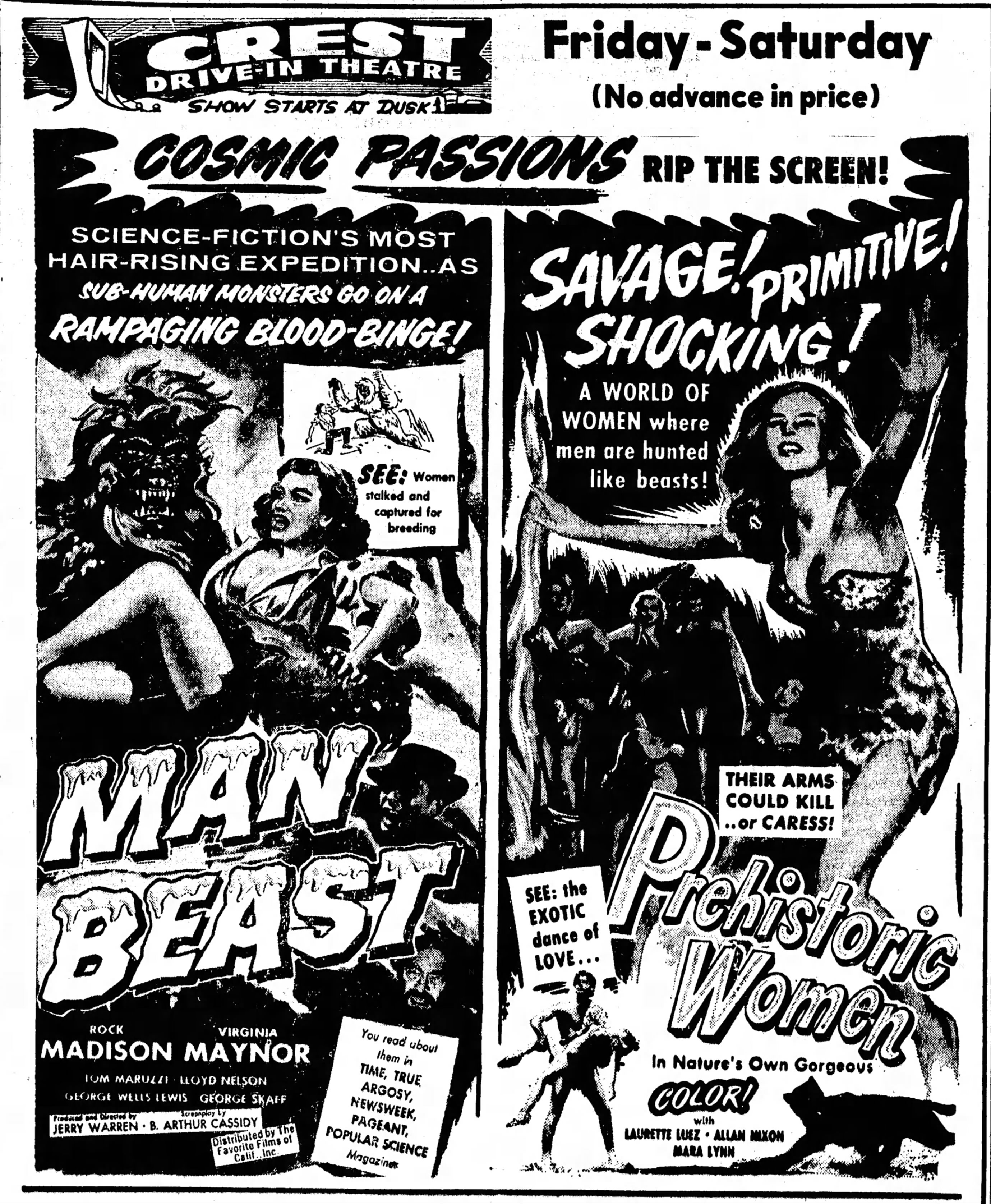
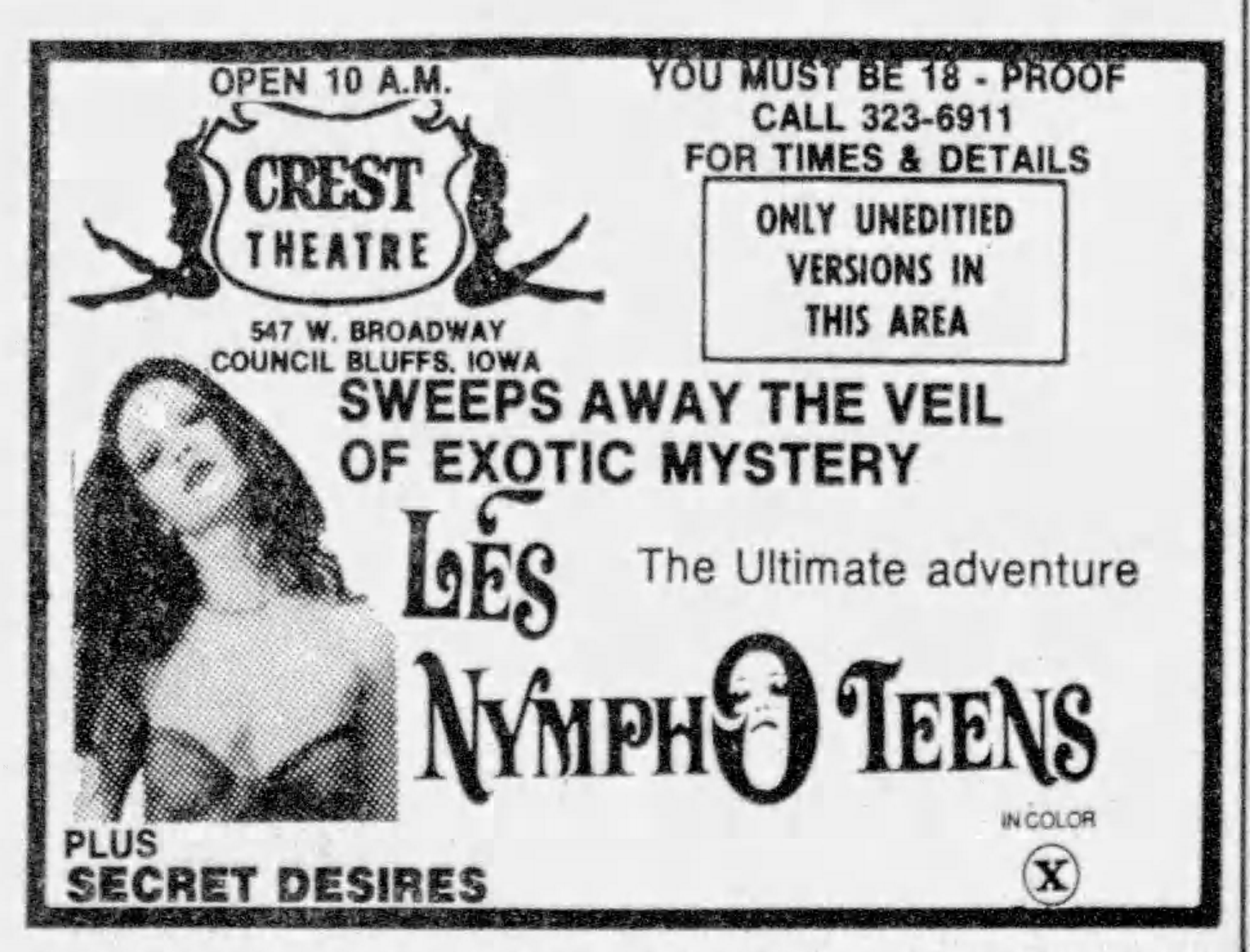
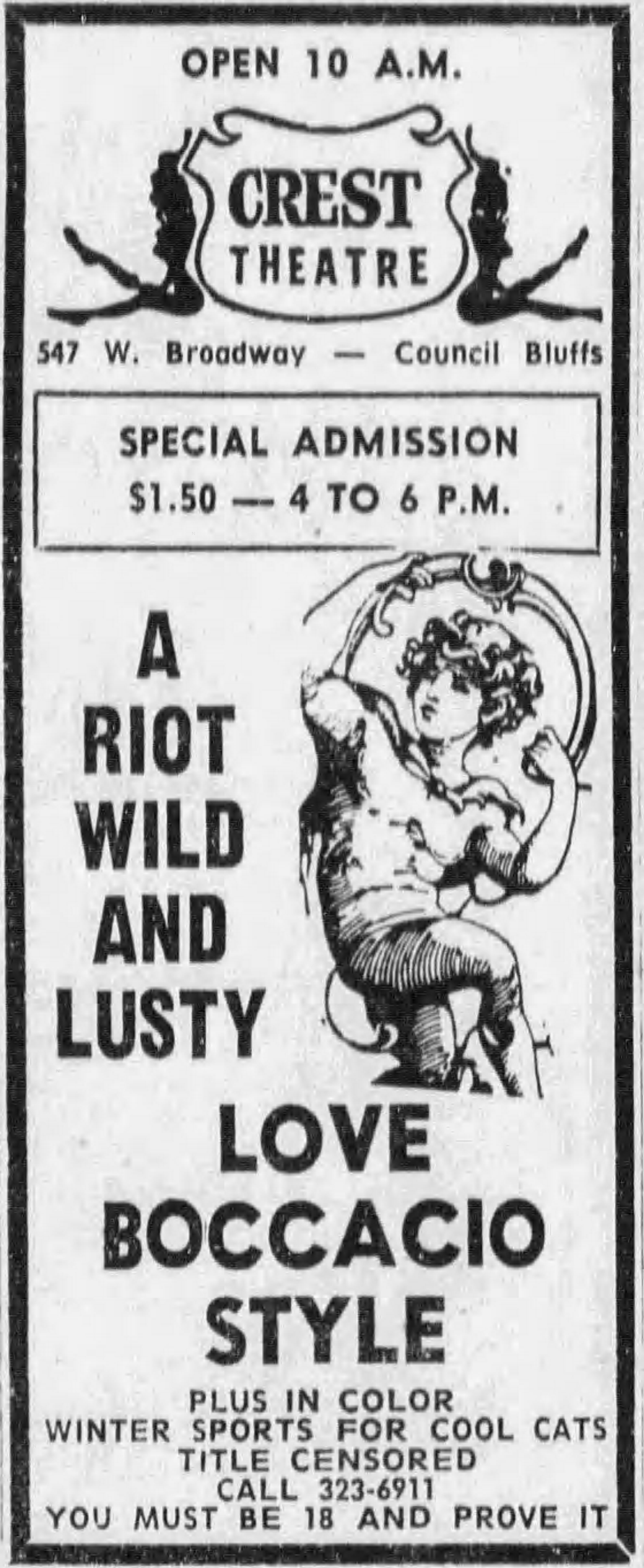
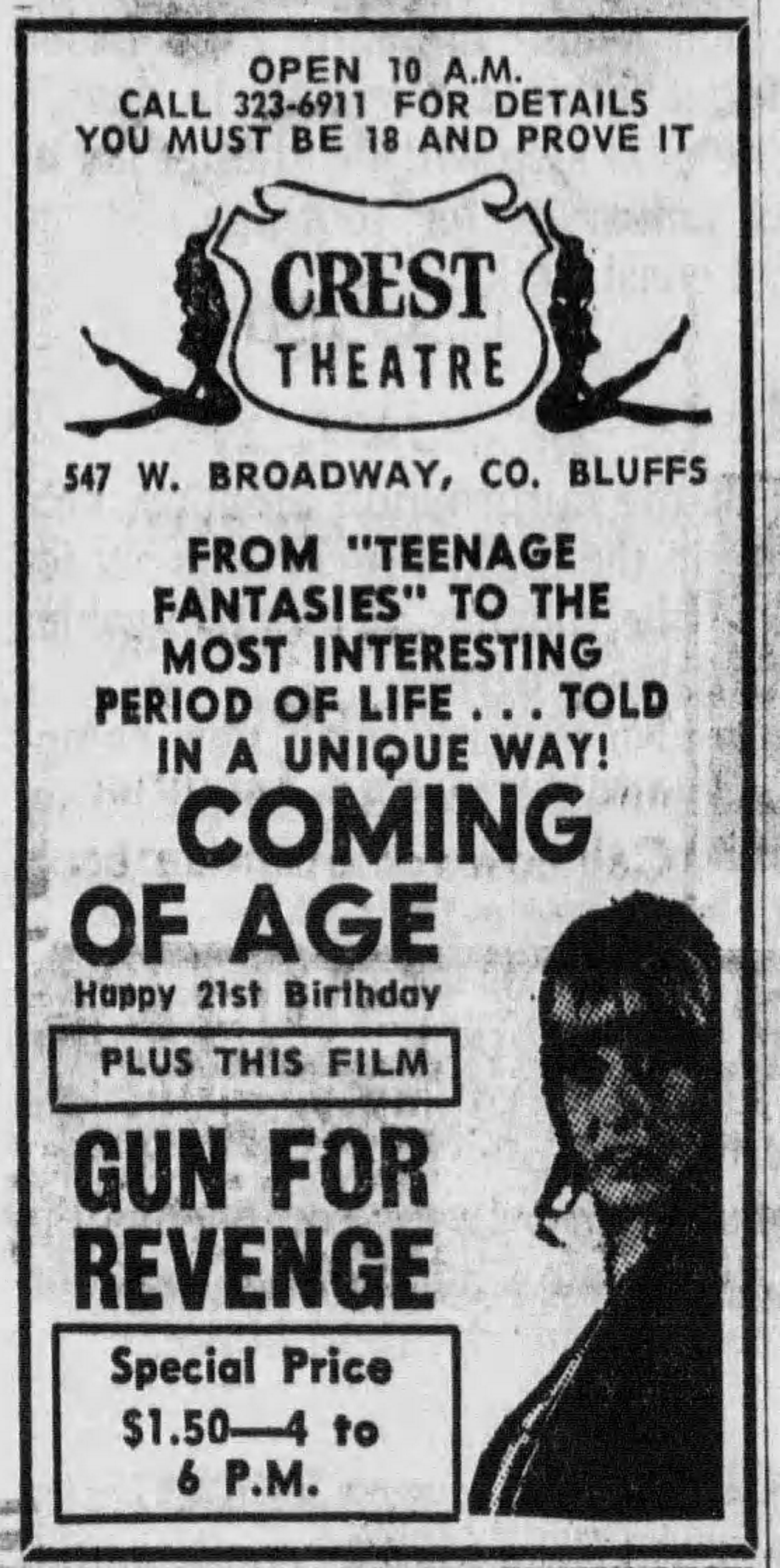
This transformation placed the Crest within the broader story of burlesque and erotic performance in Council Bluffs. While live burlesque shows were increasingly relegated to lounges and traveling revues, the Crest offered a cinematic counterpart — a space where sexuality was commercialized, contested, and made public. Its presence downtown underscored how adult entertainment was woven into the fabric of the city’s cultural history, even as debates over morality, censorship, and urban renewal swirled around it.
The Bittersweet Lounge & Lusty Lady
The Bittersweet Lounge was more than just a rural bar on the outskirts of Council Bluffs—it was a flashpoint in the region’s evolving relationship with adult entertainment, legal oversight, and cultural expression. Bittersweet became known for its nude performances and provocative atmosphere, drawing both devoted patrons and the scrutiny of local authorities. Alongside its sister venue, the Lusty Lady Lounge, Bittersweet operated in a legal gray zone, pushing boundaries while navigating shifting laws around indecency and dancer attire.
Advertisements (1975-1980):


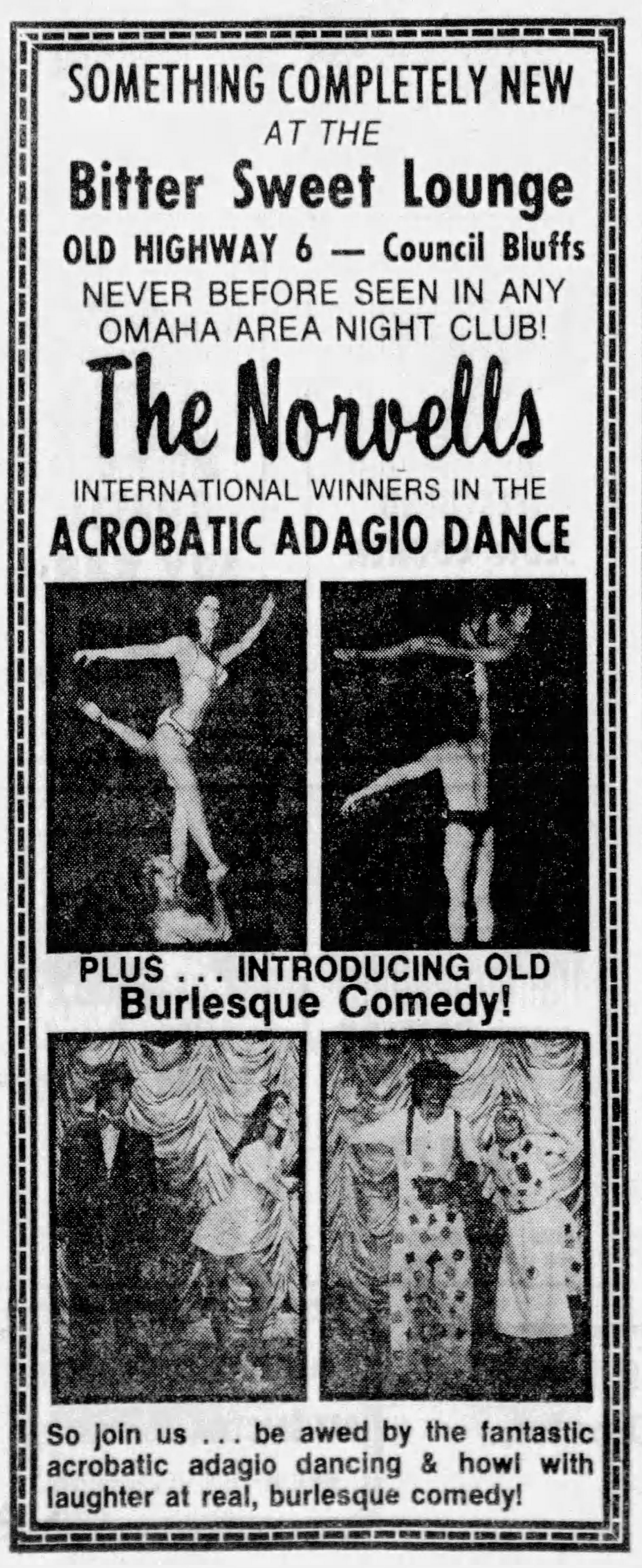


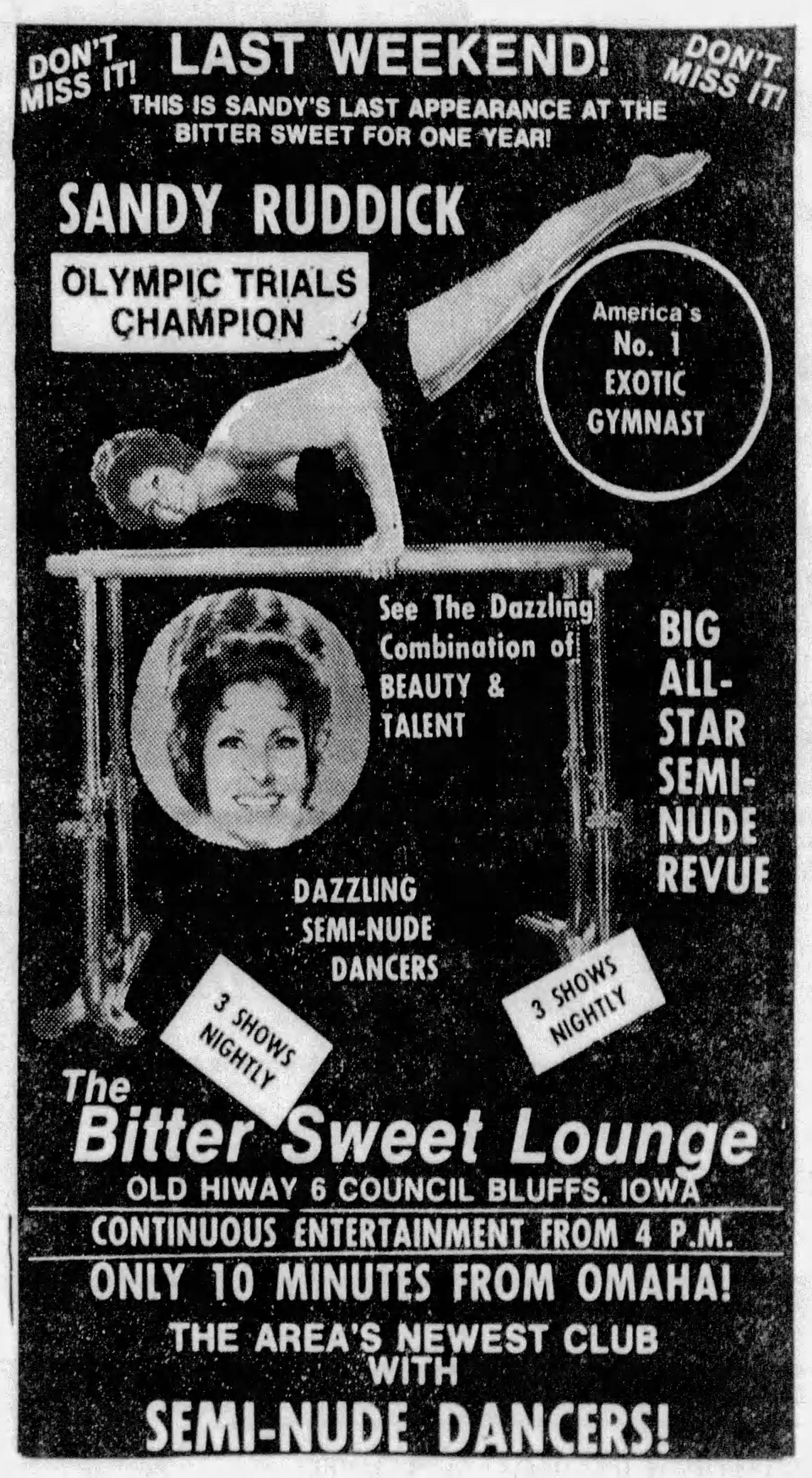
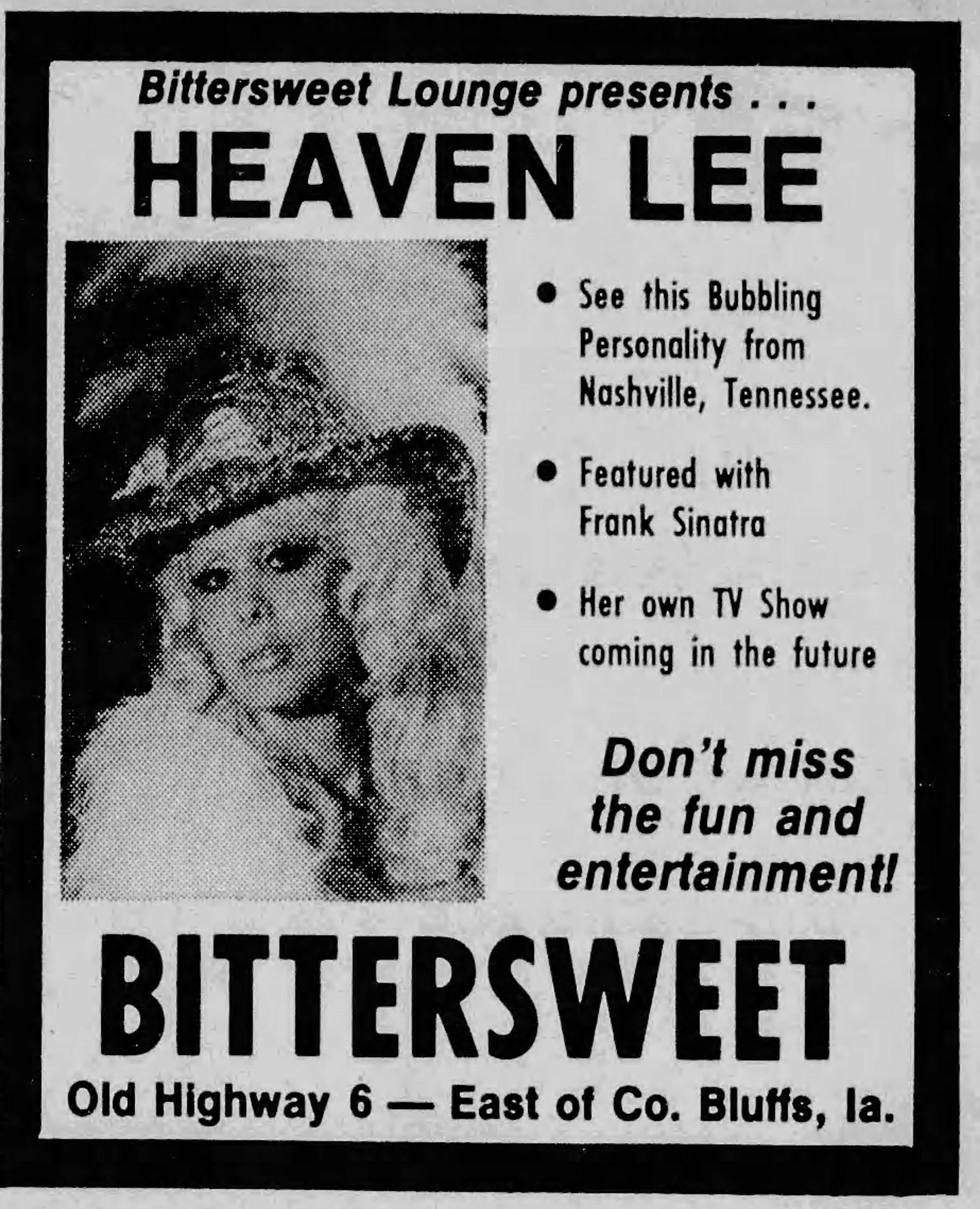
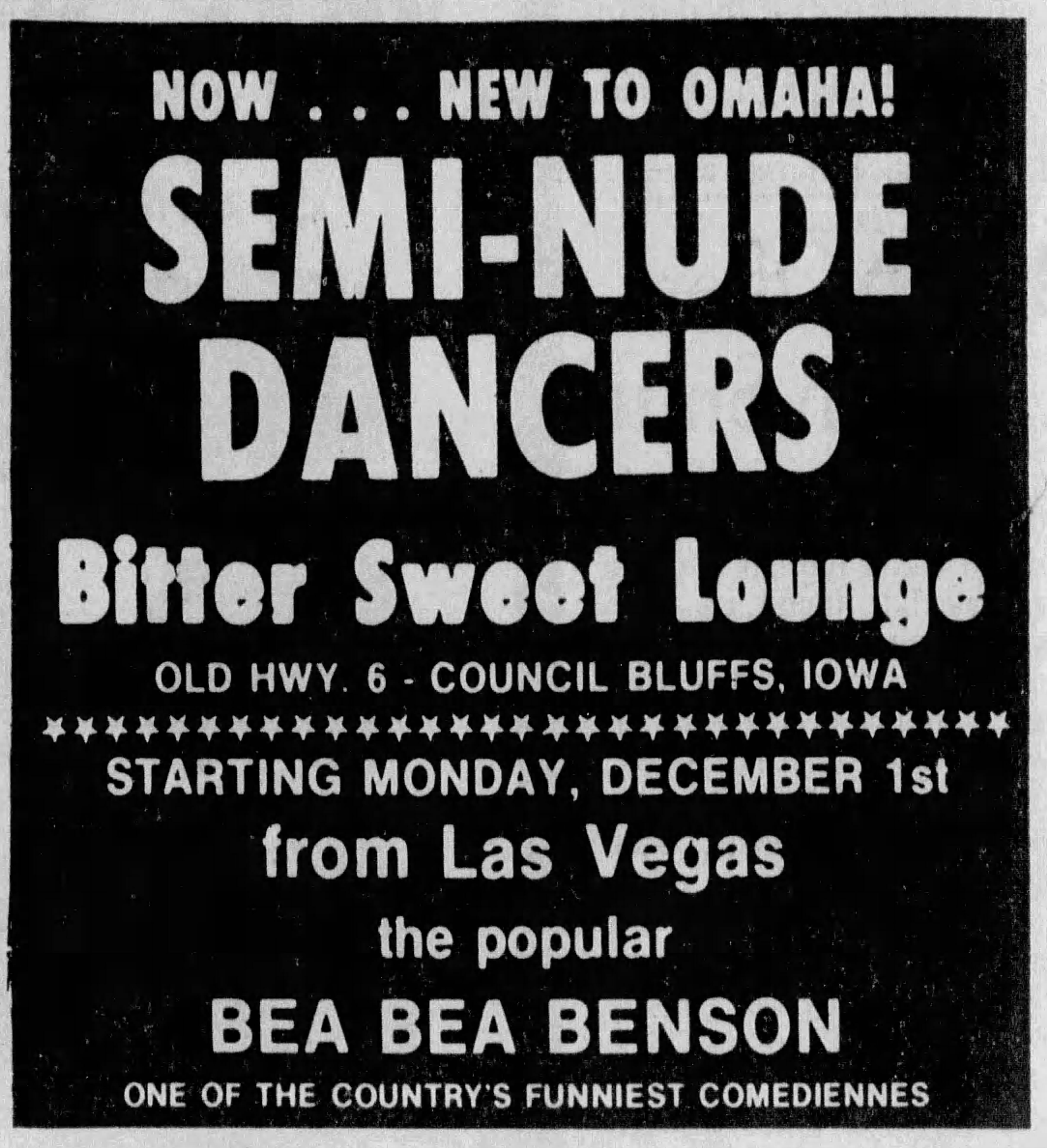

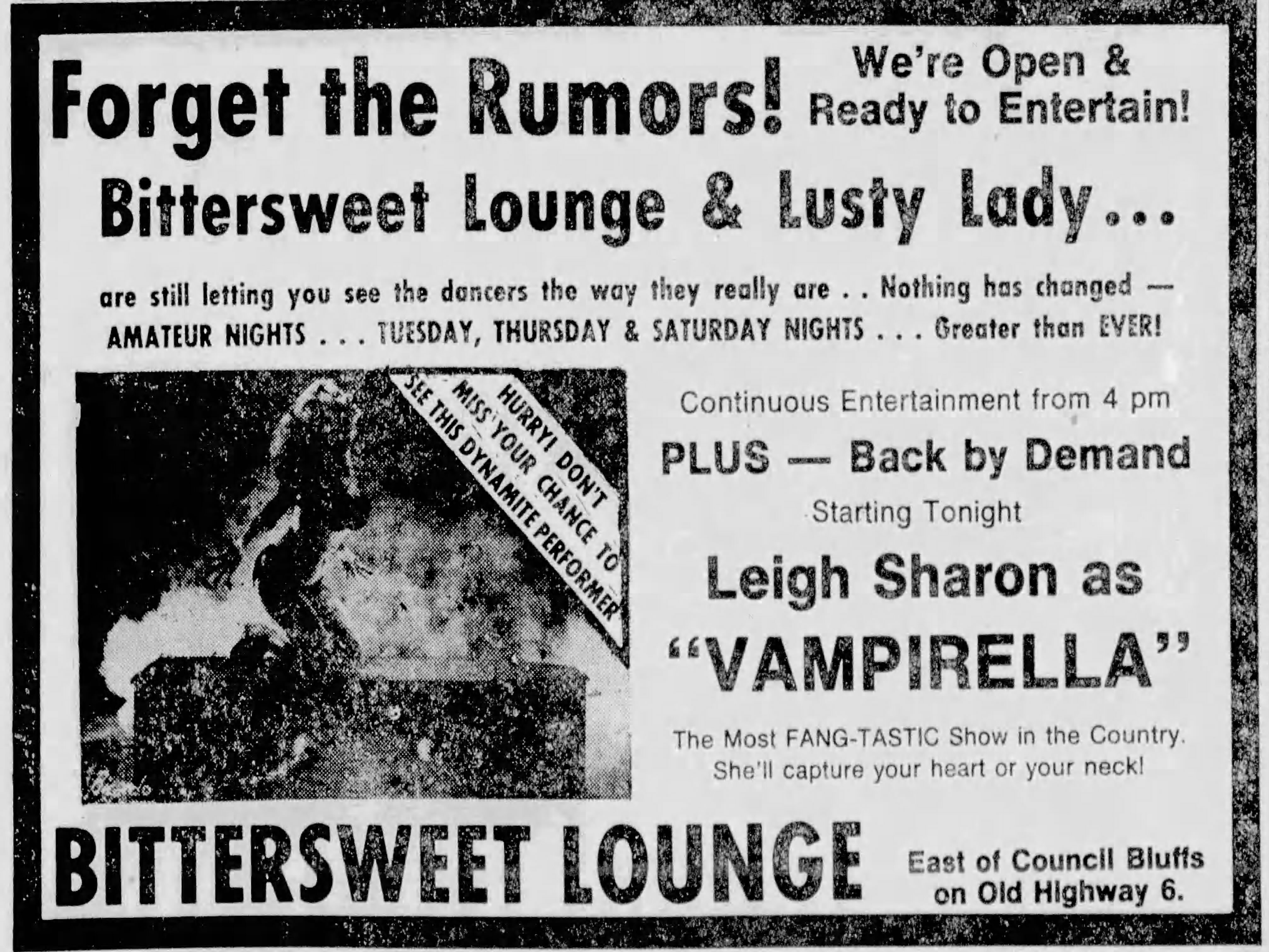
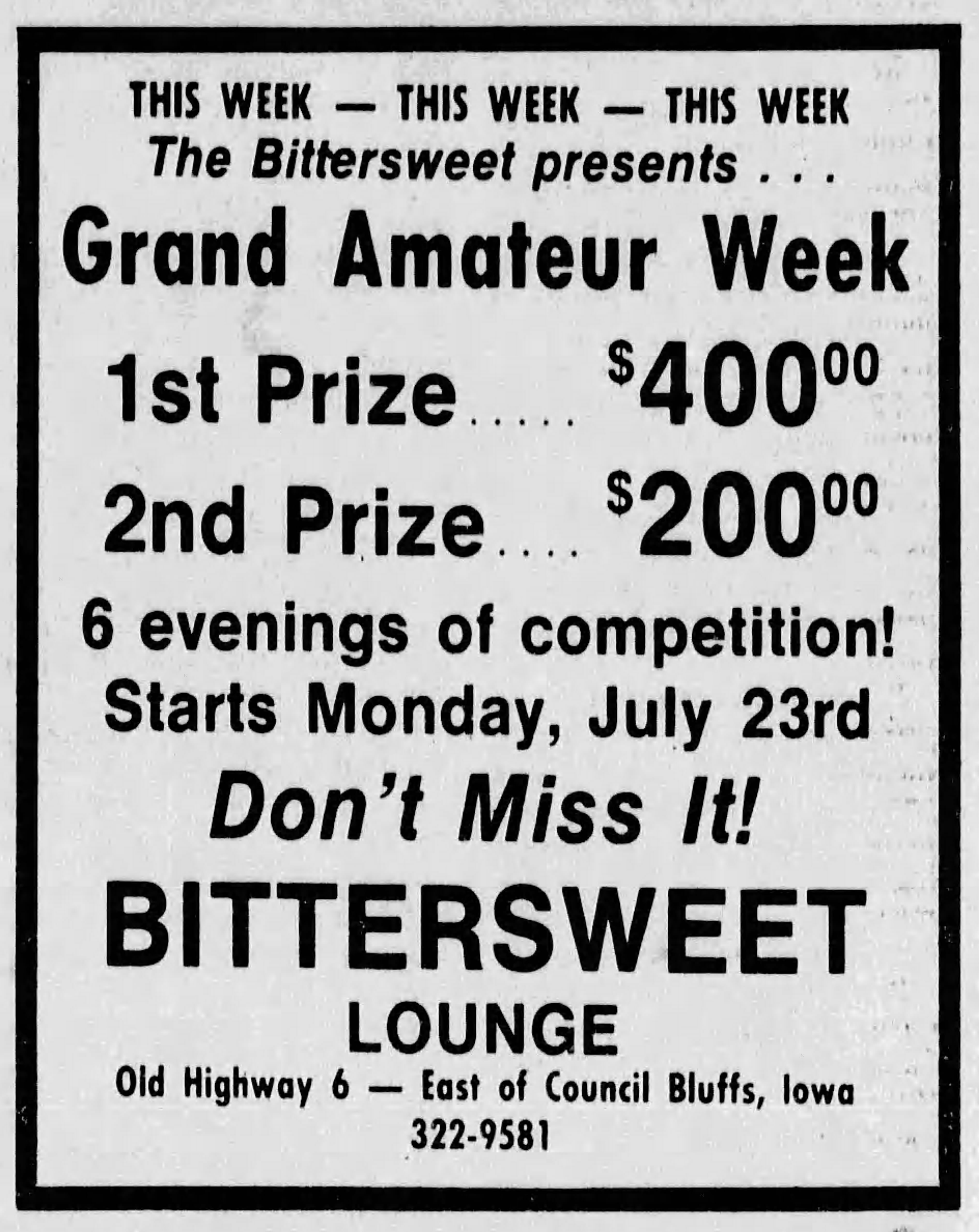
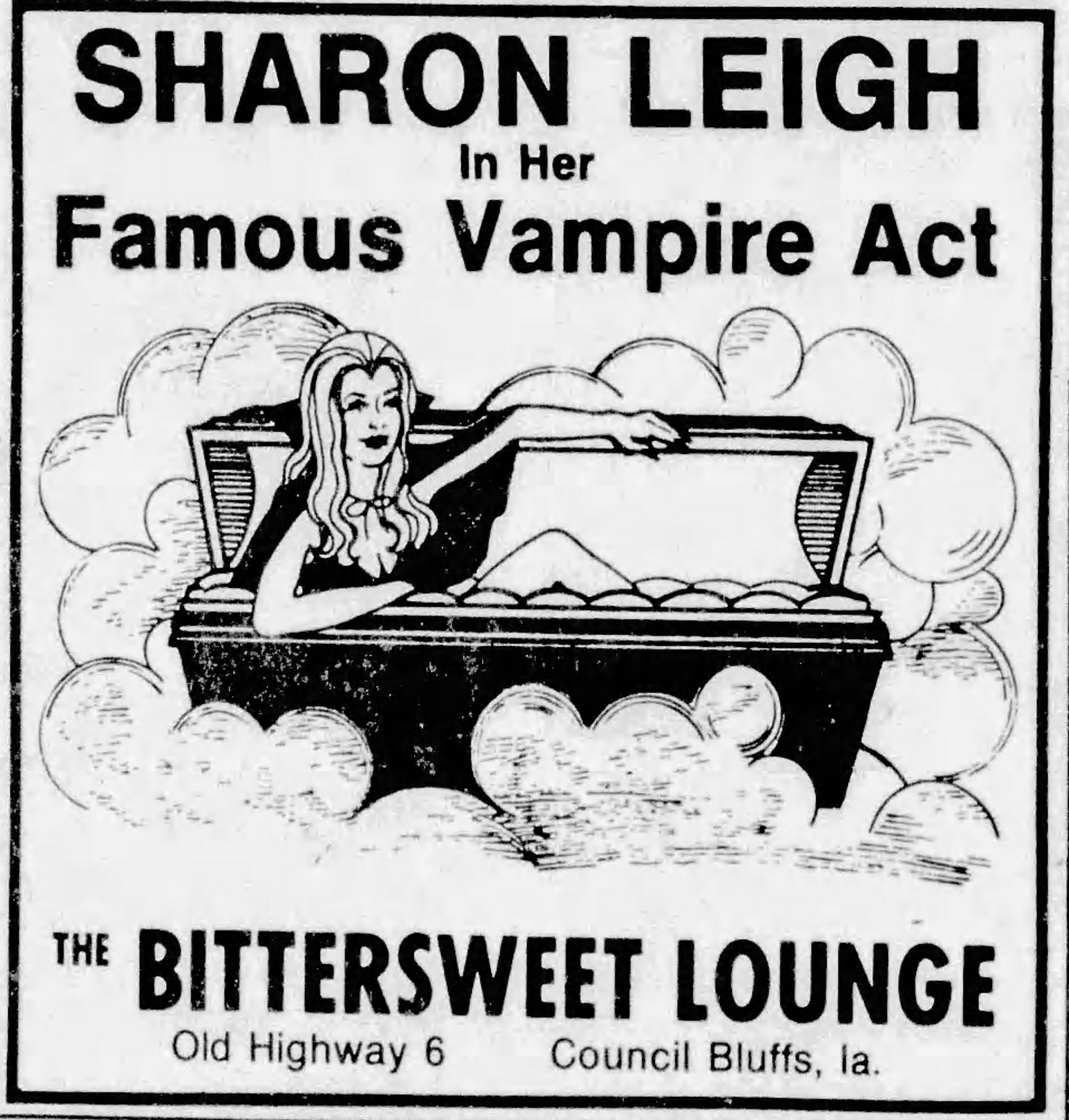
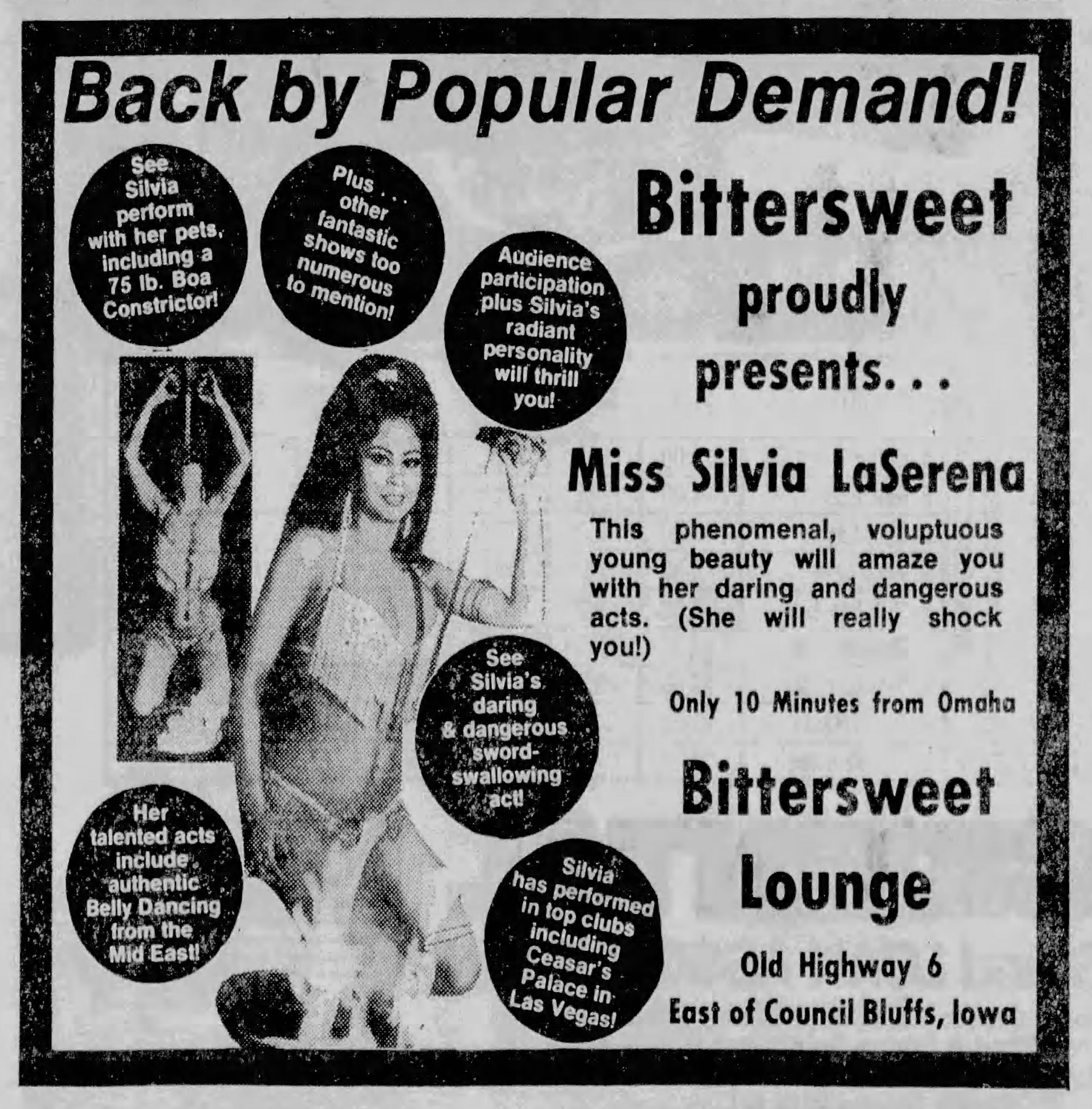
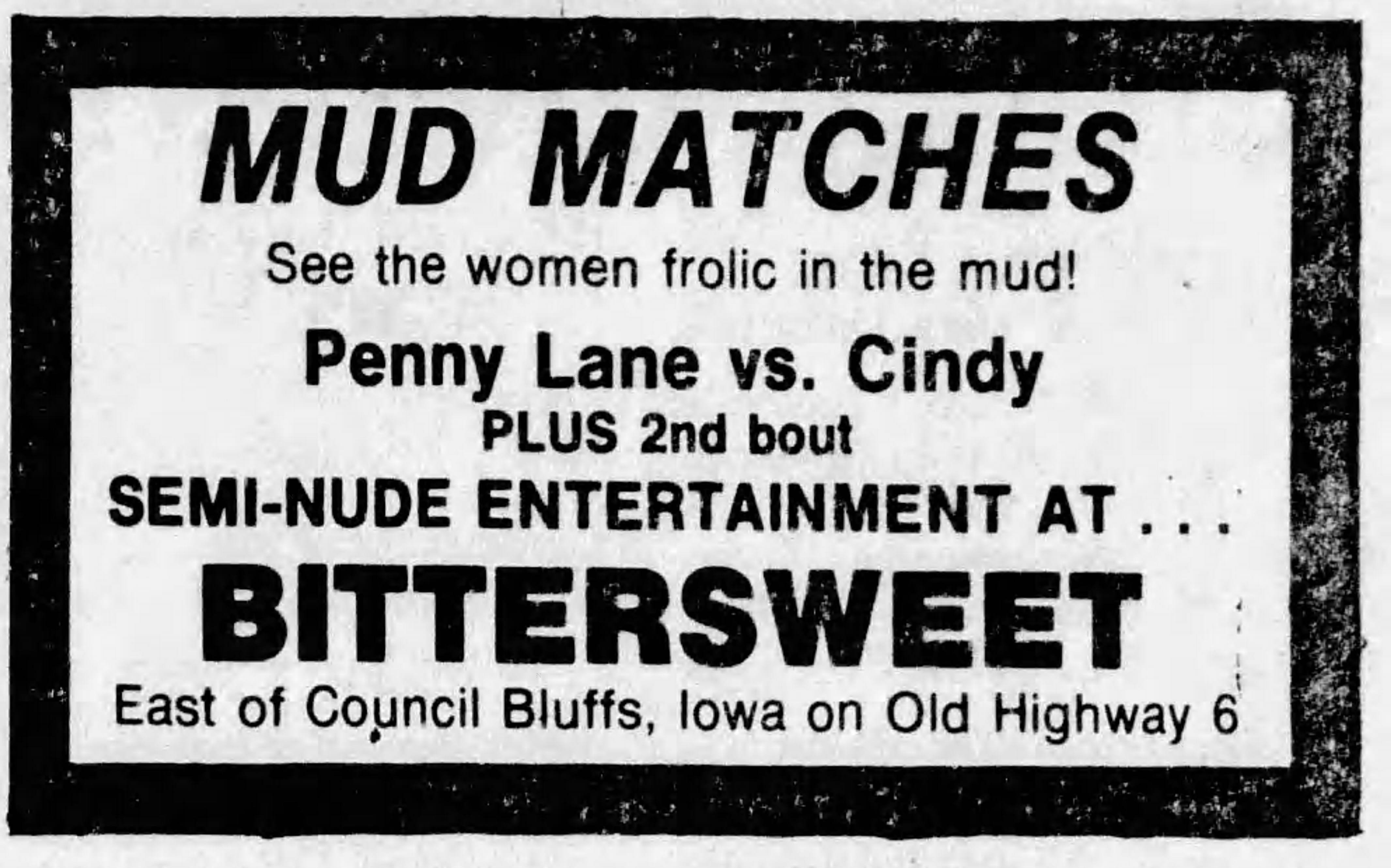
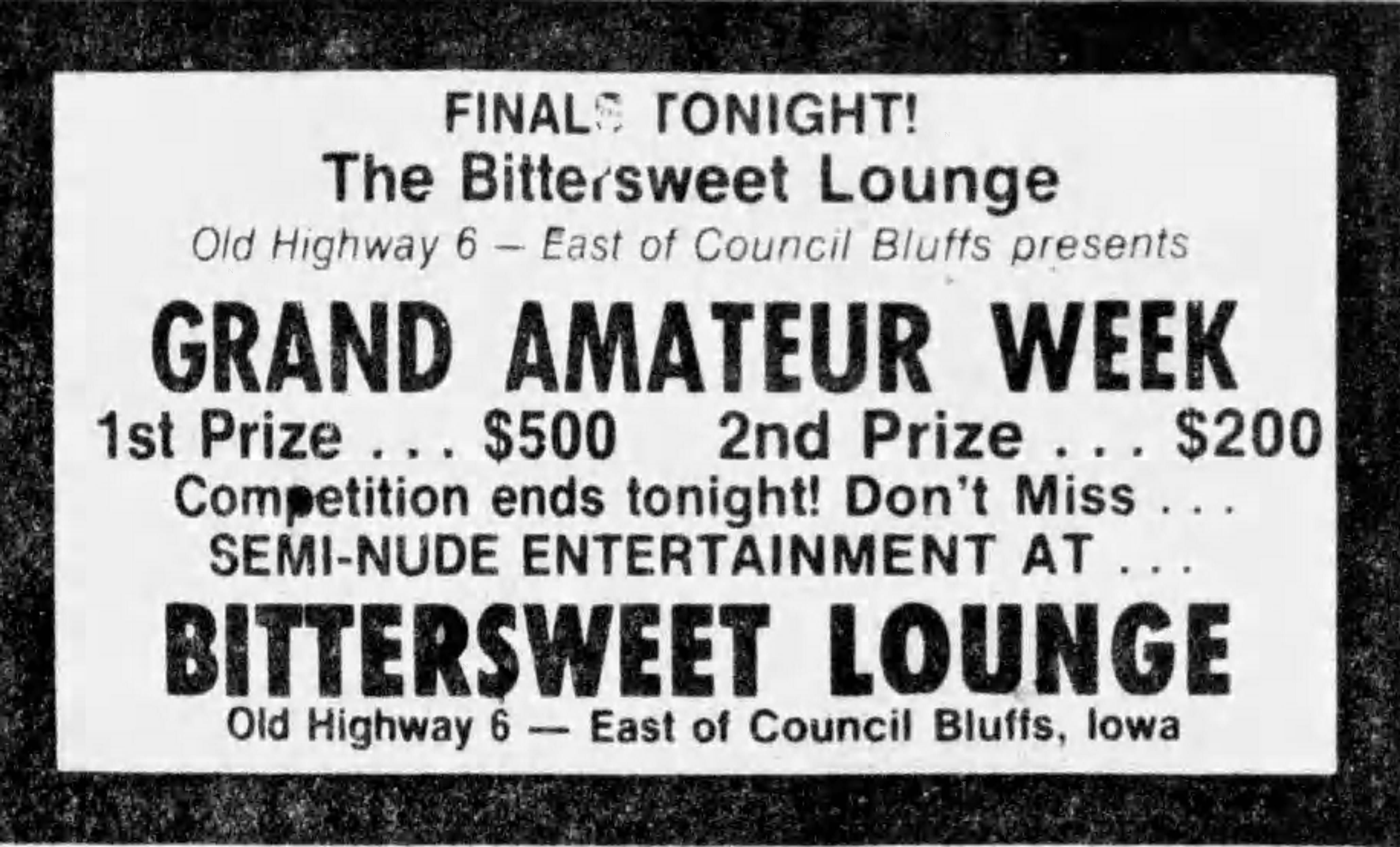
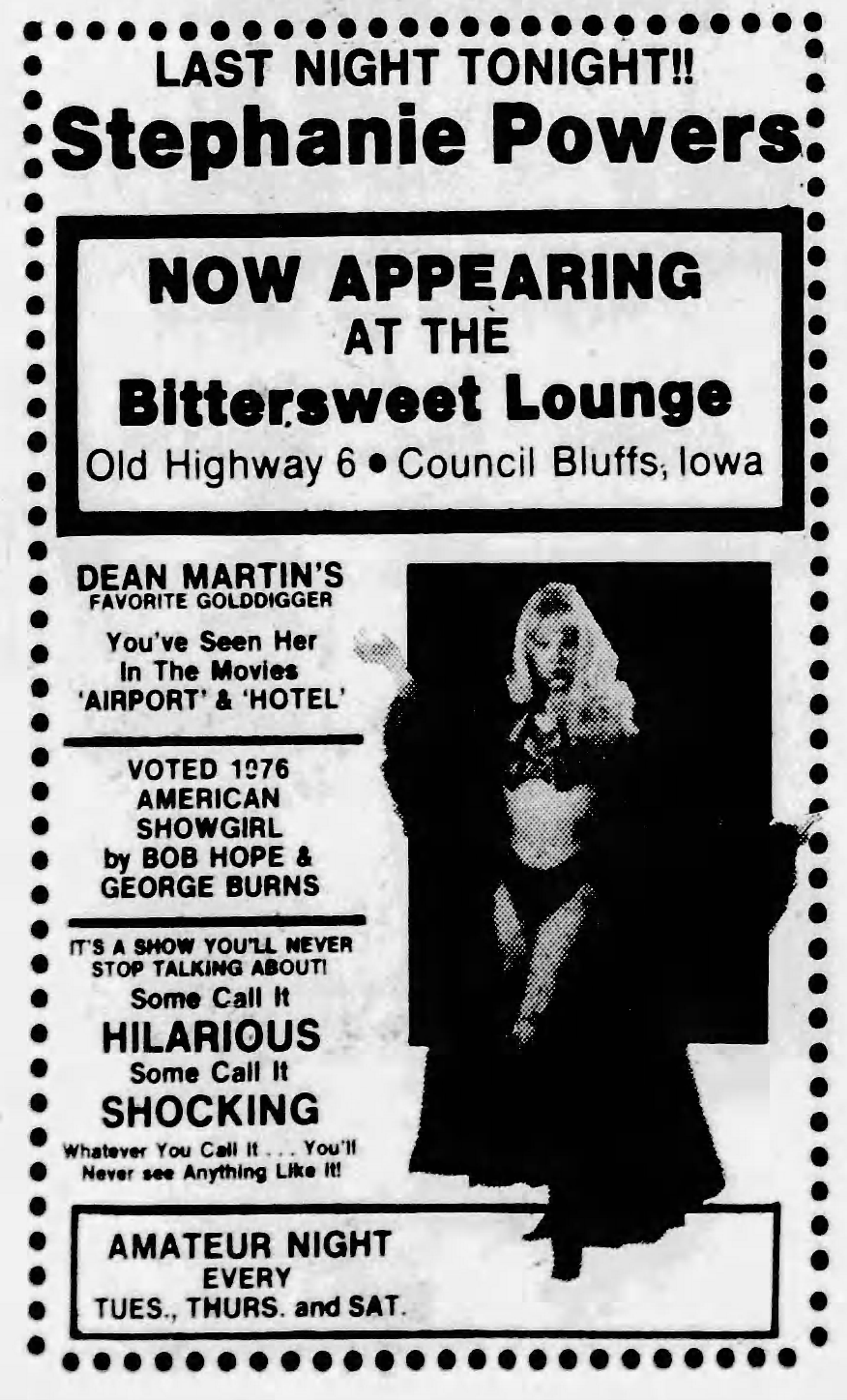
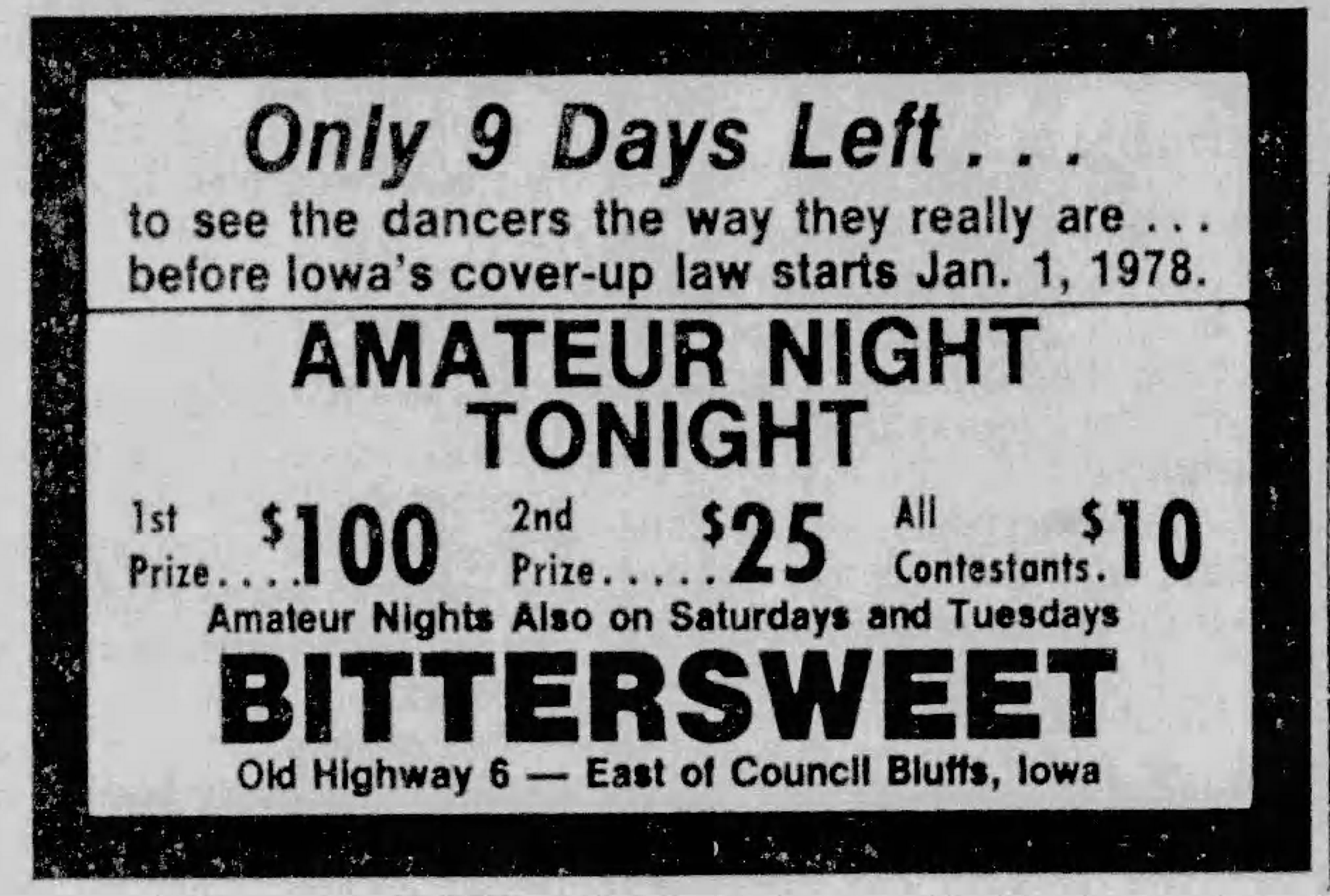

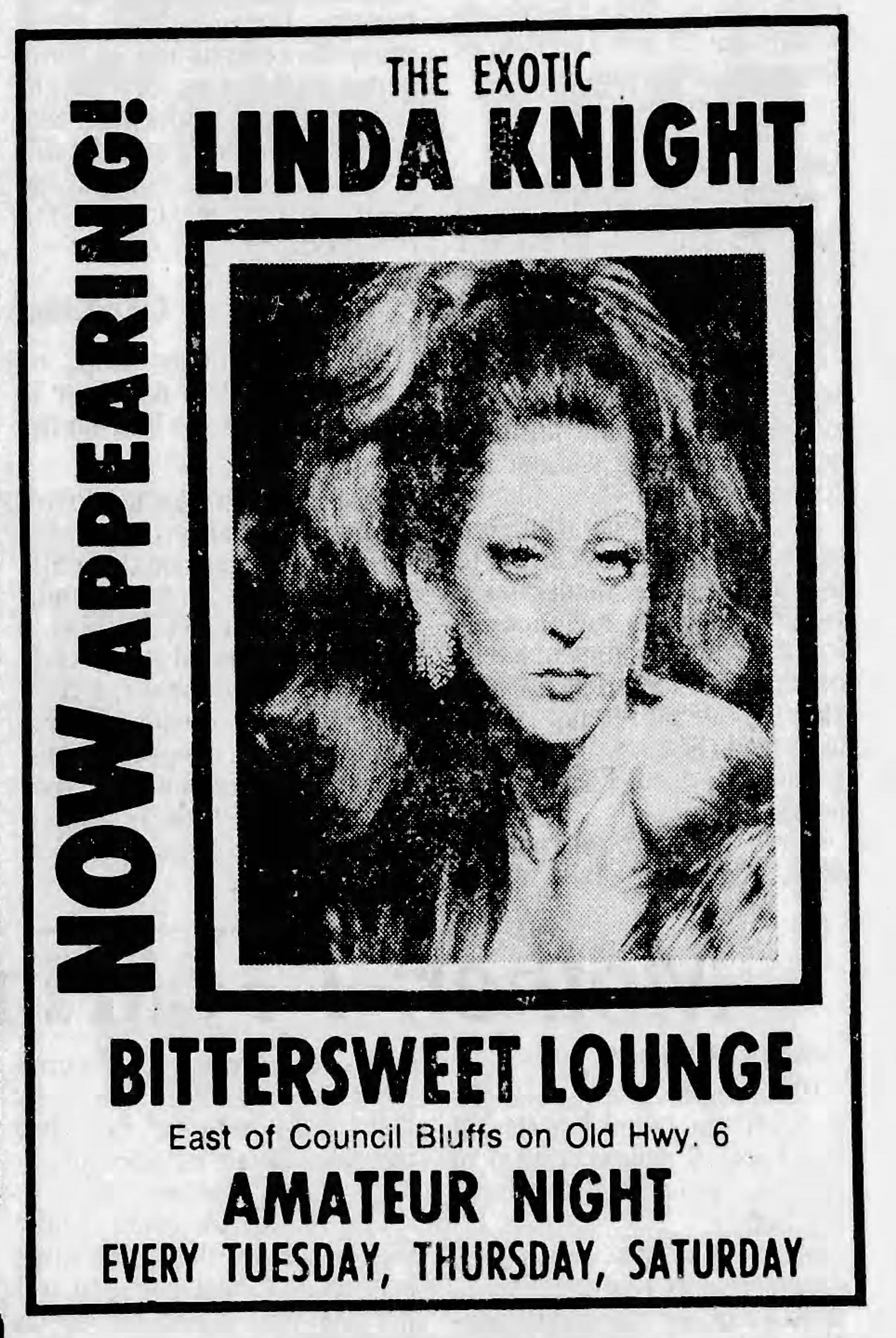
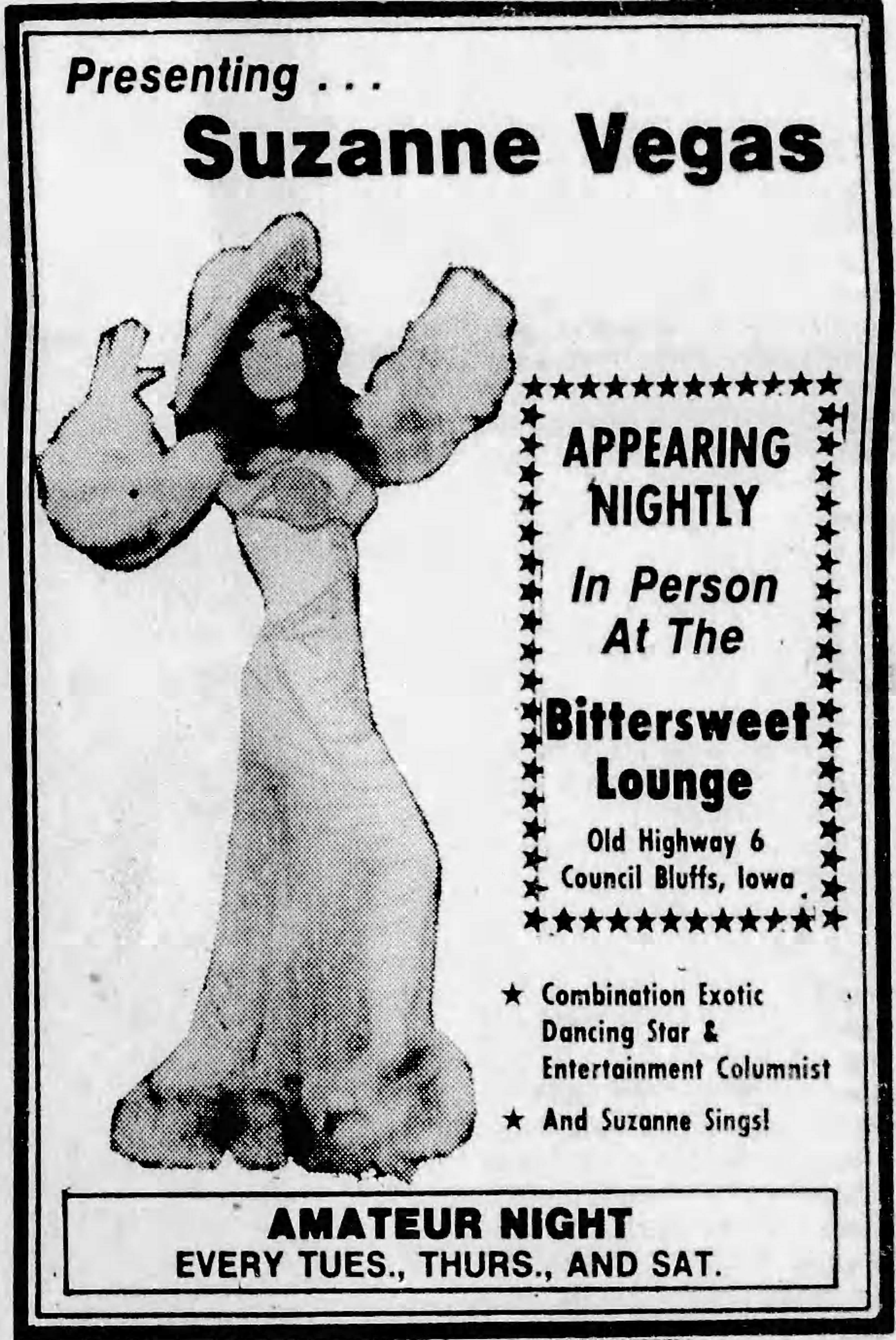
Various performers who graced its stage:
- Miss Mercy; Filipino burlesque dancer
- Wild Morganna; The World’s Largest!
- The Norvells; acrobatic dance team
- Miss Silvia LaSerena; sword swallower and fire eater
- Leigh Sharon as “Vampirella”; burlesque dancer
- Sandy Ruddick; America’s No. 1 Exotic Gymnast
- Heaven Lee; dancer from Nashville, TN
- Bea Bea Benson; dancer from Las Vegas
- Penny Lane vs Cindy; Mud Matches “See the women frolic in the mud!”
- Stephanie Powers; Dean Martin’s Favorite Golddigger
- Linda Knight; The Exotic
- Suzanne Vegas; singing burlesque star
In the early 1980s, Bittersweet found itself at the center of a legal battle over Iowa’s new “cover-up” law, which required dancers to wear G-strings and pasties. The club briefly resumed nude entertainment after winning a temporary injunction, only to have it overturned by a district court ruling. These legal skirmishes weren’t just about clothing—they reflected deeper tensions around morality, free expression, and the visibility of adult entertainment in small-town Iowa. The club’s operators, including Ron Bergeron and later Randall Petry, repeatedly challenged restrictions, even attempting to reopen Bittersweet as a country-western nightclub after its liquor license was denied.
Despite its controversial reputation, clubs and lounges like the Bittersweet Lounge played a role in the broader story of burlesque and erotic performance in Council Bluffs. It marked a shift from mid-century glamour to a more raw, rebellious form of nightlife—one shaped by legal battles, changing tastes, and the resilience of performers and proprietors alike. For historians and artists revisiting this era, Bittersweet offers a lens into how burlesque and adult entertainment adapted to the cultural currents of the 1980s, surviving not in grand theaters but in roadside lounges and contested courtrooms.
Mickey’s Razzle Dazzle Club
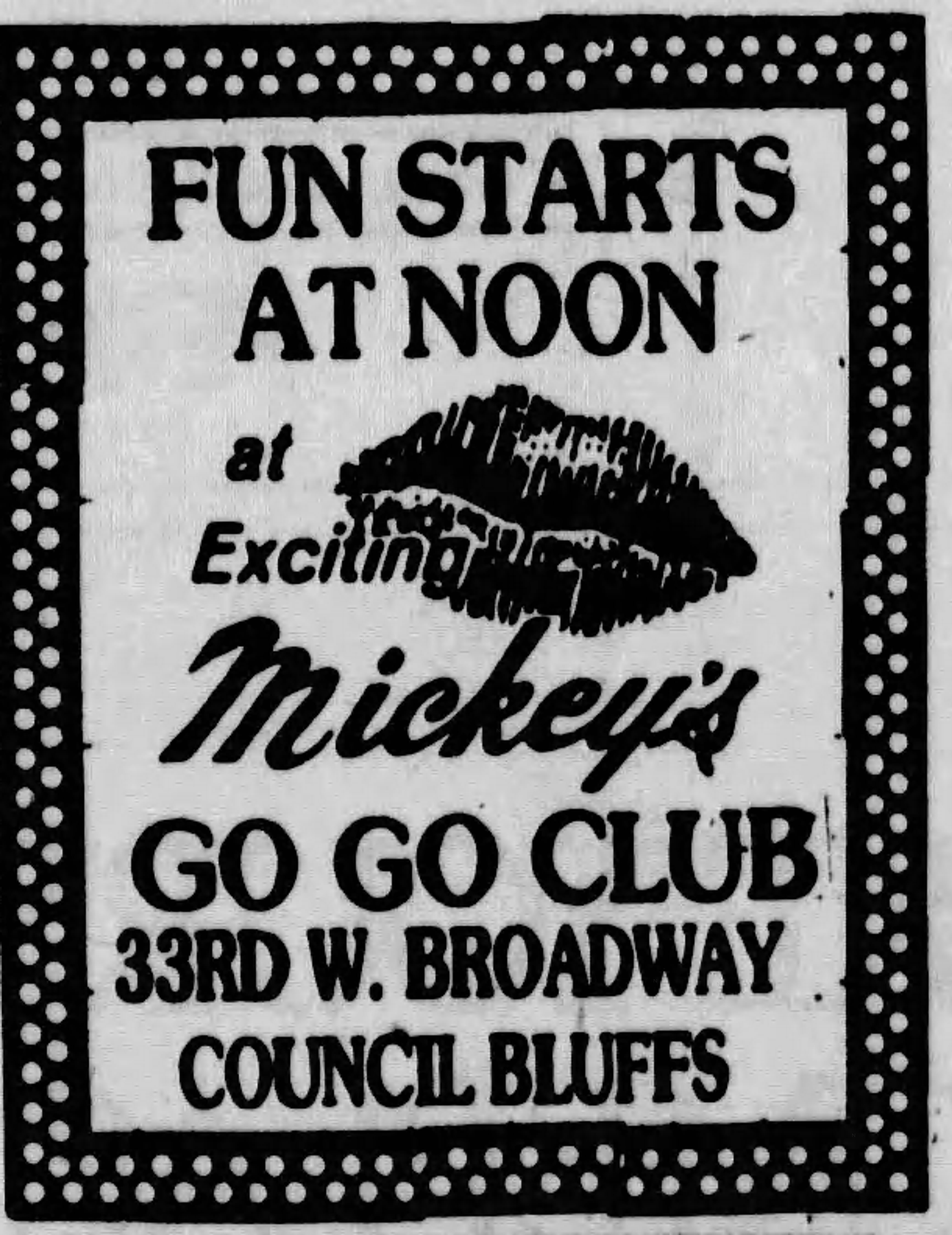
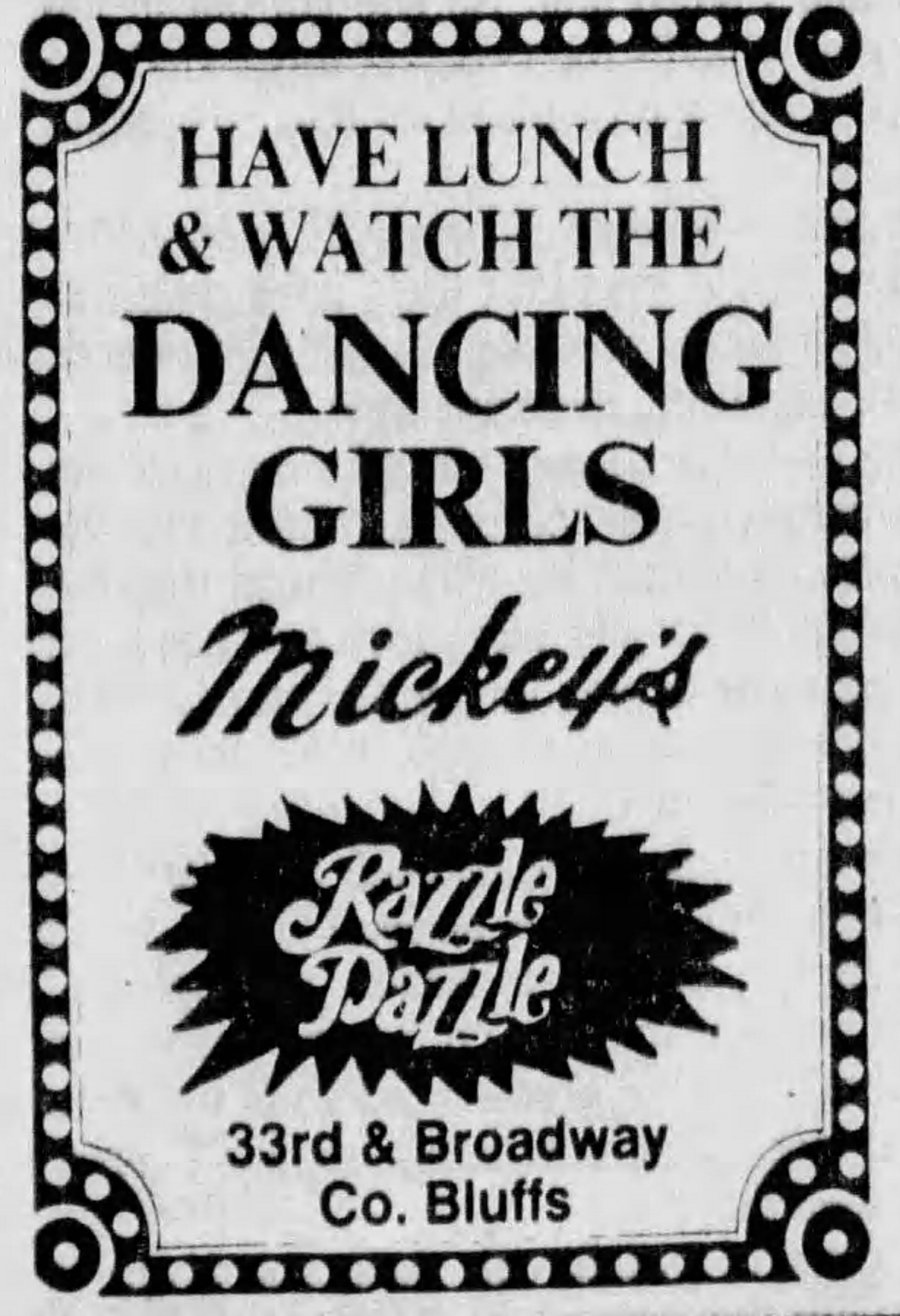

By the 1980s, West Broadway in Council Bluffs had earned a reputation as a corridor of neon lights, cocktail lounges, and adult entertainment. Among its most talked‑about venues was Mickey’s Razzle Dazzle, a sister club to the well‑known Mickey’s in Omaha. Owned by Mickey Sparano, the Razzle Dazzle carried the same brand identity across the river, offering patrons a mix of nightclub atmosphere and adult revue. Its presence underscored how Council Bluffs became a magnet for nightlife that pushed boundaries, often benefiting from Iowa’s slightly different regulatory environment compared to Nebraska.
Blondie’s

Blondie’s was another semi-nude dancing establishment in Council Bluffs.

Bottom’s Up Lounge | 2800 Twin City Dr.

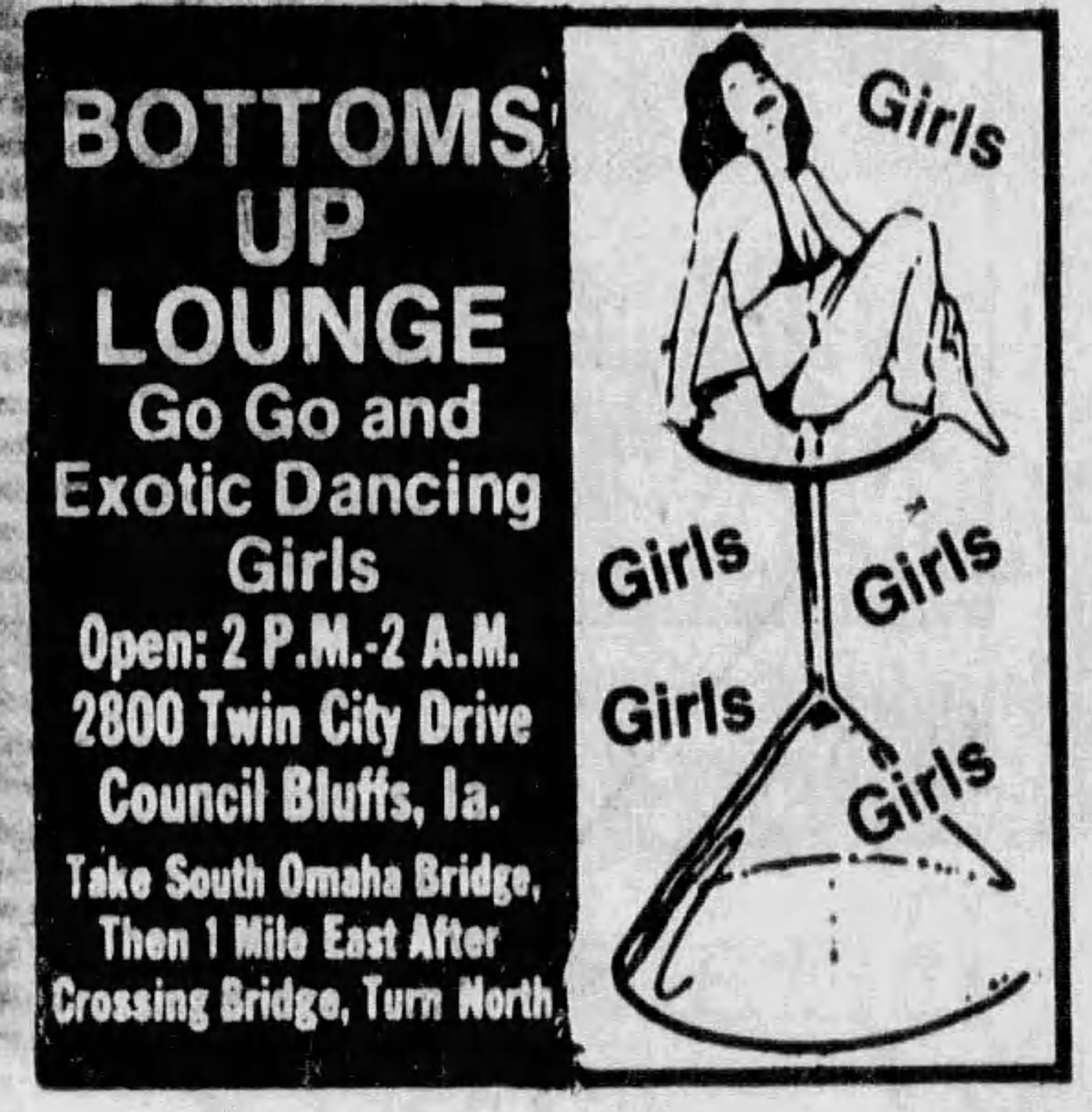
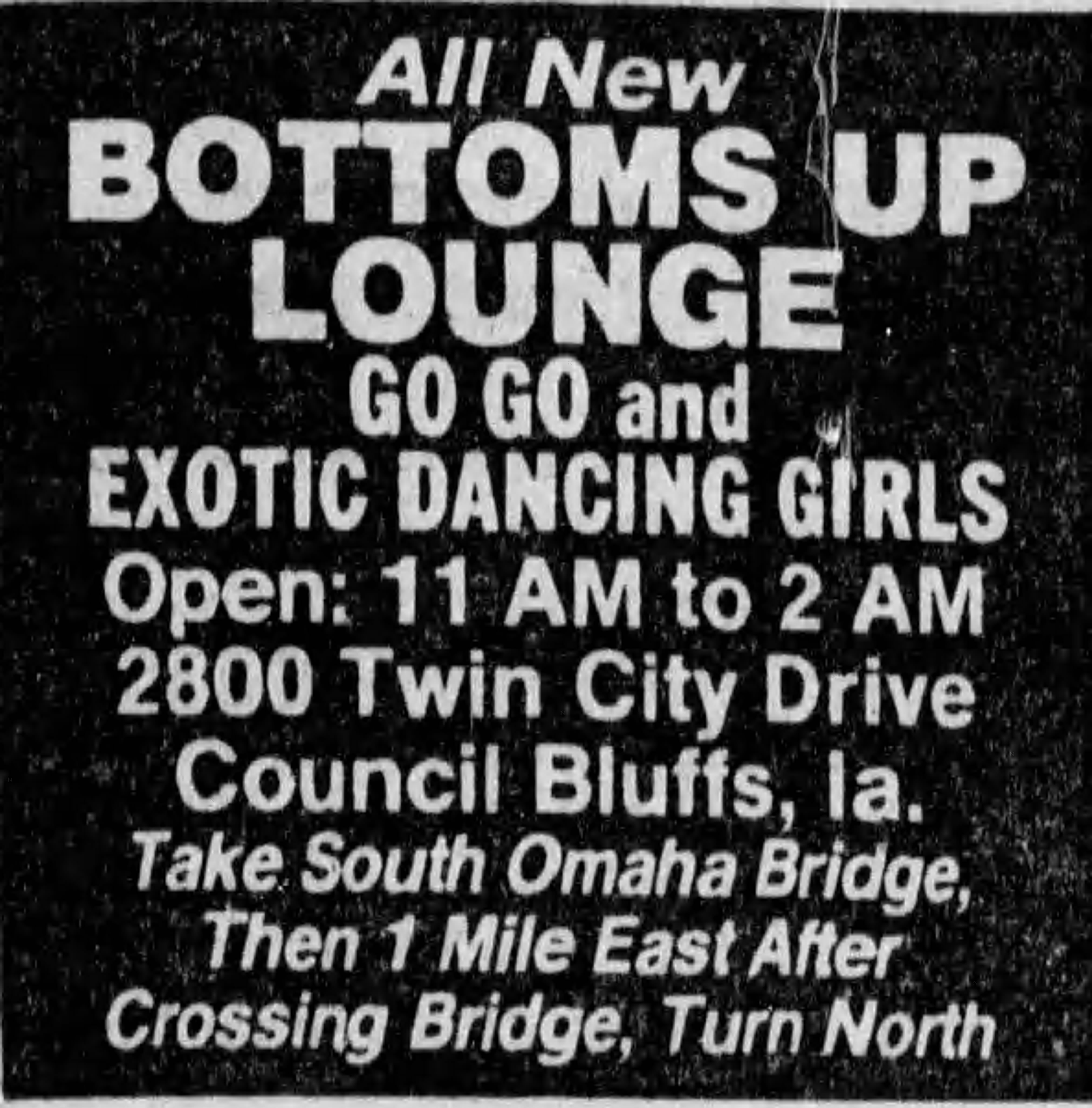
Thrill-A-Friend Service | 1984
In 1984, the Omaha-Council Bluffs Metro was home to four specialty messenger services: Sing-a-Gram, Mad Hatters Messenger Service, Excite-o-Gram, and Thrill-a-Friend. Thrill-a-Friend offered several services:
- Dump-A-Date ($30) – messenger delivers a bouquet of dead flowers and t-shirt that read, “I’ve been dumped”, to receiver
- Pie-in-the-Eye ($30) – messenger throws a pie at the receiver’s face
- Screen-A-Date ($10) – A handwriting expert analyzes your date’s scribbles
- Granny-Gram ($30) – ‘little old lady’ drops by to tend over ill or depressed receiver
- Male-Tutu-Gram ($40) – guy in a ballet tutu dances for receiver
- Female or Male Flashers ($40) – Messenger flashes receiver, revealing underwear with a face pictured on it
- Male exotic dancers ($55)
- Female exotic dancers ($65)
- Custom exotic dancer ($75)
The service was run by Chester Hendrix of Council Bluffs. His phone number was listed as the business’s line. He stated, “dancers strip to bikini-style underwear, revealing ‘no more than you would see on a beach.” Hendrix also booked his own group of male exotic dancers for bars and parties to be rented in the area.
Burlesque in Council Bluffs
From the city’s earliest dance halls in the 1860s to the neon‑lit lounges of the 1980s, burlesque in Council Bluffs has mirrored the community’s shifting values, anxieties, and desires. Ordinances, contests, theaters, and clubs all reveal how performance was both celebrated and contested, a site of joy and spectacle as well as regulation and resistance. What emerges across more than a century is a story of resilience: performers and venues continually reinvented themselves, adapting to new laws, cultural tides, and audience expectations. Burlesque in Council Bluffs was never static — it was a living tradition, shaped by the city’s unique position at the crossroads of the Midwest.
Revisiting this history today reminds us that burlesque has always been more than entertainment; it is a reflection of community, identity, and the enduring power of performance to challenge boundaries and keep the spotlight burning.
Sources
Websites:
- Strand Theatre in Council Bluffs, IA – Cinema Treasures
- Our History | Council Bluffs, IA – Official Website
- IAGenWeb – Pottawattamie Co, Iowa – History: Council Bluffs Town
- History of Pottawattamie County, Iowa. Containing a history from the earliest settlement to the present time … biographical sketches; portraits of some of the early settlers, prominent men, etc. .. : Keatley, John H : Free Download, Borrow, and Streaming : Internet Archive
- HSPC Winter 20152016-1.pdf
- Local History | Council Bluffs Public Library
Newspapers:
- Omaha World Herald. Ads from Bittersweet Lounge. 1975-1979
- Omaha World Herald. “2 Bars to Appeal Nude Dance Ban.” Council Bluffs. Page 14. February 18, 1978
- Omaha World Herald. “Howard: I’m Innocent of Indeceny Charge.” October 16, 1978
- Omaha World Herald. “Bittersweet Lounge Denied Reopening.” June 27, 1985
- Omaha World Herald. Ad for Blonde’s Go-go Club. April 27, 1984
- Omaha World Herald. Wanted at for Blondie’s. November 18, 1985
- Omaha World Herald. Ad for Bottoms Up Lounge. August 30, 1985
- Omaha World Herald. Ad for Bottoms Up Lounge. October 9, 1987
- Omaha World Herald. Ad for Bottoms Up Lounge. June 8, 1985
- The Daily Times. Ad for Ted Lewis. February 26, 1936
- The Daily Times. “Musical Maestro Here Friday.” February 26, 1936
- The Daily Times. “With Ted Lewis.” Page 8. February 27, 1936
- Morning World Herald. Omaha, NE. Ad for Bathing Beauty Contest. August 19, 1951
- Beatrice Daily Sun. Crest Theater Ad. Page 2. May 24, 1957
- Omaha World Herald. Ad for Crest Theater. February 11, 1977
- Omaha World Herald. Ad for Crest Theater. December 12, 1972
- Omaha World Herald. Ad for Crest Theater. January 23, 1973
- The Daily Nonpareil. “Dance Ordinance Up for Passage.” Page 8. March 24, 1925
- The Daily Times. Ad for Dancing Coliseum. Page 8. September 24, 1932
- Evening World Herald. “Legion in Omaha: It Was Not Us.” December 14, 1957
- Omaha World Herald. Ad for Lusty Lady Lounge. August 31, 1976
- Omaha World Herald. Ad for Mickey’s Razzle Dazzle Club. August 30, 1985
- Omaha World Herald. Ad for Mickey’s Razzle Dazzle Club. October 19, 1987
- Omaha World Herald. Ad for Mickey’s Razzle Dazzle Club. August 19, 1986
- The Daily Times. “Kids ‘Take Over’ for Their Day at Fair; Attendance at Opening Beats Number in ’48.” Page 1. August 17, 1949
- The Daily Nonpareil. “Amusements.” Page 3. May 25, 1904
- The Daily Nonpareil. “Big Winter Circus Was Great Success.” Page 10. March 11, 1921
- The Daily Nonpareil. “At the Theaters – At the Roper.” Page 15. September 22, 1912
- The Daily Nonpareil. “Roper Theater” ad. March 12, 1918
- Omaha World Herald. “50 Ways to Leave Your Lover Red-Faced.” Steve Millburg. February 13, 1984
- The Daily Times. Ad for Tri-City Theatrical Booking Exchange. Page 5. April 6, 1945
- Council Bluffs Weekly Bugle. “The Nightingales.” Page 3. May 8, 1861
- The Daily Nonpareil. “A Rare Treat.” Page 4. September 8, 1872
- The Daily Nonpareil. “The Chapman Sisters.” Page 4. March 14, 1874
- The Daily Nonpareil. Ad for Dohany’s Opera House. March 17, 1874
- The Daily Nonpareil. Ad for Dohany’s Opera House. June 15, 1876
- The Daily Nonpareil. Ad for Dohany’s Opera House. December 19, 1890
- The Daily Nonpareil. Ad for Dohany’s Opera House. March 18, 1892
- The Daily Nonpareil. Ad for Dohany’s Opera House. March 9, 1893
- The Daily Nonpareil. “Female Burlesque Company.” Page 3. March 9, 1893
- The Daily Times. “Amusements – Soldene’s Burlesque.” Page 4. November 11, 1887
- The Daily Nonpareil. “Flora Belle’s Sensational Burlesque Troupe.” Page 4. September 14, 1872
- The Daily Nonpareil. “The Female Show.” Page 4. December 28, 1878
- The Daily Nonpareil. “The Hyers Sisters Combination.” Page 4. January 26, 1879

Leave a comment