

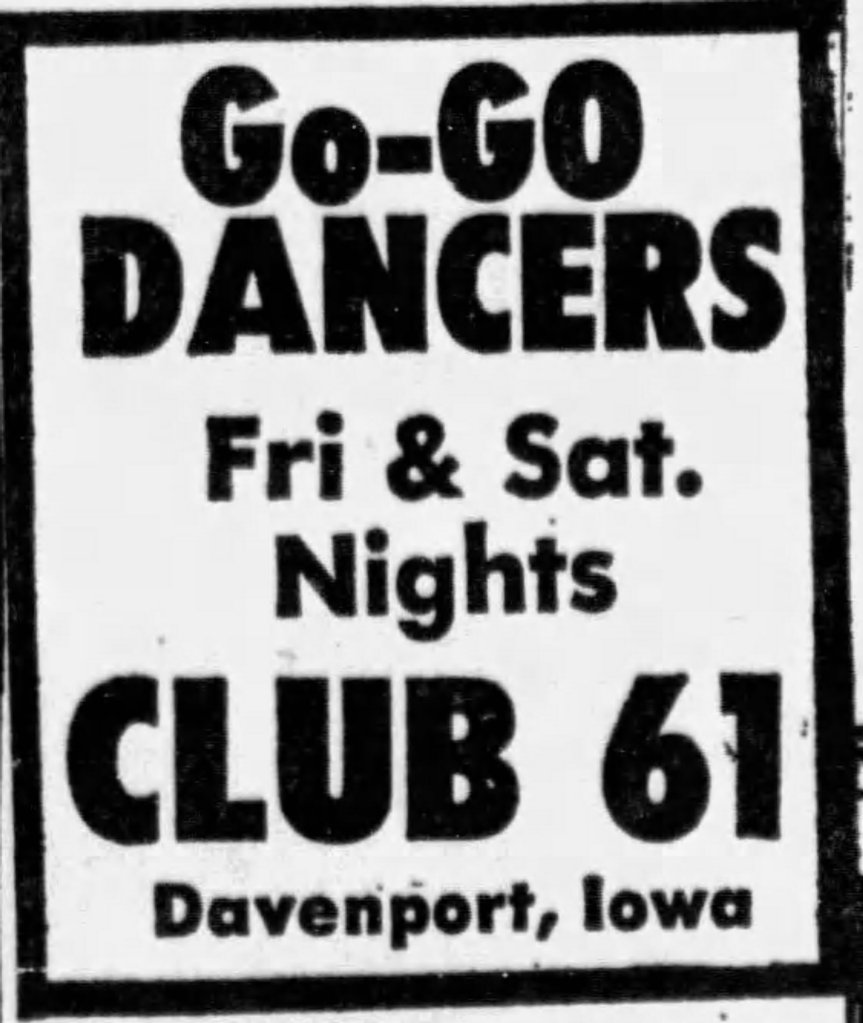
During the 1960s through the 1990s, Davenport stood at the heart of a thriving erotic‑entertainment circuit in the Quad Cities. Its geography, nightlife culture, and steady demand for live performance created consistent work for stripteasers and nude dancers who moved fluidly across nearby city and state lines. While the regional network shaped the flow of venues and performers, this article focuses on Davenport itself—its clubs, its dancers, and its role as a cultural anchor within the larger Quad Cities scene.
1960s-1970s
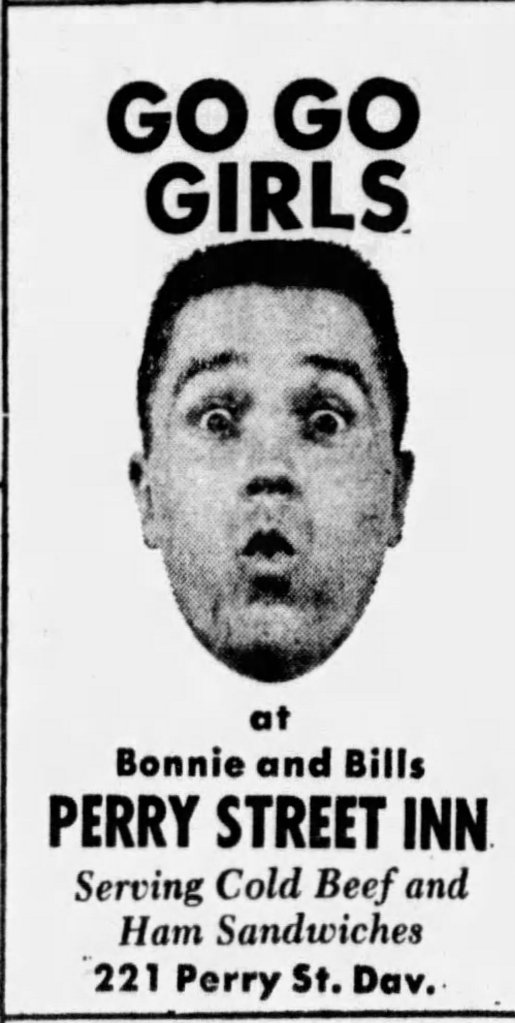
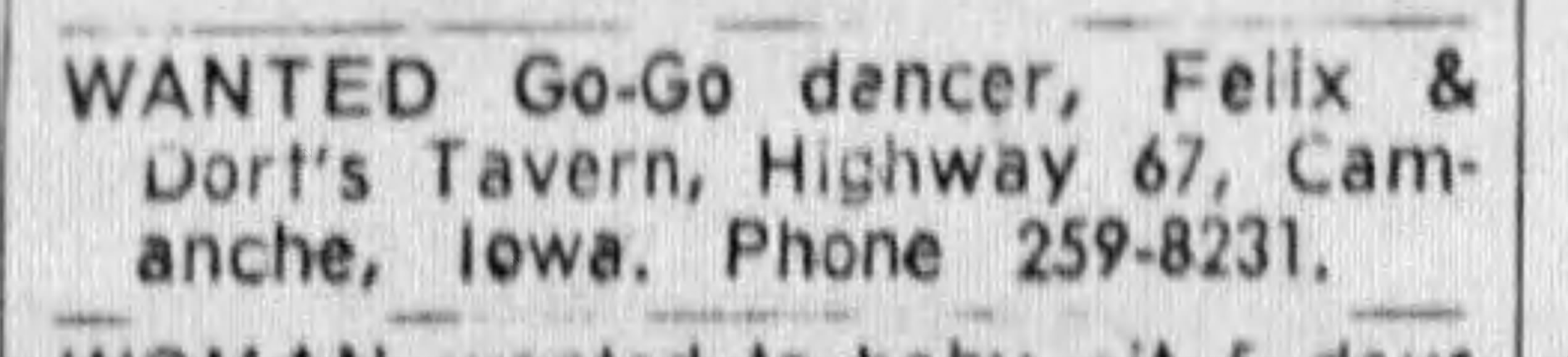
The go-go dancing craze swept through the Midwest in the late 1960s, a trend made unmistakable by the flood of want ads appearing in the Quad City Times between 1960 and 1979.
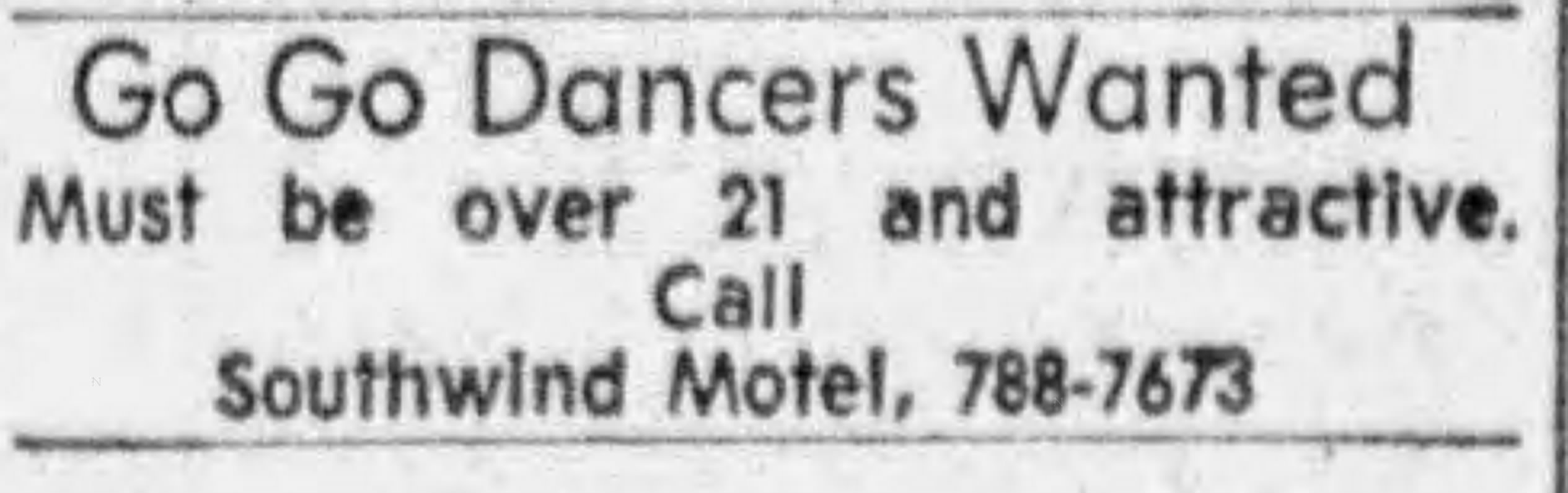

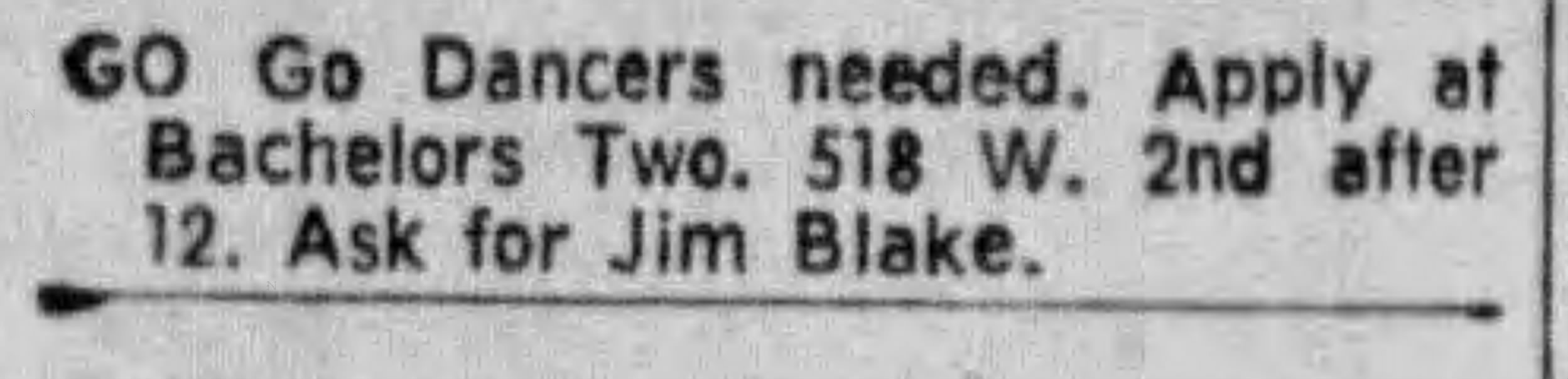
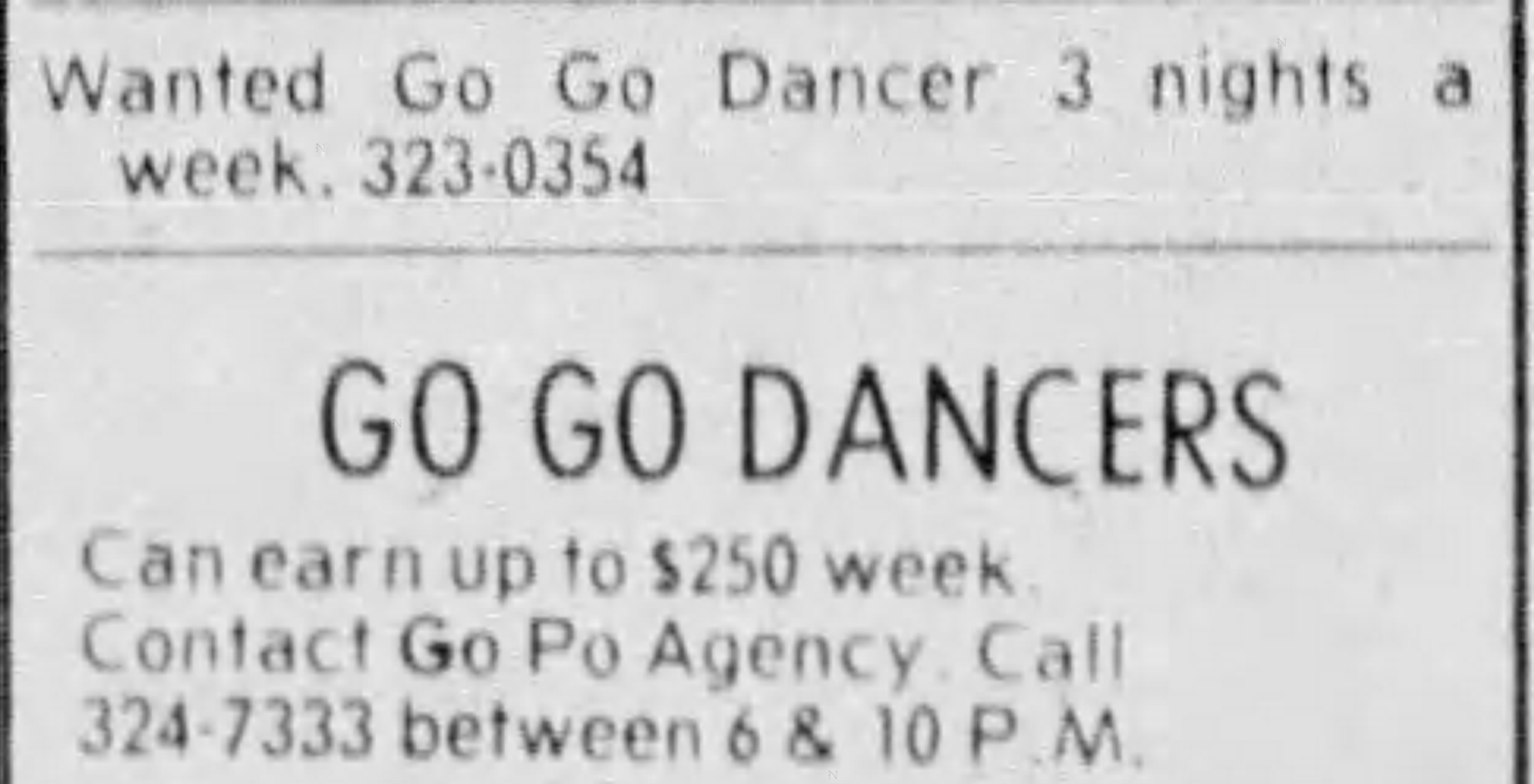
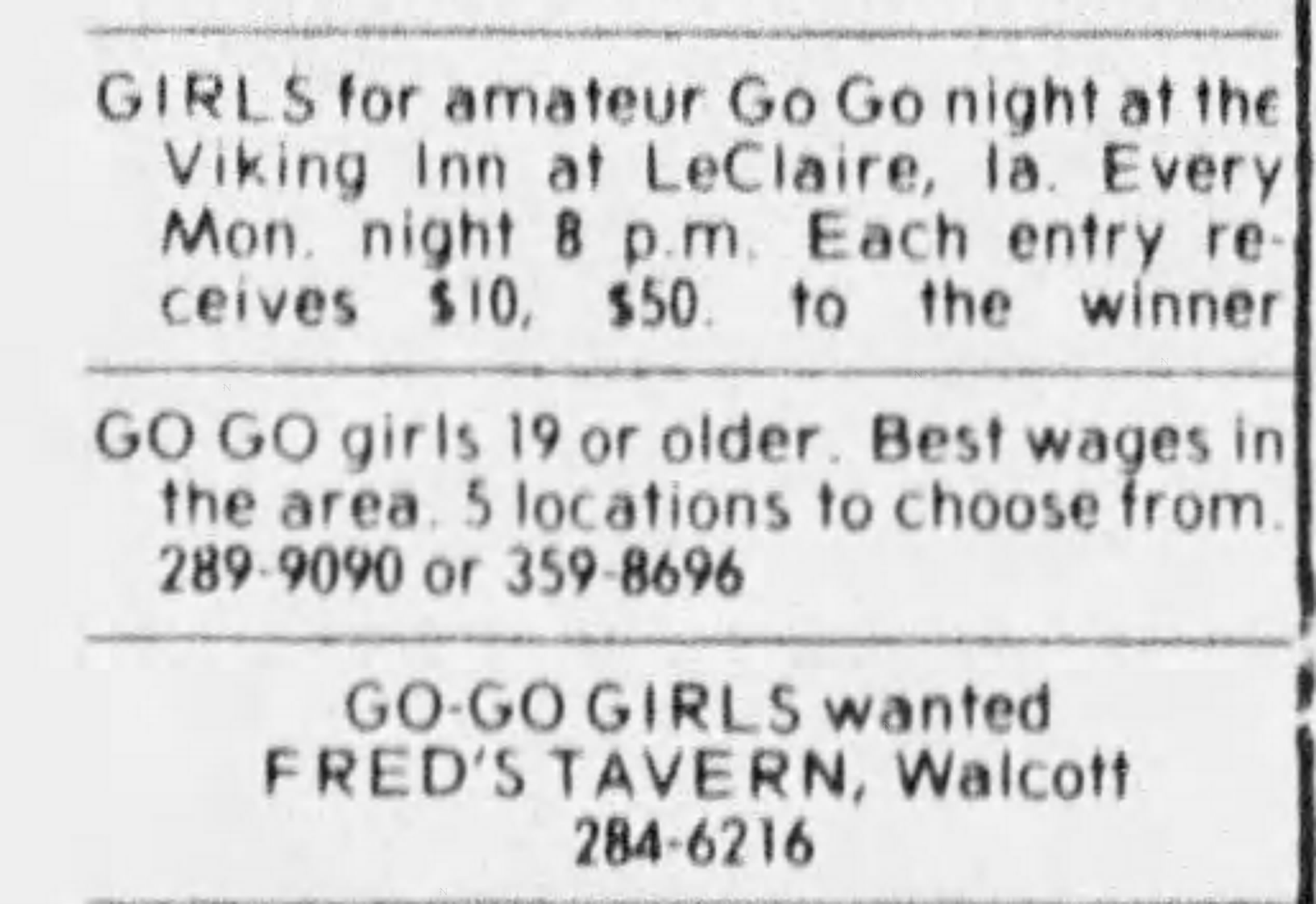
One 1970 listing from the Go Po Agency advertised openings for go-go dancers earning up to $250 a week—equivalent to more than $2,000 today.
A brief list of clubs and lounges listed in the Quad City Times 1960-1979:
- Alibi Tap – 416 W 2nd St
- Bachelors Two – 518 W 2nd St
- Bob’s Pine Rock Inn or Bob’s Bull Pen – 2030 Rockingham Road
- Bonnie and Bill’s Perry Street Inn – 221 Perry St
- Club 61
- Go Po Agency (Exotic Dancer Booking Agency)
- Hotei – 1612 Rockingham Rd
- Jim’s Colonial Inn
- P.J.’s Lounge – 4th & Perry St
- Payton Place – 932 W 6th St
- Pete’s Midwest – 1305 West 3rd St
- Ray and Wanda’s – 410 W 2nd St
- Road South – 1612 Rockingham Rd
- Saddle Club Lounge
- Southwind Motel
- Sugar’s Dancers
- The Lounge
- The Mound – 1029 Mound St
- The Place – 1130 W 3rd St
- Tom’s Double T Tap – 1116 W 3rd St
- Vanishing Point – 1612 Rockingham Rd
- Willow Brook Inn – 1702 W 1st St
Wedding at The Lounge | 1970
Peter Lane and Judy Telford, both 29, tied the knot at a go-go nightclub called the Lounge, a popular night spot in July 1970. They were married on the go-go stage. After the ceremony, go-go girls took to the stage and resume dancing for the evening. Psychedelic lights illuminated the bride and groom’s faces.
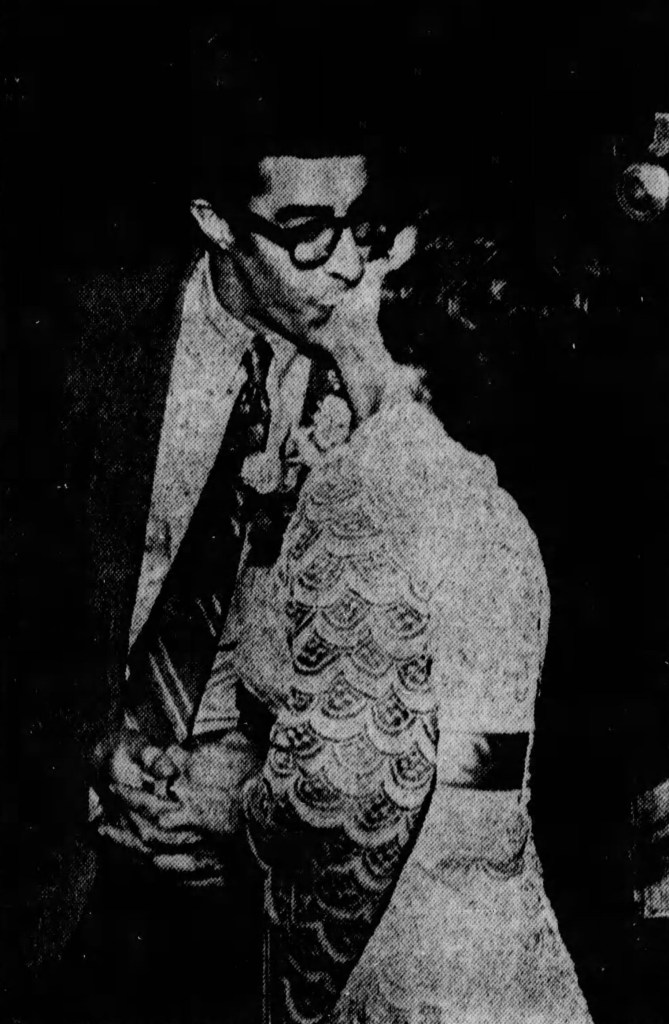
Peter was the owner of the bar, and they decided to make the venue work for their wedding. Judy wore a blue lace mini dress and Peter wore a blue sport coat with dark trousers. The two met a few years before while working in another tavern. The Lounge had just opened 2 months prior to their wedding. It was mentioned in the papers that both had been married before. (Quad City Times. “It’s A Go-Go Wedding.” Jan Grivley. Page 18. July 23, 1970)
Tom’s Double T Tap | 1116 W. 3rd St
Thomas Thompkins, 38 was the operator of Tom’s Double “T” Tap in Davenport. In August 1970 he was arrested and charged with giving immoral exhibition or entertainment. He was released on $1000 bond. The dancer, Alice Marie Ann King, 19, was also arrested for indecent exposure. She was released on $500 bond. Police stated they had sent two undercover officers into the tavern to view the entertainment after several complaints were received. (Quad City Times. “Tap Operator, Dancer Held.” Page 27. August 27, 1970)
River City Follies Kickoff Party | 1967
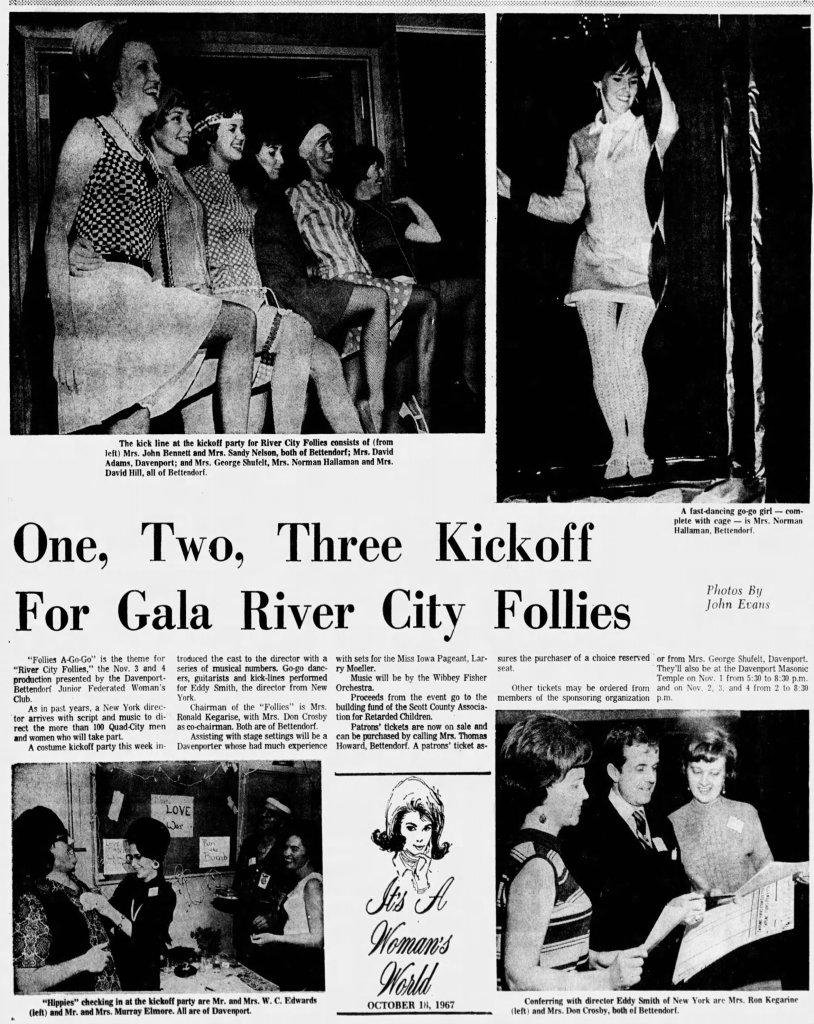
The Davenport-Bettendorf Junior Federated Woman’s Club launched a musical production, Follies A-Go-Go, with a lively costume kickoff party in October 1967. Directed by Eddy Smith of New York, the show features over 100 local performers from the Quad Cities. The kickoff included go-go dancers (complete with cage), guitarists, and kick-lines, blending 1960s pop culture with community theater flair. The production, scheduled for November 3 and 4, benefitted the Scott County Association for Retarded Children’s building fund. Tickets were available through club members and at the Davenport Masonic Temple.
Pete’s Midwest Tavern | 1305 West 3rd St.
Pete’s Midwest was one of the key Davenport clubs responsible for bringing a steady stream of go-go dancers into the Quad Cities nightlife circuit. Throughout the late 1960s and early 1970s, the venue became known for its high-energy atmosphere and its ability to attract dancers from across the Midwest, many of whom traveled specifically for the reliable work and lively crowds. Pete’s Midwest helped cement Davenport’s reputation as a regional hub for go-go entertainment, offering a stage where dancers could hone their craft and where audiences could experience the era’s shifting nightlife trends up close.
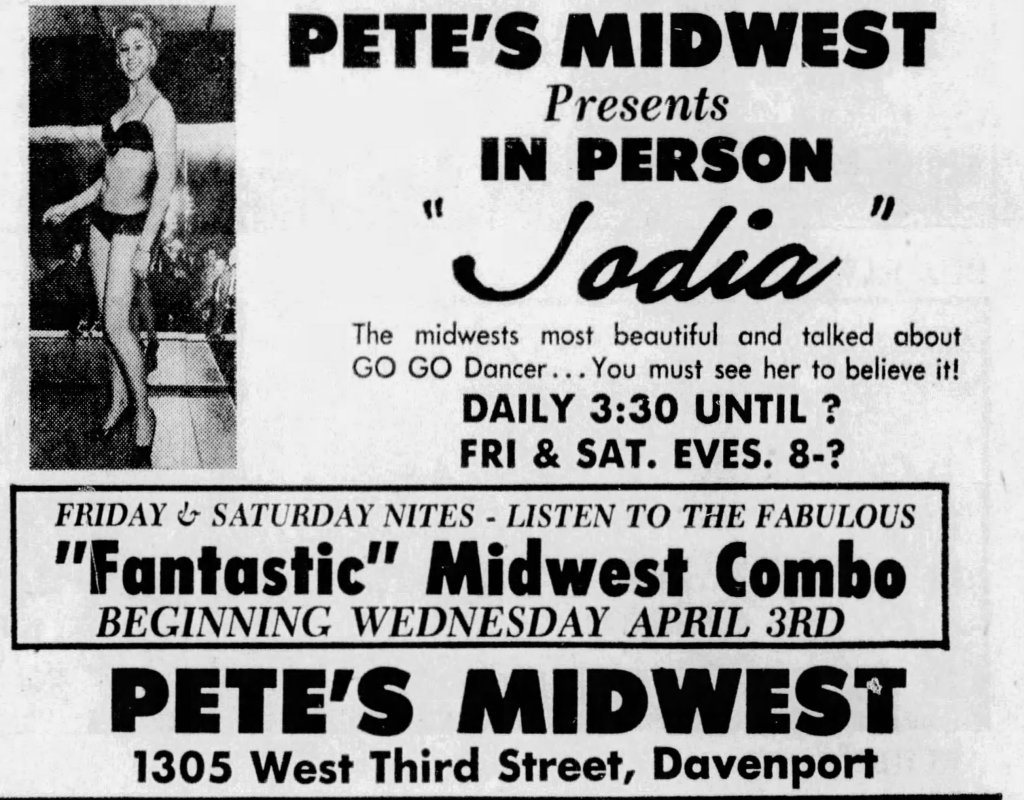
An inconclusive list of performers who graced the stage at Pete’s Midwest:
- “Fabulous Donna”
- Miss Denmark – The Shapely Blond Beauty
- “Buttons”
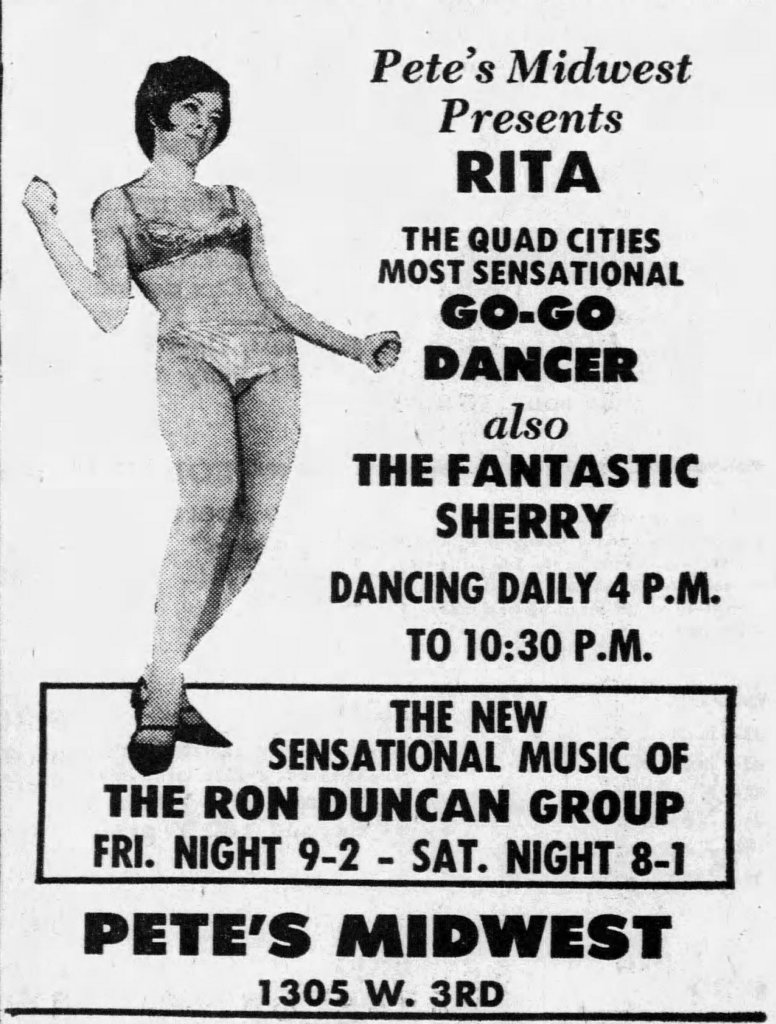
- Rita – The Quad Cities Most Sensational Go-Go Dancer
- Sherry – The Fantastic
- Jodia – The Midwest’s most beautiful and talked about Go Go dancer
- Linda & Betty – The Two Fastest Moving, most Exciting Dancers in the Quad City Area
- Candy
- Little Christie
- Rosie
- Suzie
- Joann
- Lacy the Mermaid
- Brandy

Pete’s Midwest was also called a Tavern and even a Bar & Grill for serving tacos and charcoal burgers alongside their exotic dancers. Dancing was continuous daily from 4pm to 11pm and until 2am on Fridays and Saturdays.
Betty Jane Allsup AKA Simone
Davenport’s burlesque history is full of performers who slipped between expectation and reality, women who could command a stage with a wink, a shimmy, or a well‑timed joke. In Jim Arpy’s Off The Record column, Simone emerges as one of those figures—a blonde, endlessly undulating strip‑tease artist whose physical flexibility was matched only by her ability to navigate the public’s assumptions.
Arpy paints her as a study in contrasts. She’s double‑jointed, yes, but also sharp, self‑possessed, and surprisingly matter‑of‑fact about her work. She talks about her act not as a scandalous novelty but as a craft: the muscle control, the stamina, the hours of practice that go into making each movement look effortless. Her “constant undulation,” as Arpy calls it, wasn’t just a gimmick—it was technique.
Simone mentions her education, her family, and the fact that she didn’t fall into strip‑tease by accident. She chose it. She liked the work. She understood the audience. And she wasn’t shy about saying so.
Simone jokes about the importance of being double‑jointed as if it’s the most natural prerequisite in the world. Simone is more than aware of the audience. She talks about how people watch her—what they expect, what surprises them, and how she plays with that tension. She acknowledges the stigma but shrugs it off with a kind of breezy confidence that feels very “Midwest showgirl”—unbothered, grounded, and fully in control of her narrative.
Arpy describes her movements in a way that borders on hypnotic, emphasizing how her body seemed to ripple rather than simply move. It’s a reminder that burlesque has always been as much about presence as it is about removal. Simone’s story, as captured by Arpy, reinforces what Davenport’s burlesque history has always shown: that the Midwest was never as buttoned‑up as outsiders imagined. (Quad City Times. “Off the Record.” Page 57. March 27, 1966)
Bob’s Pine Rock Inn | 2030 Rockingham Rd
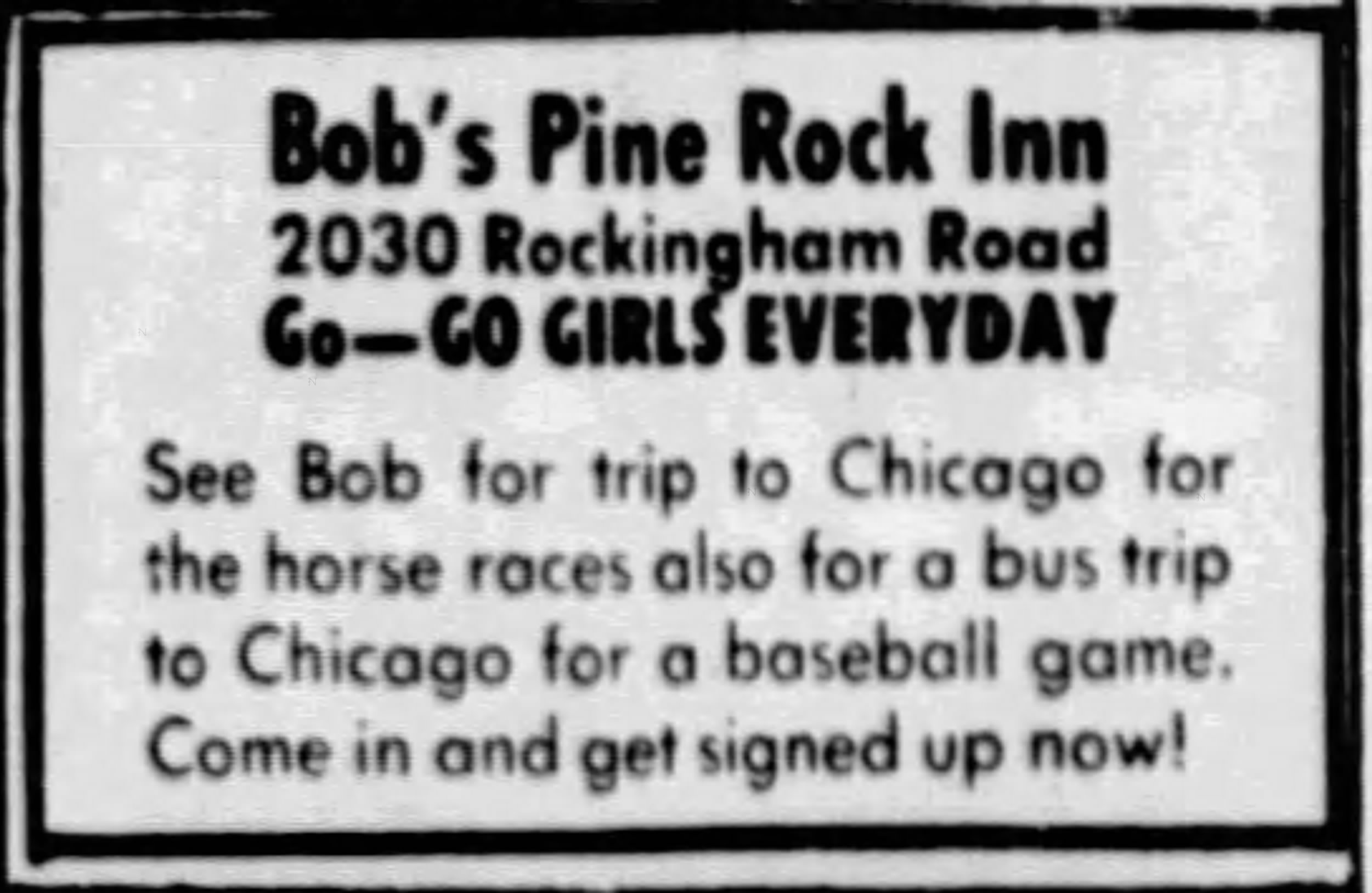
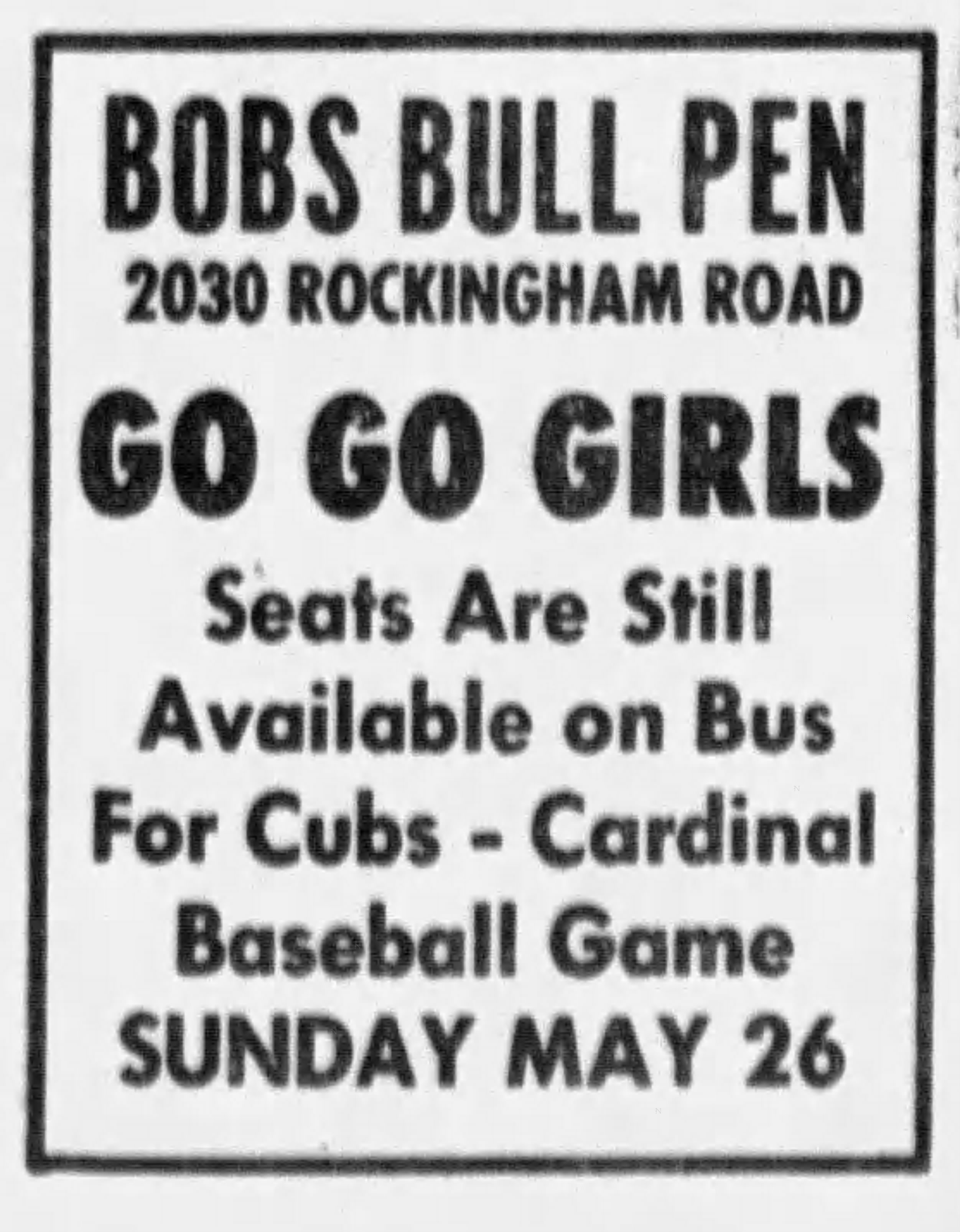
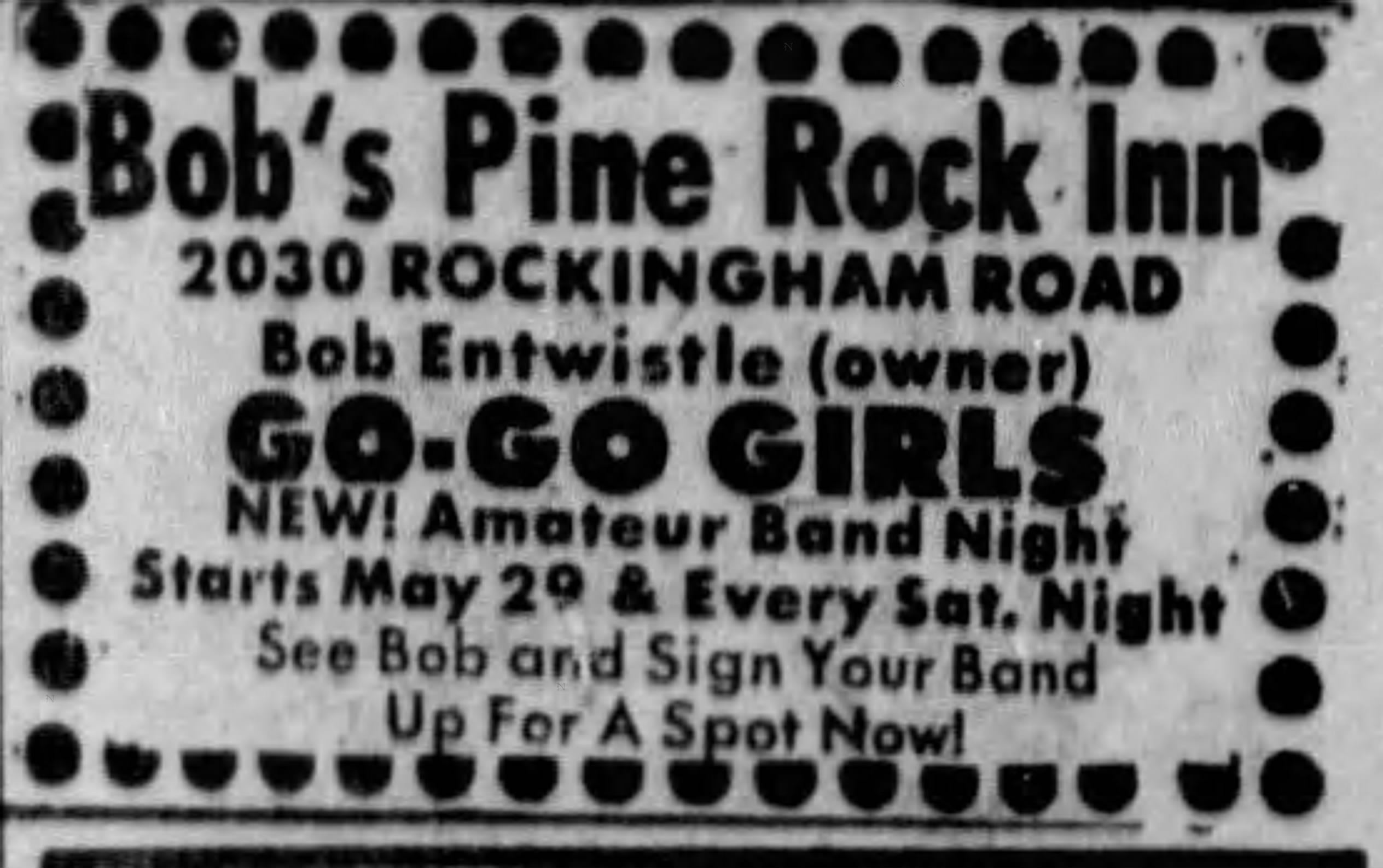
Bob Entwistle’s club, the Bull Pen, carved out its own niche in Davenport’s nightlife by offering a little bit of everything. The venue featured go-go dancers every day, making it a reliable stop for audiences seeking high‑energy entertainment during the height of the go-go craze. But Entwistle didn’t limit the Bull Pen to dancing alone—he cultivated a sense of community around the club. He organized bus trips to Chicago for baseball games, turning the Bull Pen into a social hub as much as a nightlife destination. The club also supported local talent through amateur band nights, giving Quad Cities musicians a place to test their sound and build an audience.
Hotei Lounge | 1612 Rockingham Rd.
Hotei and its sister venue, Hotei 2, both located at 1612 Rockingham Road, were part of the west‑end strip of Davenport bars that embraced the go‑go trend as it swept through the Midwest. Their newspaper ads regularly promoted “Go Go Girls,” signaling a steady rotation of dancers and a nightlife environment built around movement, music, and spectacle.
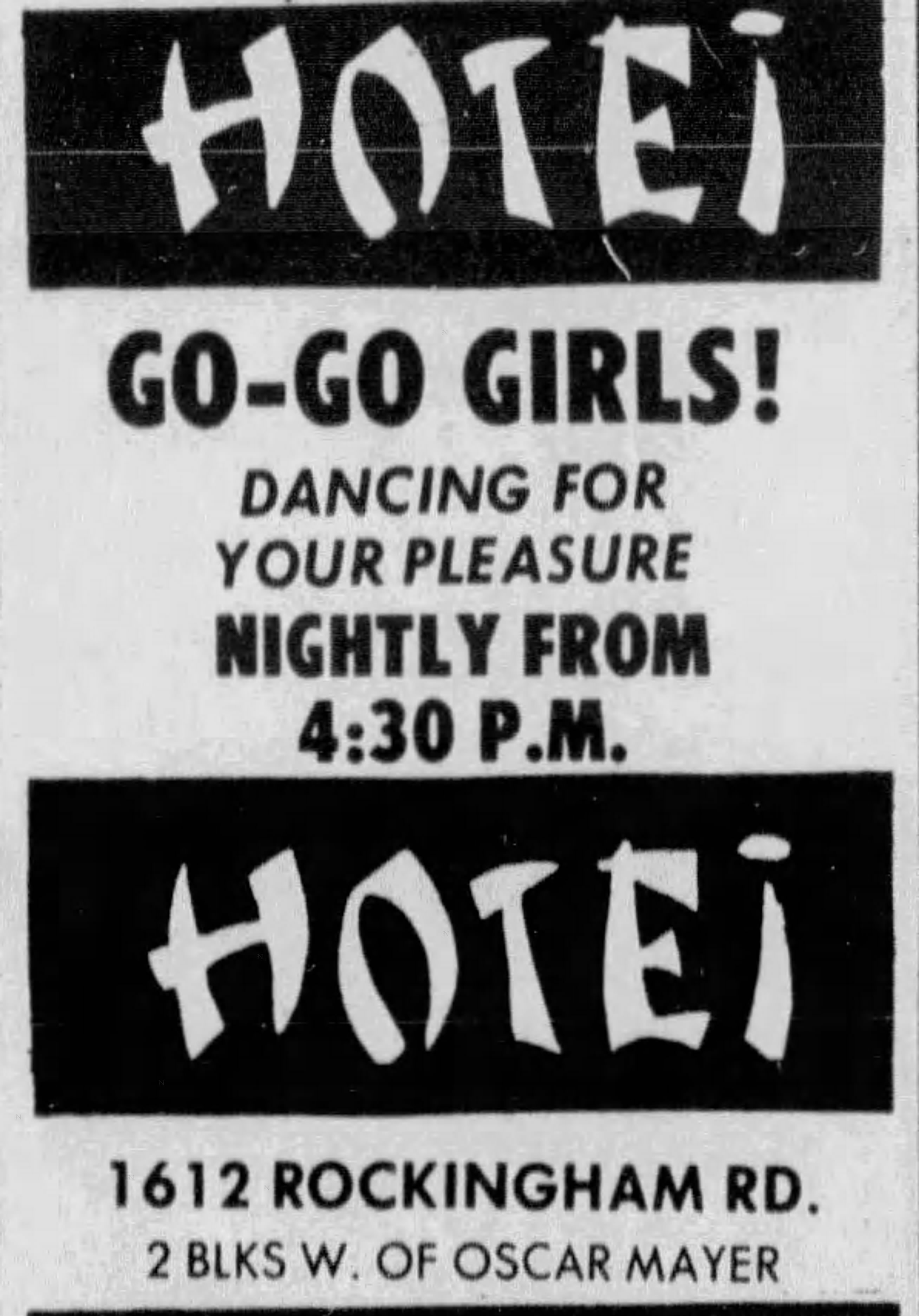
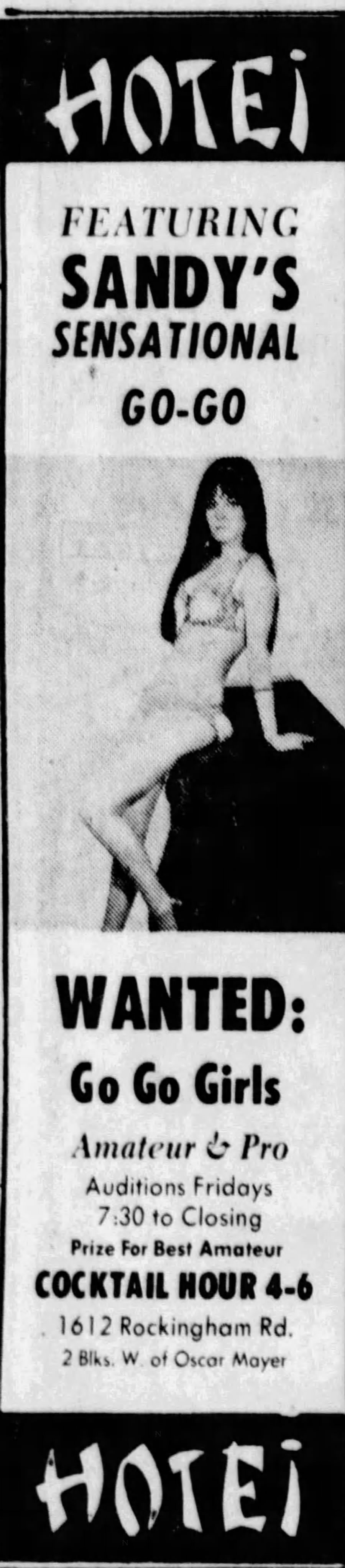
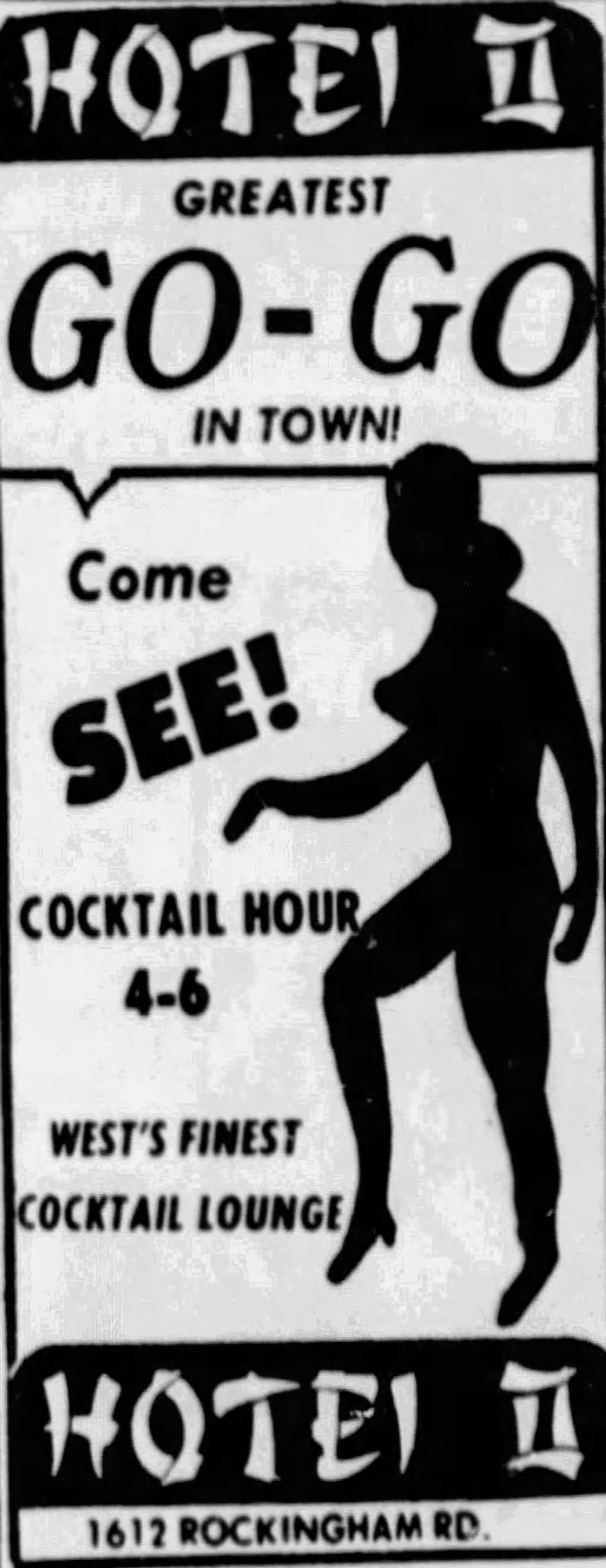
Like many clubs along Rockingham Road in the late 1960s and early 1970s, the Hotei bars catered to working‑class patrons and travelers passing through, offering an accessible, high‑energy alternative to the more polished downtown lounges. While documentation on the venues is sparse, their persistent advertising suggests they were reliable fixtures in Davenport’s erotic entertainment landscape, contributing to the corridor’s reputation as a hub for go‑go dancing and adult nightlife.
P.J.’s Lounge | 4th & Perry St.
P.J.’s Lounge emerged in the late 1970s as one of Davenport’s more eclectic adult entertainment venues, leaning into spectacle as much as sensuality. In 1977, the bar advertised mud wrestling matches alongside appearances by a male exotic dancer known as “Calypso” and a plus‑sized go‑go performer billed as “Marsha Mellow.” This blend of novelty acts, gender-diverse performers, and body‑inclusive casting set P.J.’s apart from the more conventional go‑go bars of the era.
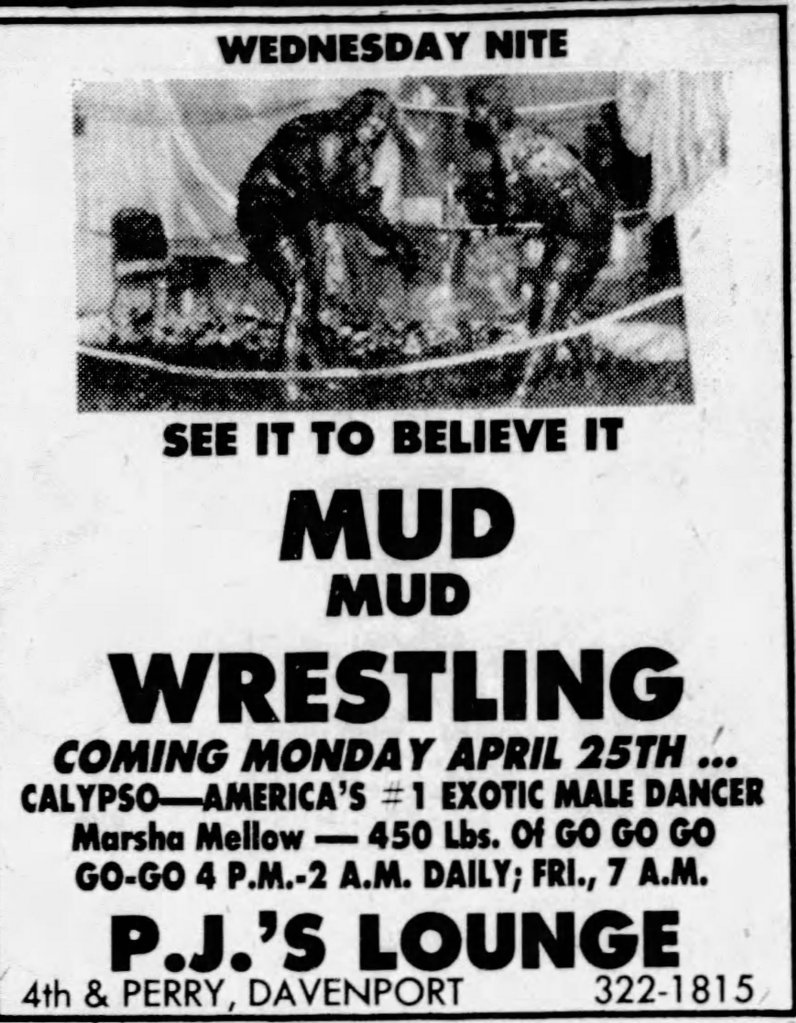
Rather than relying solely on dancers in cages or standard striptease formats, the lounge embraced a carnival‑like approach to adult entertainment, reflecting both the experimental spirit of the 1970s and the Quad Cities’ appetite for offbeat nightlife. P.J.’s stands out as a reminder that Davenport’s erotic entertainment scene wasn’t monolithic — it was inventive, theatrical, and often delightfully unpredictable.
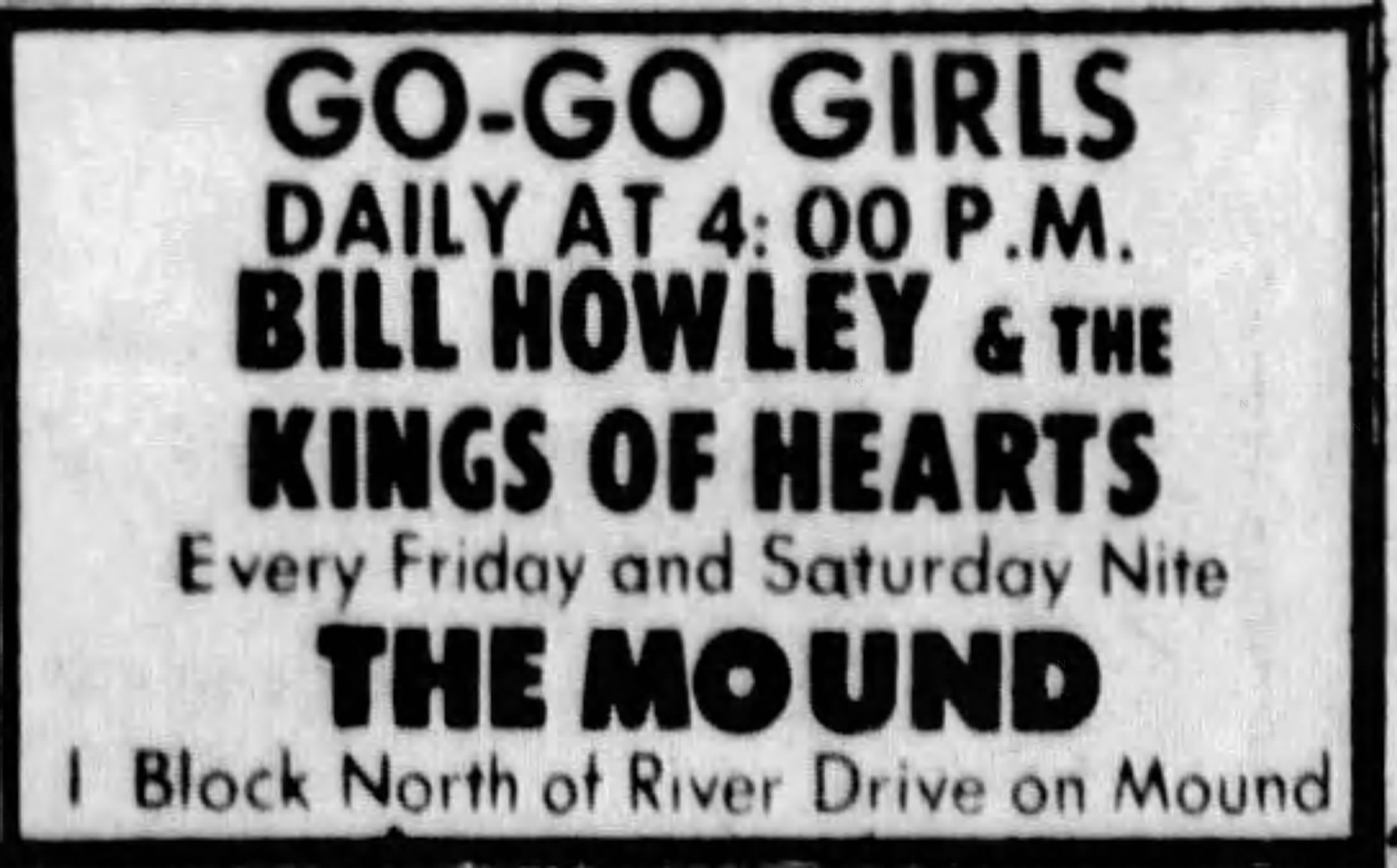
The Mound | 1029 Mound St.
The Mound, managed by Ken Sederstrom, was one of the Quad Cities clubs that leaned into the demand for live entertainment by featuring semi‑nude go‑go dancers on Friday and Saturday mornings.
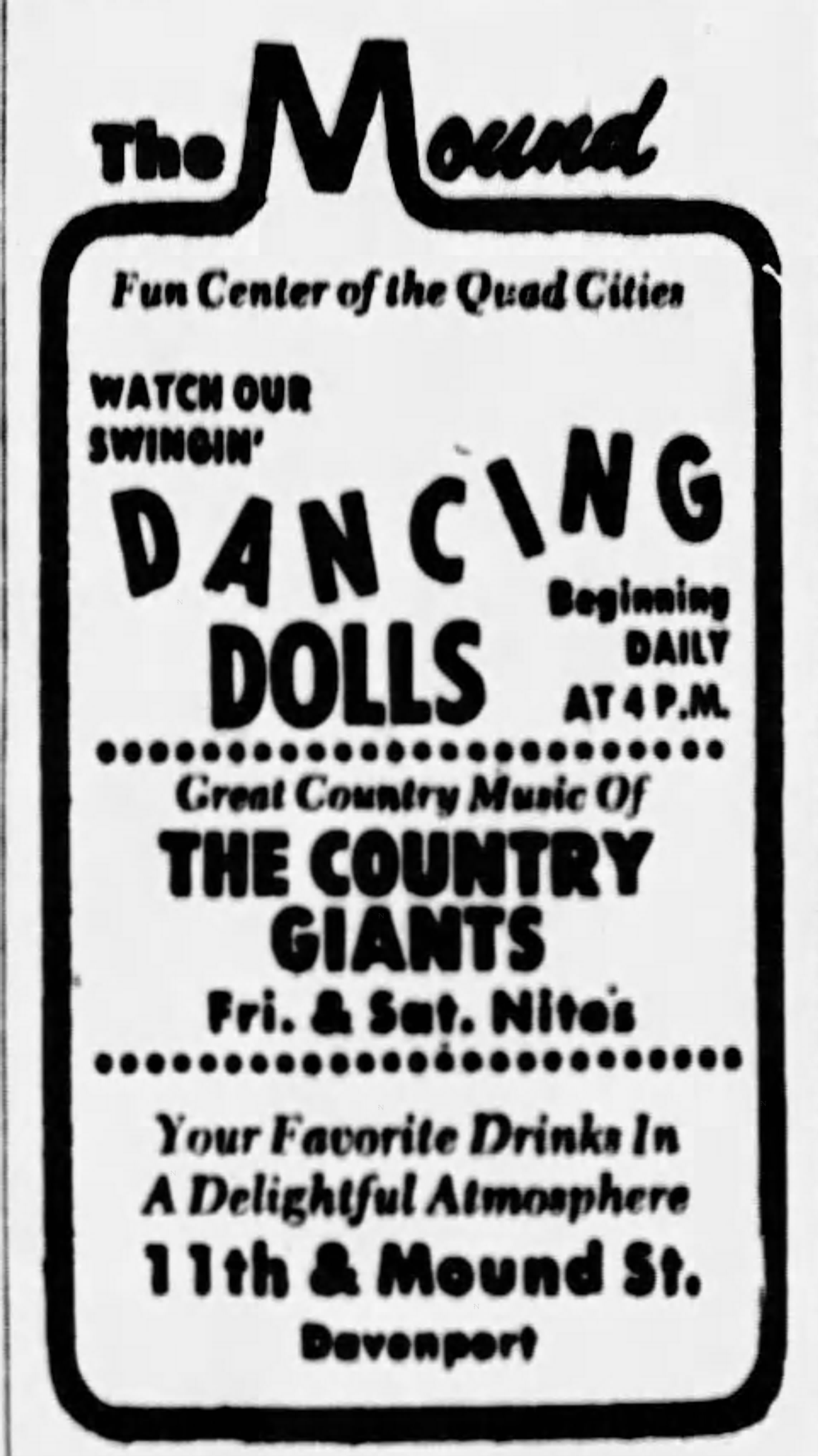
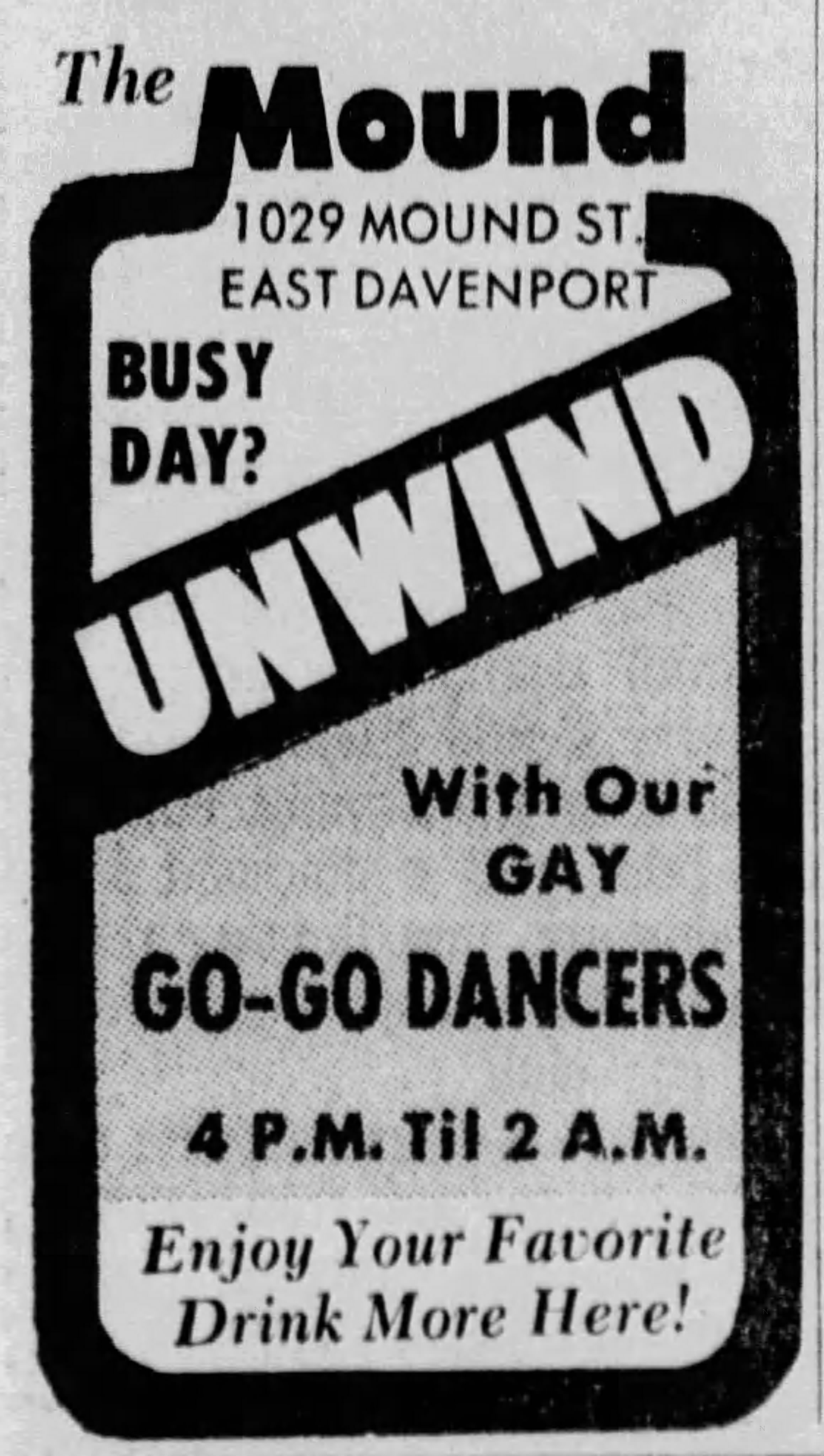
One of these dancers, an Iowan performer known as “Tina,” was interviewed by Brenda Lewis of the Quad‑City Times. Tina reported earning $180 a week for 32 hours of dancing—roughly the equivalent of $1,000 today. Like many dancers on the regional circuit, she moved between multiple clubs offering steady work and jukebox‑driven sets.
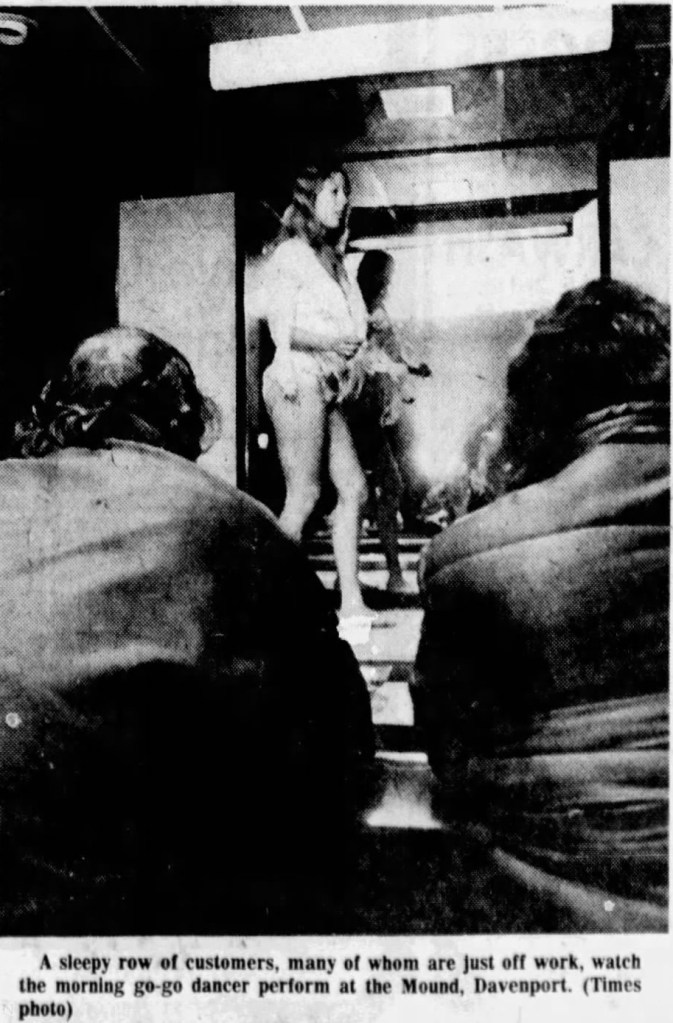
Her shifts followed a strict rhythm: twenty minutes of dancing, followed by twenty minutes of rest, repeated across a typical six‑hour day. Tina’s account offers a rare glimpse into the labor structure behind Davenport’s go‑go scene, revealing both the physical demands and the economic realities of the job.
In 1976, it was standard practice for dancers working at the Mound to sign a contract stipulating that they do not strip completely. 5 dancers were employed at the club during that year.
Rosie Young – The Golden Stripteaser
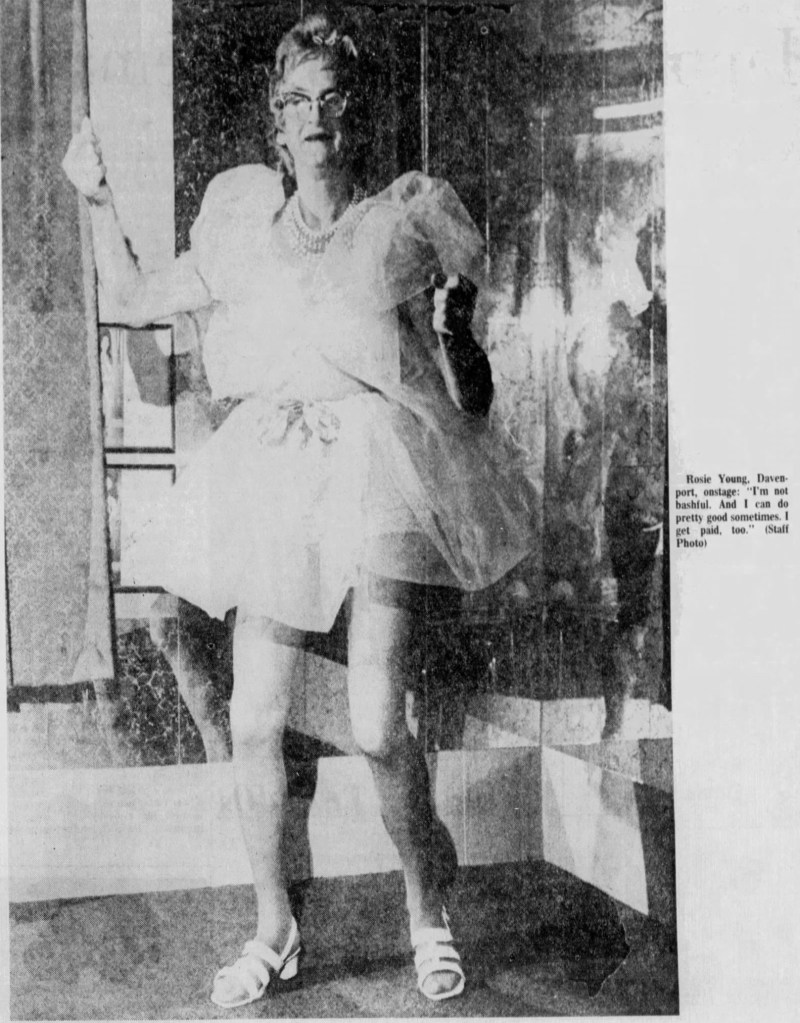
At 73 years old, Rosie Young was one of Davenport’s most unexpected go‑go dancers. By the time the Quad‑City Times interviewed her in 1972, she had already spent four years performing at Jim’s Colonial Inn, dancing from opening time until 2 a.m. and alternating twenty‑minute sets with another dancer. Originally from Wisconsin, Rosie had built a full life beyond the stage: she was the mother of Louellea Westmoreland and Raymond Mayberry and the great‑grandmother of seven. At the time of the interview, she was living in Davenport with her daughter.
“I only dance on stage on Thursdays. But I’m here almost every night. I dance with the young ones and the old ones and the middle-aged ones. And I like to talk to interesting people. It was all I could do to stay home last night. I wanted to get in a cab and come out here. Jim (the owner) knew I liked to dance, so he suggested I dance on stage one night a week. I’m not bashful. And I can do pretty good sometimes. I get paid too…They come from Geneseo, all around to see me. I’ve danced in Walcott and Lone Tree. The other night a guy from Maquoketa was in here and he wants me to dance at his club. Last summer I danced on a float in the Durant Centennial…About a year ago I won $100 in an amateur go-go contest in Coralville. I tore the place apart,” Rosie chuckled. (Quad City Times. “A Go-Go Great Grandmother.” July 28, 1972)
Rosie stated she made her own costumes by reusing old clothing, like a slip from a wedding dress and white tulle from a previous costume. Despite her stamina and devotion to the craft, Rosie spoke candidly about a lingering regret — she had always loved to dance, but she felt she had never quite made it as a “professional.” Her story adds a poignant, deeply human dimension to the region’s go‑go scene, revealing the mix of resilience, longing, and joy that shaped performers’ lives beyond the spotlight.
1980s
Companies of Exotic Dancers
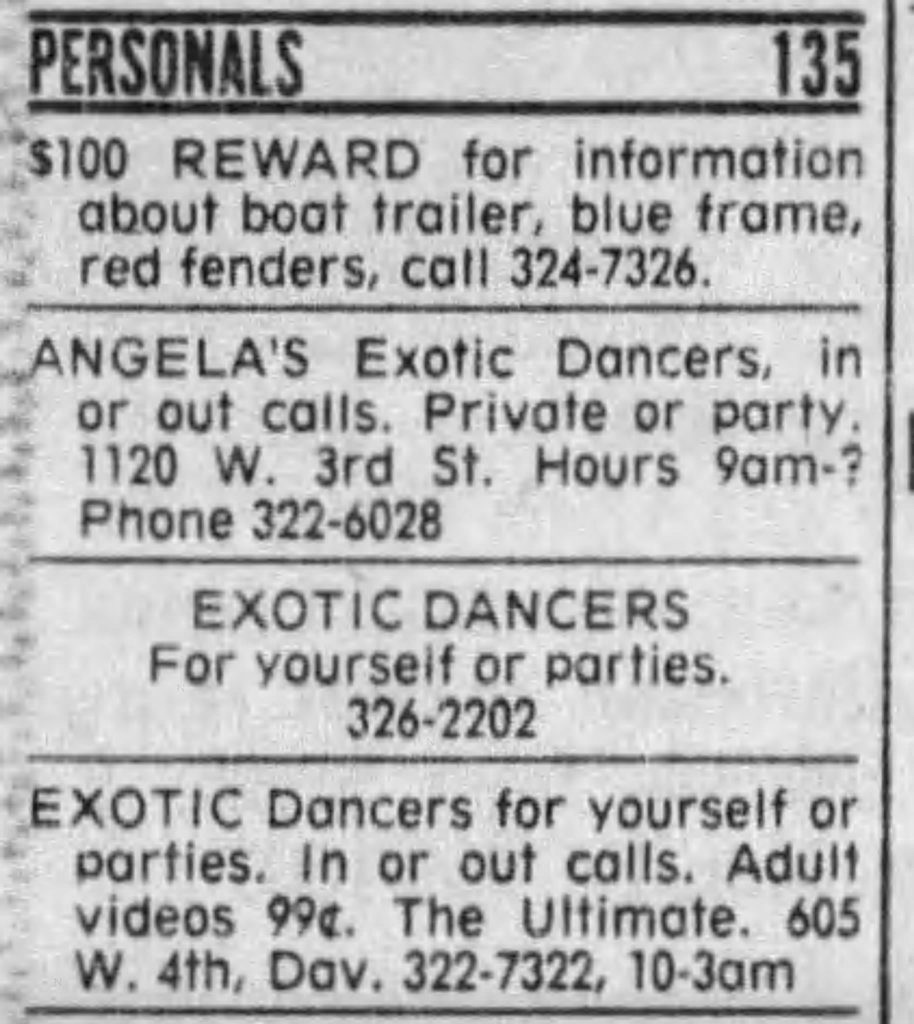
By the 1980s, the Quad Cities’ adult entertainment economy had grown beyond bars and lounges, and the Wanted ads reflected that shift. Alongside listings from clubs seeking topless dancers were advertisements for independent companies offering exotic entertainment on demand. Businesses like Angela’s Exotic Dancers and The Ultimate marketed themselves as full‑service providers, supplying dancers for private parties, personal bookings, and special events. Their presence in the classifieds signals a diversification of the industry: erotic labor was no longer confined to fixed venues but was increasingly mobile, customizable, and entrepreneurial.

These companies operated in the gray space between nightlife culture and personal entertainment, revealing how the region’s demand for adult performance extended well beyond the walls of traditional clubs.
Exotic Dancing Companies listed in Quad City Times 1980-1990:
- Executive Escorts
- KISSES Exotic Dancers
- Dolls Unlimited
- Angela’s Exotic Dancers
- The Ultimate
- Caring Companions (Escorts)
Grindhouse Cinema
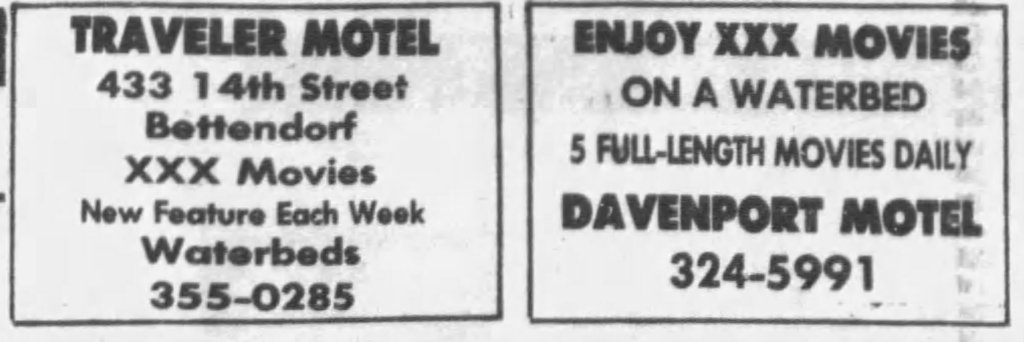
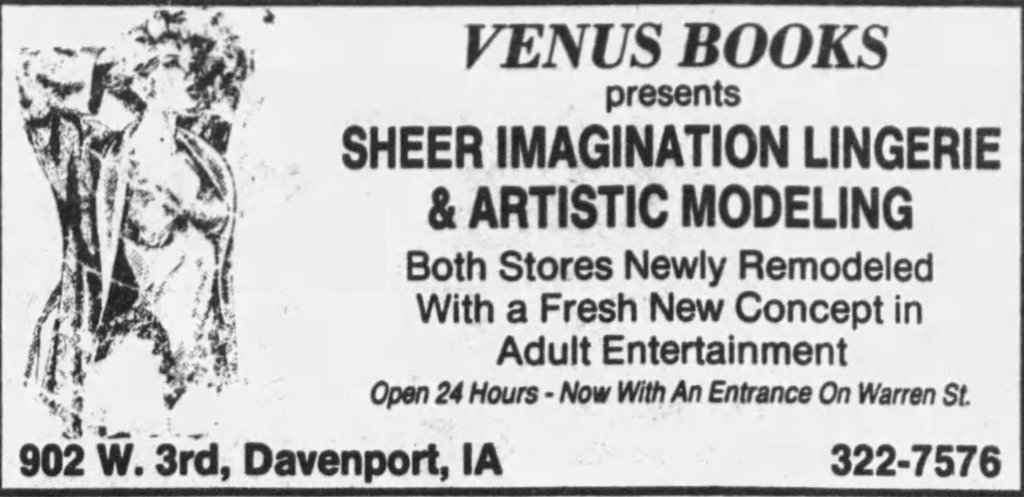
By the 1980s, the adult entertainment landscape of the Quad Cities had expanded beyond go‑go bars and strip clubs to include a network of grindhouse and XXX movie theaters that catered to shifting tastes and late‑night curiosities. These theaters—often tucked into aging commercial corridors or repurposed storefronts—screened low‑budget exploitation films, soft‑core features, and explicit adult movies that circulated through national distribution circuits.

Their presence reflected both the loosening of obscenity laws in the 1970s and the growing appetite for alternative, sometimes transgressive cinema. In Davenport and the surrounding cities, these venues became part of the broader nightlife ecosystem: places where patrons sought anonymity, novelty, or simply a different kind of escape. The grindhouse era marked a distinct chapter in the region’s entertainment history, one shaped by changing technology, evolving moral debates, and the gritty charm of theaters that thrived on the margins.
Coronet Adult Movie Theater | 1415 Harrison St
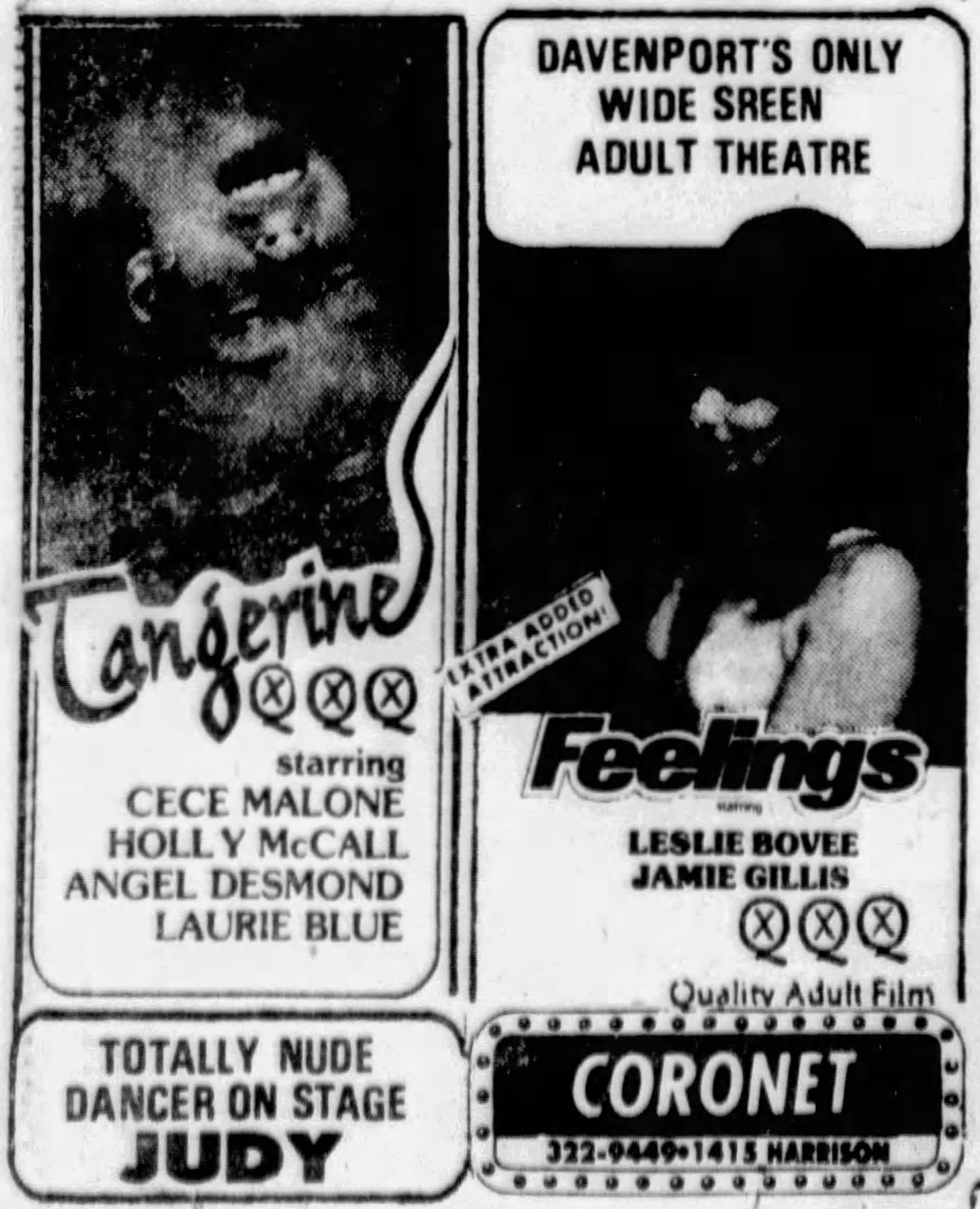
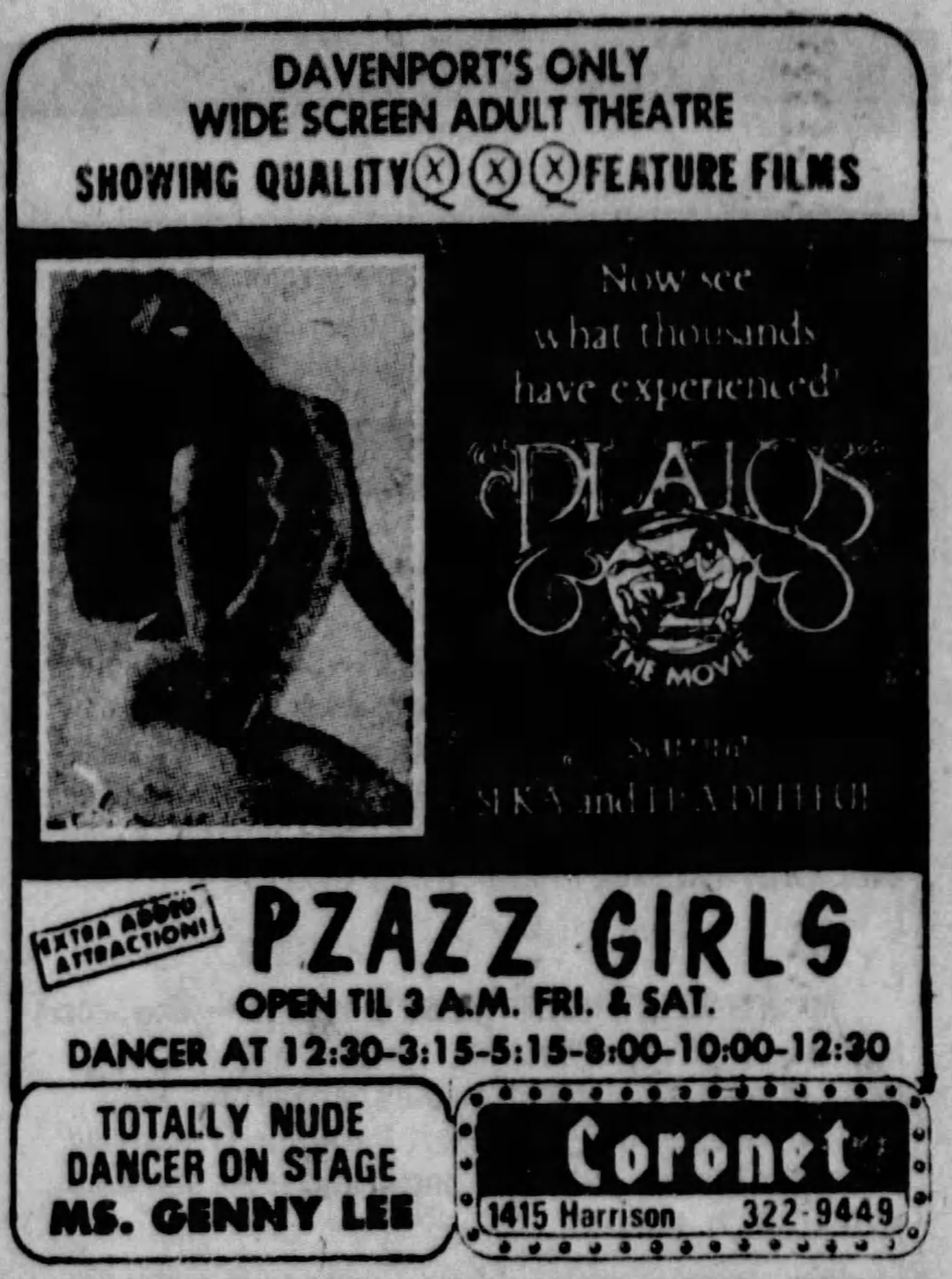
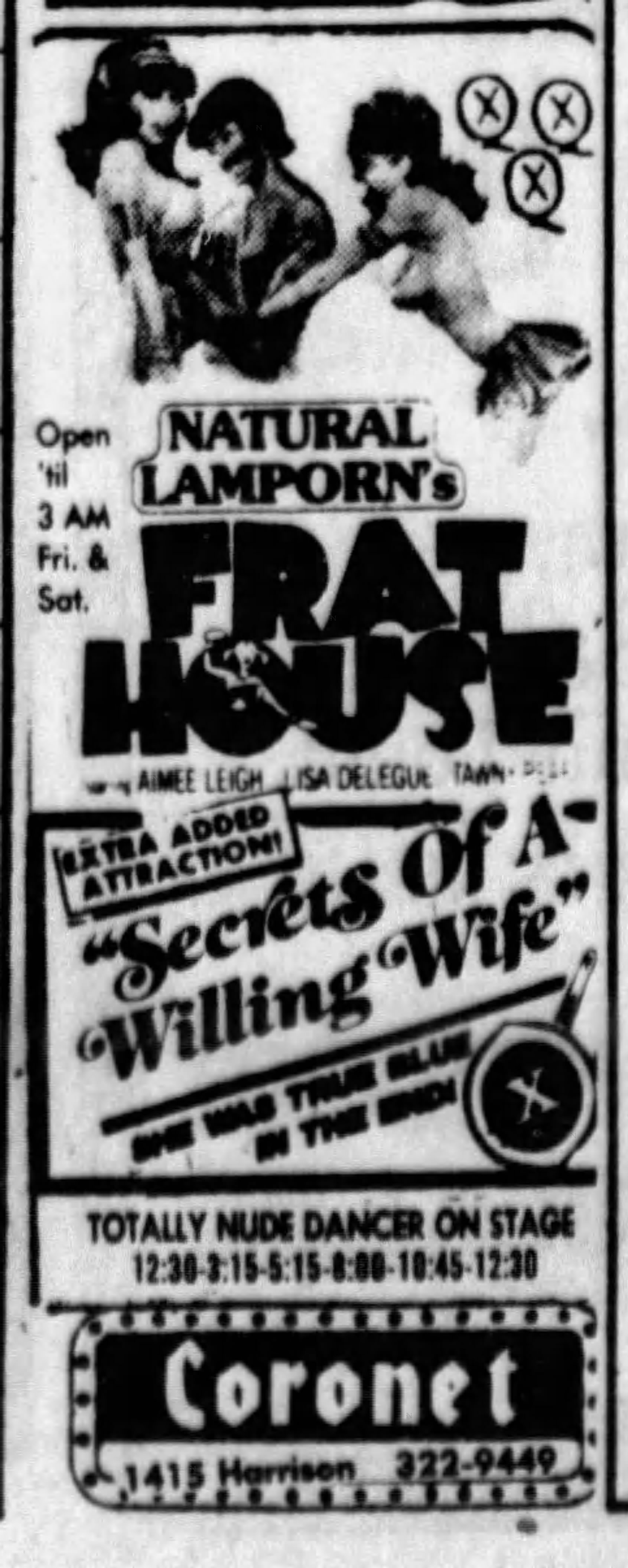
Advertisements from the Quad City Times highlight 1980 when the Cornet Adult Movie Theater opened. It featured XXX Films on the wide screen and live nude dancers on the stage. The Cornet advertised frequently in the Quad City Times. The Theater was open until 3:00am on Fridays and Saturdys. Nude dancers could be found on stage at 12:30pm, 3:15pm, 5:15pm, 8:00pm, 10:45pm, and 12:30am. (October 30, 1980)
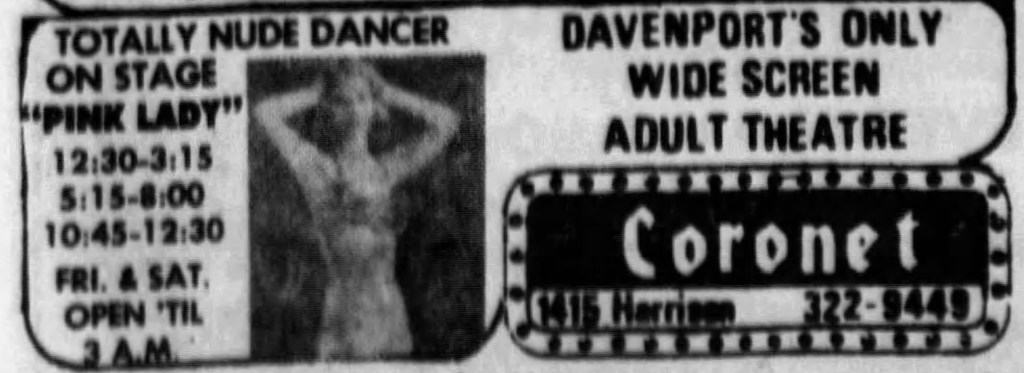
An inconclusive list of nude dancers who graced the stage of the Coronet:
- Judy
- Pzazz Girls
- Ms. Genny Lee
- Pink Lady
- Foxy Lady
- The Fox
- Justine Case
- Felici Valentine

Most newspaper advertisements did not advertise the performer name, simply listing “Totally Nude Dancer on Stage” or simply “Nude Dancer – Mon.-Fri.” Other adult entertainment venues existed in Davenport. By 1984, the Cornet was shutdown closed after the “partnership that owned it had been dissolved.” However, there was a large push from Davenport ministers against pornography in the Quad Cities. A group of about 40 people gathered to support ministers after the cinema closed (even though there was no confirmation as to the citizens’ efforts being responsible for the theater closing.” (Quad City Times. “40 join porn fight.” Diana Penner. Page 1. June 29, 1984)
Patrons of Adult Cinema could also frequent the Mini-Cinema 16 at 401 Brady Street or an Adult Motel or Bookstore in town.
1990s+
By the 1990s, Davenport’s burlesque scene operated within a clearer legal framework. Iowa law allowed stripping as long as no live sex acts occurred and clubs followed the rules tied to their liquor licenses. Within those boundaries, local venues continued to feature dancers, adapting their stages and schedules to stay compliant while keeping the city’s long tradition of erotic entertainment alive.
Angela’s Exotic Dancers | 1120 W. 3rd St
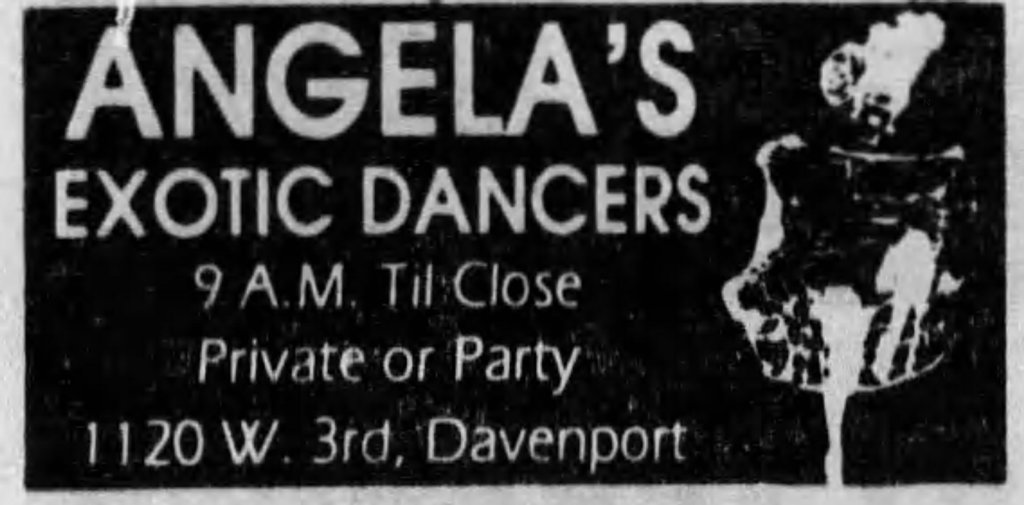
Beginning in 1988, Angela’s Exotic Dancers emerged as one of the Quad Cities’ more visible adult‑entertainment companies, offering private bookings for parties and events. Their ads promoted both male and female exotic dancers, as well as escorts, positioning the business as a mobile alternative to club‑based entertainment. Angela’s remained a steady presence in the classifieds through the early 1990s, disappearing from advertisements after 1992—suggesting the company likely closed or shifted operations as the region’s adult‑entertainment landscape continued to change.
Chorus Line Nightclub
Bob White owned the Chorus Line in Davenport, one of seven Quad Cities clubs featuring exotic dancers during the early 1990s. The venue stood out for offering both male and female performers, with many of the men traveling through as part of touring circuits while a handful of local dancers also took the stage.
“It’s all about fantasy. We all have fantasies, especially about sex, and a club like this allows guys the chance to experience that fantasy. And as long as that fantasy is kept as fantasy-as long as it doesn’t spill over into a guy grabbing a dancer or cheating on his wife-I think this a healthy thing.” – Bob White (Quad City Times. “Naked Truths.” March 8, 1992)
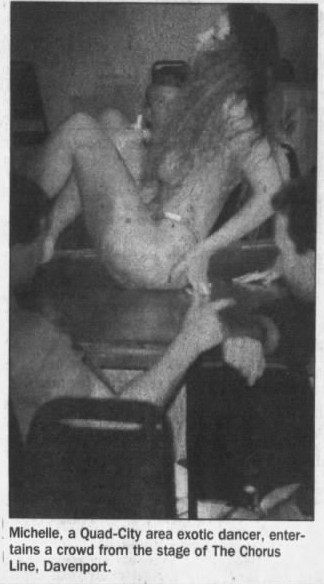
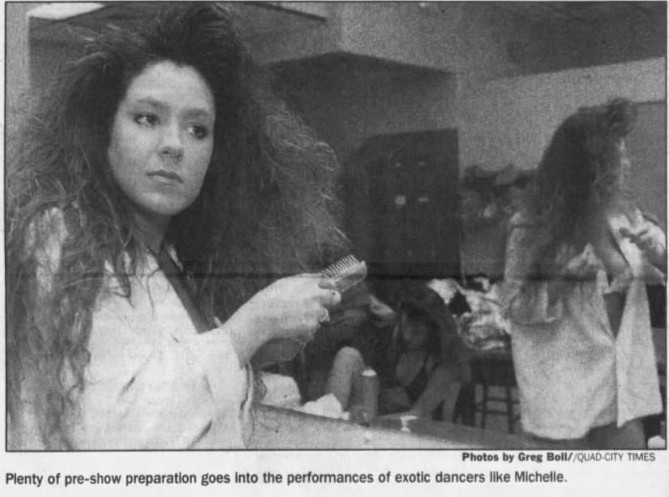
Earnings at clubs like the Chorus Line could be substantial: Quad Cities dancers reported making around $2,000 a week—over $100,000 a year in 1992, the equivalent of roughly $4,600 a week, or $231,000 annually, in 2025. The Chorus Line’s mix of touring talent, local performers, and high earning potential made it a defining part of Davenport’s adult‑entertainment landscape at the time.
Injury at the Chorus Line | 1993
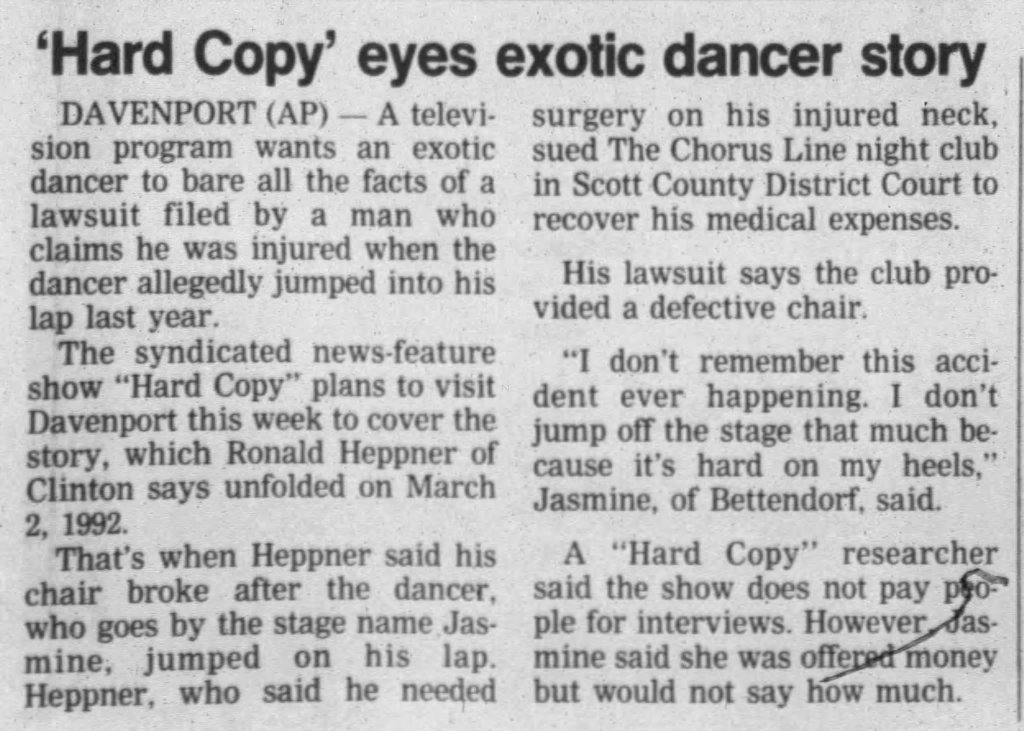
An exotic dancer, Jasmine, of Bettendorf, jumped onto the lap of a patron named Ronald Heppner, breaking the chair beneath him. Ronald needed surgery to his neck, and he ended up suing the Chorus Line night club in court for his medical expenses. Jasmine stated, “I don’t remember this accident ever happening. I don’t jump off the stage that much because it’s hard on my heels.” (The Gazette. January 13, 1993)
Tuxedo’s Show Club | Continued
Ron Fargas managed Tuxedo’s Show Club—also known as Show Girls—in Davenport, a venue that advertised itself with the slogan “A place where grown men go to have fun.” Tuxedo’s featured topless dancers, while its sister club, Dream Girls, offered fully nude performances but operated without alcohol service. Although the two clubs presented themselves as separate establishments, the owner acknowledged they were effectively one business operating under a single liquor license.
In 1996, the City of Davenport’s Zoning Board of Adjustment ruled that because the clubs shared a building and ownership, they constituted a single adult‑entertainment business. This put Davenport Bar Investments Inc. in violation of a city ordinance prohibiting two adult venues from operating within 300 feet of each other. As a result, the Board ordered one of the clubs to close. By August 1996, Tuxedo’s shut its doors, citing low attendance and difficulty finding employees—though the closure would not be permanent. Dream Girls, meanwhile, continued operating. (Omaha World‑Herald, “Topless Bar Closes; Nude Dancing Continues,” Aug. 1, 1996)
2000s+
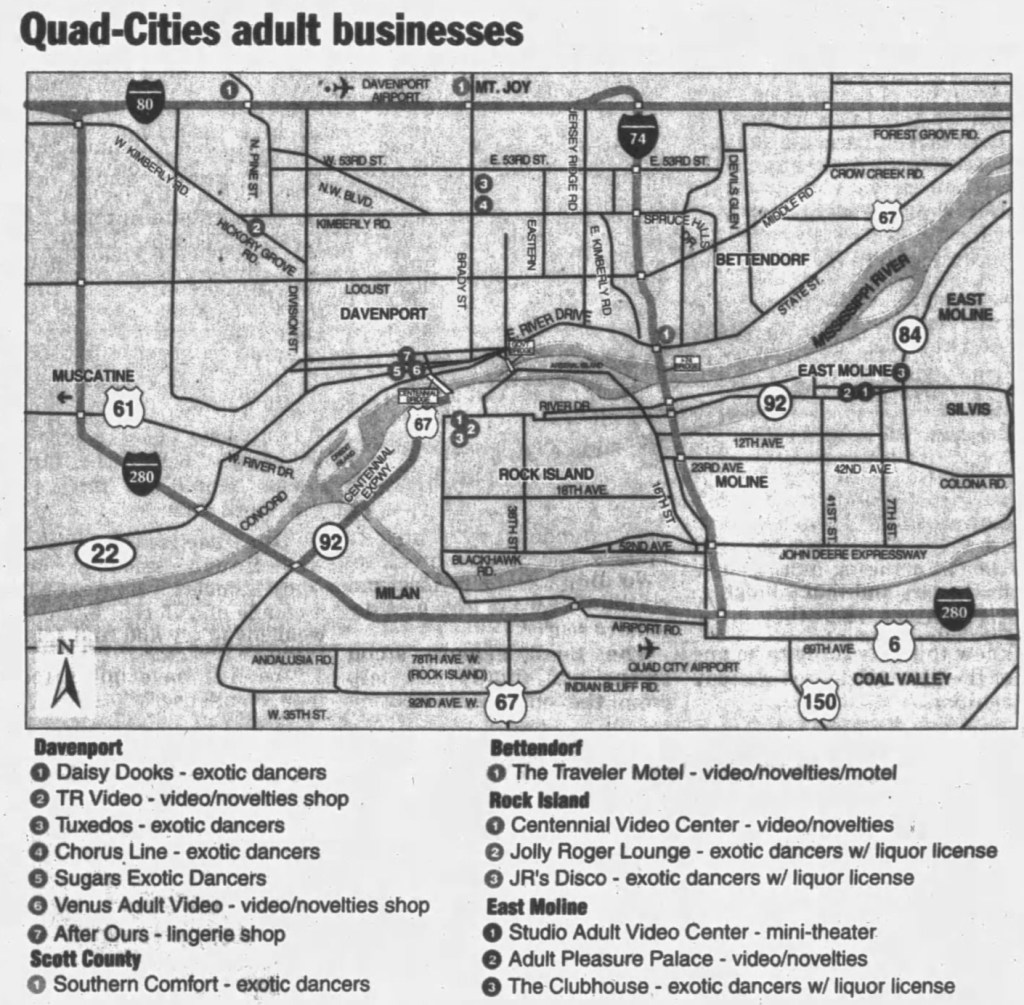
Adult businesses were booming at the beginning of the 2000s. Davenport was home to many venues where one could witness exotic dancing:
- Daisy Dooks
- Tuxedos
- Chorus Line
- Sugars Exotic Dancers
Davenport’s city ordinance required that all adult businesses were at least 1000 feet away from child-care services, schools and churches. They also had to be 300 feet away from another adult business. Because Davenport is in Iowa, the four strip clubs in the city limits could not allow nude employees to serve alcohol.
Sadie McLaren vs. Tuxedos Show Lounge | 2019
Davenport’s burlesque history has always been shaped by labor—by the quiet negotiations performers make to stay safe, get paid, and keep control of their work. That through-line becomes especially clear in 2019, when former dancer and union organizer Sadie Yvonne McLaren sued Tuxedos Gentlemen’s Club for unfair labor practices. Her case exposed how dancers are often treated as independent contractors while being bound by strict rules, mandatory tip-outs, and required shifts—conditions that mirror what she saw in clubs across the country.
Rules & Regulations Dancers Were Required to Follow at Tuxedo’s
Mandatory Tip-Outs (Every Shift):
- Tip-out to security:
- $5 every shift
- $10 if they worked a double
- Tip-out to DJs:
- 3–8 shift: $5
- 3–12 shift: $10
- 8–3 shift: $5
- 8–10 shift: $2
- Sunday DJs: $7
- “Basically if you do more than 6 hours it’s $10. 4 hours or less is $5.”
- Tip-out to manager: $7
- Must pay a house fee every shift
- Must tip out DJ and security every shift, regardless of earnings
Required Work Expectations
- Must be dressed and ready at the start of shift
- Must work a minimum of 4 hours per shift
- Must work a minimum of 3 shifts per week
- Must work Friday and Saturday nights
- Must work all major holidays
Performance Requirements
- Dollar dances are required after every stage set
- Must perform stage sets, dollar dances, and private dances
- If a dancer refuses or misses these, they receive a disciplinary mark
Behavioral Restrictions
- No drinking alcohol while working
- No drug use
- No illegal activity
- No leaving the club during shift without permission
- No bringing guests into the club
- No phone use while working
- No arguing with staff or management
- No physical altercations
- No damaging club property
- No stealing
- No soliciting prostitution
- Must follow all club rules and policies
What stands out is how familiar these dynamics are. Midcentury dancers in Davenport navigated their own unspoken expectations, balancing persona, crowd work, and club politics. McLaren’s fight simply makes visible what has always been true: striptease is labor, and performers have long had to advocate for dignity within systems that profit from their bodies and their skill.
Burlesque Continues Today
Burlesque in Davenport didn’t disappear with the last go‑go cage or the fading glow of the grindhouse marquee—it transformed. Today, the city is home to a thriving constellation of troupes, producers, and performers who carry forward the legacy shaped by decades of dancers before them.
Davenport’s stages now host everything from classic striptease to the bold experimentation of neo‑burlesque-where performers blend satire, storytelling, political commentary, and body‑positive performance art. Shows pop up in bars, breweries, theaters, and community spaces, each one adding a new layer to the region’s long relationship with erotic entertainment. The performers who take the stage today are part of a lineage stretching back through the city’s clubs, lounges, and late‑night theaters—keeping the spirit of burlesque alive while navigating city and state limits.
Sources
- Quad City Times. Ad for Angela’s Exotic Dancers. Page 15. September 14, 1988
- Quad City Times. Personal Ad for Angela’s Exotic Dancers. Page 20. October 3, 1988
- Quad City Times. Wanted Ad for Bachelor’s Two. 518 W 2nd St. Page 25. September 12, 1969
- Quad City Times. “Off the Record; The Importance of Being Double-Jointed.” Jane Arpy. Page 47. March 27, 1966
- Quad City Times. Ad for Bob’s Pine Rock Inn. Page 15. May 21, 1971
- Quad City Times. Ad for Bob’s Pine Rock Inn. Page 21. May 5, 1972
- Quad City Times. Ad for Bob’s Bull Pen. Page 25. May 15, 1974
- Quad City Times. Ad for Bonnie and Bill’s Perry Street Inn. Page 30. May 5, 1967
- Quad City Times. “Naked Truths.” Gary Schneeberger. Page 77, Section H. March 8, 1992
- The Gazette. “‘Hard Copy’ eyes exotic dancer story.” Davenport, IA. Page 12. January 13, 1993
- Quad City Times. Ad for Club 51. Page 5. April 29, 1967
- Coronet Adult Movie Theater Advertisements in Quad City Times from 1980-1984
- Quad City Times. “40 join porn fight.” Diana Penner. Page 1. June 29, 1984
- Quad City Times. Ads for Traveler Motel and Davenport Motel. Page 17. January 16, 1981
- Quad City Times. “One, Two, Three Kickoff For Gala River City Follies.” Photos by John Evans. Page 15. October 19, 1967
- Quad City Times. Personal Ads for Sugar’s Dancers, Dolls Unlimited, and other exotic services. Page 23. November 17, 1993
- Quad City Times. Ad for Go Po Agency. Page 17. October 27, 1970
- Quad City Times. Wanted Ads for Go Go Dancers. Page 17. July 8, 1972
- Quad City Times. Wanted Ads for Go Go Dancers. Page 30. February 23, 1973
- Quad City Times. Wanted Ads for Go Go Dancers. Page 28. March 31, 1978
- Quad City Times. Ad for Hotei Go Go Girls. Page 16. March 17, 1972
- Quad City Times. Ad for Hotei II Go-Go Girls. Page 19. June 7, 1972
- Quad City Times. Ad for Hotei. Page 112. June 25, 1972
- Quad City Times. “People: A Go-Go Great Grandmother.” Marilyn Lane. Page 9. July 28, 1972
- Quad City Times. Ad for Memri Theater. Page 7. May 11, 1966
- Quad City Times. Ad for Memri Theater. Page 27. March 7, 1969
- Quad City Times. Ad for Mini-Cinema 16. Page 19. October 1, 1980
- Quad City Times. Ad for the Mound. Page 15. February 7, 1970
- Quad City Times. Ad for the Mound. Page 7. March 9, 1970
- Quad City Times. Ad for the Mound. Page 17. July 20, 1970
- Quad City Times. Ad for the Mound. Page 16. March 17, 1972
- Quad City Times. “Go-Go Dancing By Yawn’s Early Light.” Brenda Lewis. Page 7. November 15, 1976
- Quad City Times. Ad for the Orpheum Theater. Page 27. March 7, 1969
- Quad City Times. Ad for P.J.’s Lounge. Page 20. April 19, 1977
- Quad City Times. Wanted Ad for Dancers for Peyton Place. 932 W 6th St. Page 27. October 10, 1972
- Quad City Times. Ad for Pete’s Midwest. 1305 W. 3rd St. Page 39. May 25, 1967
- Quad City Times. Ad for Pete’s Midwest. Page 104. November 5, 1967
- Quad City Times. Ad for Pete’s Midwest. Page 25. April 1, 1968
- Quad City Times. Ad for Pete’s Midwest. Page 9. July 22, 1968
- Quad City Times. Ad for Pete’s Midwest. Page 20. March 5, 1969
- Quad City Times. Ad for Pete’s Midwest. Page 19. March 7, 1969
- Quad City Times. Ad for Pete’s Midwest. Page 2. August 18, 1969
- Quad City Times. Ad for Pete’s Midwest. Page 7. March 9, 1970
- Quad City Times. Ad for Pete’s Midwest. Page 20. October 25, 1971
- Quad City Times. Ad for Pete’s Midwest. Page 14. March 23, 1973
- Quad City Times. Ad for Pete’s Midwest. Page 21. June 25, 1973
- Quad City Times. Ad for Pete’s Midwest. Page 11. November 6, 1973
- Quad City Times. Wanted Ad for Go Go Dancer for Ray & Wanda’s. 410 W 2nd St. Page 28. March 31, 1978
- Quad City Times. Wanted Ad for Go Go Dancer Road South. 1612 Rockingham. Page 28. March 31, 1978
- Quad City Times. Ad for Sugar’s Exotic dancers. 1037 W. 3rd St. Page 118. July 28, 1996
- Quad City Times. “It’s A Go-Go Wedding.” Jan Grimley. Page 18. July 23, 1970
- Quad City Times. Wanted Ad for Go Go Girls at The Place. 1130 W 3rd St. Page 28. March 31, 1973
- Quad City Times. Wanted Ads for Exotic Dancers at The Ultimate. Page 20. October 3, 1988
- Quad City Times. “Tap Operator, Dancer Held.” Page 27. August 27, 1970
- Omaha World Herald. “Nude Dance Club Owner Appeals Order to Close.” Davenport, Iowa. Page 19. July 31, 1996
- Omaha World Herald. “Topless Bar Closes; Nude Dancing Continues.” Davenport, IA. Page 17. August 1, 1996
- Quad City Times. “City officials crack down on Tuxedo’s; Show club must close 1 business.” Ed Tibbetts. Page 6. May 16, 1996
- Quad City Times. “The Big Story; ‘Nobody Knows that we put up with so much’.” Sarah Ritter. Page B1, B2, & B3. June 16, 2019
- Quad City Times. Ad for Vanishing Point. 1612 Rockingham Road. Page 25. May 15, 1974
- Quad City Times. Ad for Venus Books. Page 75. October 29, 1989
- Quad City Times. Wanted Ad for Go Go Dancers at Southwind Motel. Page 20. September 13, 1966
- Quad City Times. Wanted Ad for Go Go Dancers at Perry St. Inn. 221 Perry St. Page 27. February 10, 1967


Leave a comment