

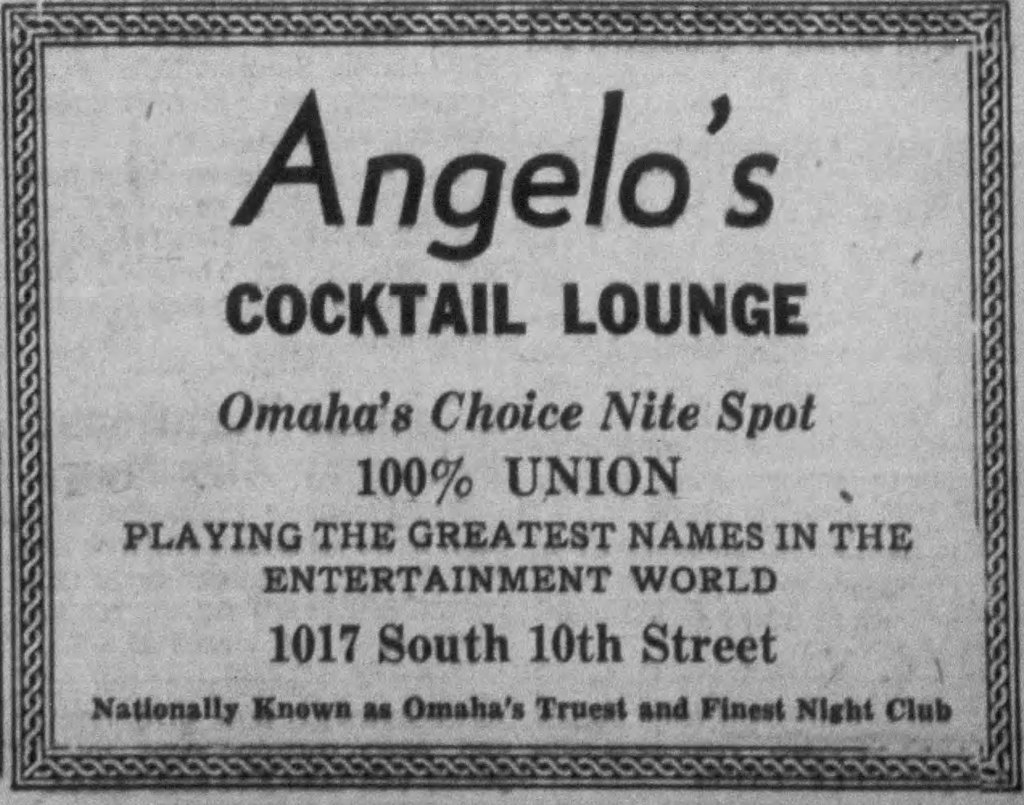
Angelo’s Cocktail Lounge began its life at 1017 South 10th Street, operating by the early 1950s in the heart of Omaha’s downtown entertainment district. The venue quickly earned a reputation as “Omaha’s Choice Nite Spot,” proudly advertising itself as 100% union and committed to high-quality entertainment. Its audience was a mix of working‑class locals, nightlife regulars, and music lovers drawn to the club’s ambitious booking strategy.
A Stage for National Talent
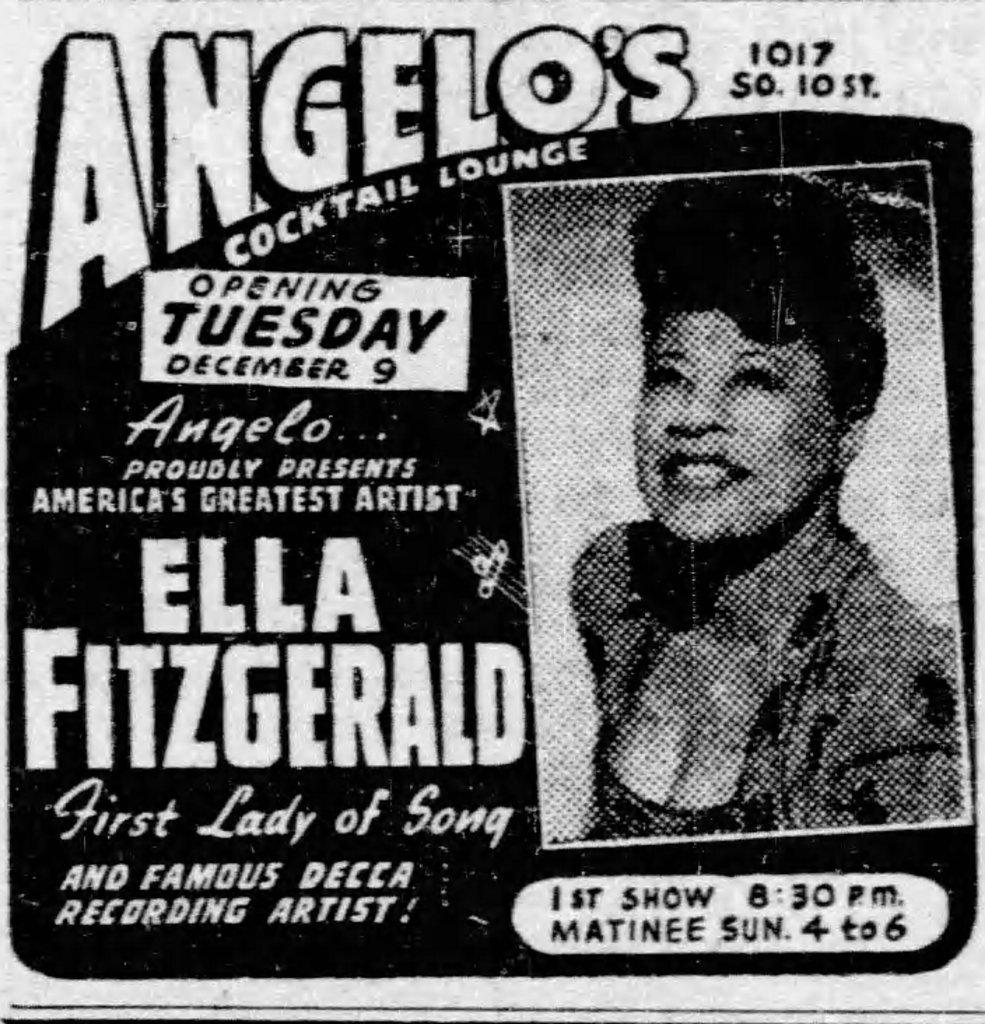
From the beginning, Angelo’s booked major national acts. In December 1952, Ella Fitzgerald, the “First Lady of Song,” performed multiple shows at the lounge. A newspaper ad proudly announced her opening night on December 9, with evening and Sunday matinee performances. Her return engagement was covered in a follow-up article, noting her recent appearance at Technical High School as part of Norman Granz’s “Jazz at the Philharmonic” tour.
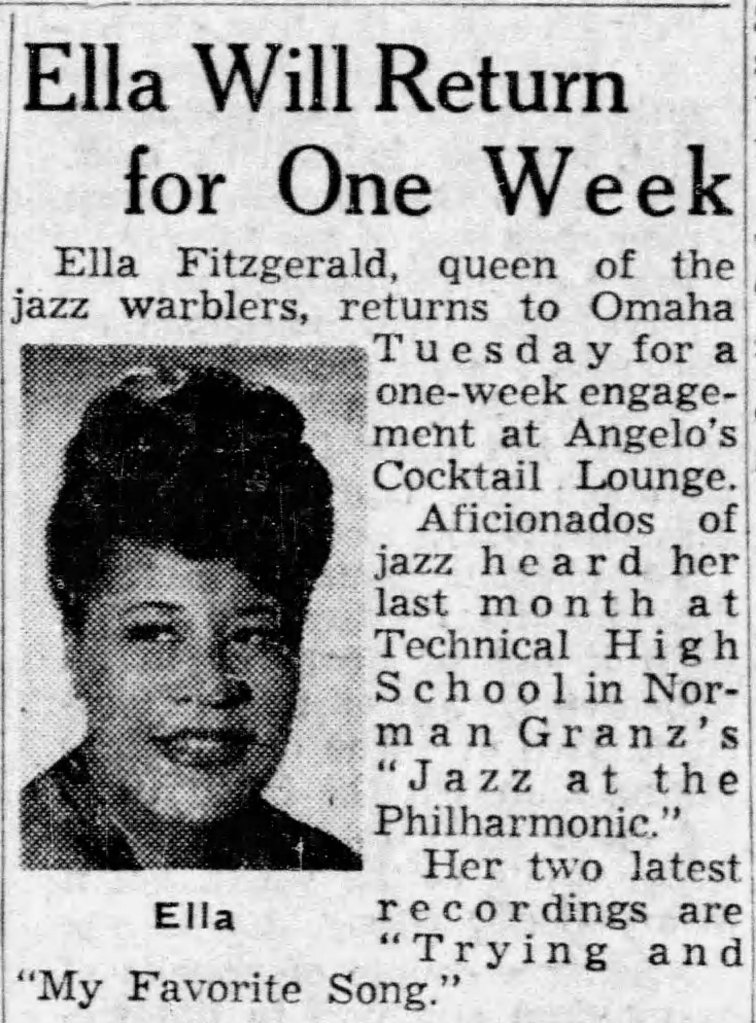
Her appearance, followed by a return engagement, placed Angelo’s firmly on the national jazz map and demonstrated owner Angelo Di Giacomo’s commitment to securing top‑tier talent.
Spectacle and Sensation
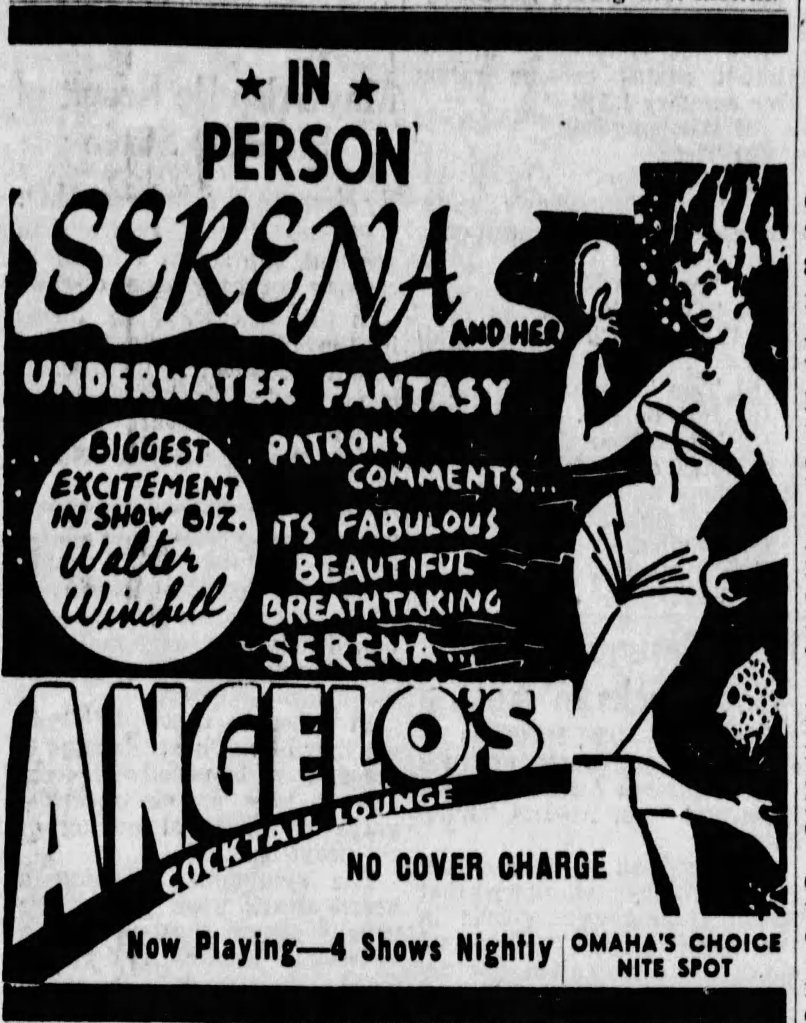
Angelo’s wasn’t just about music — it embraced theatrical spectacle. A vintage ad promoted Serena and Her Underwater Fantasy, a visually arresting show hailed by columnist Walter Winchell as the “Biggest Excitement in Show Biz.” With four nightly performances and rave reviews from patrons, the show exemplified the lounge’s blend of burlesque, novelty, and cabaret — a hallmark of mid-century nightlife.
Legal Drama and Public Scrutiny
Not all press was celebratory. In September 1952, a patron named Adlyn N. Coons filed a $60,000 lawsuit against Angelo’s, claiming she fell down steps due to a lighting change during a floor show. The incident underscores the risks of theatrical staging and the legal vulnerabilities of nightlife venues during this era.
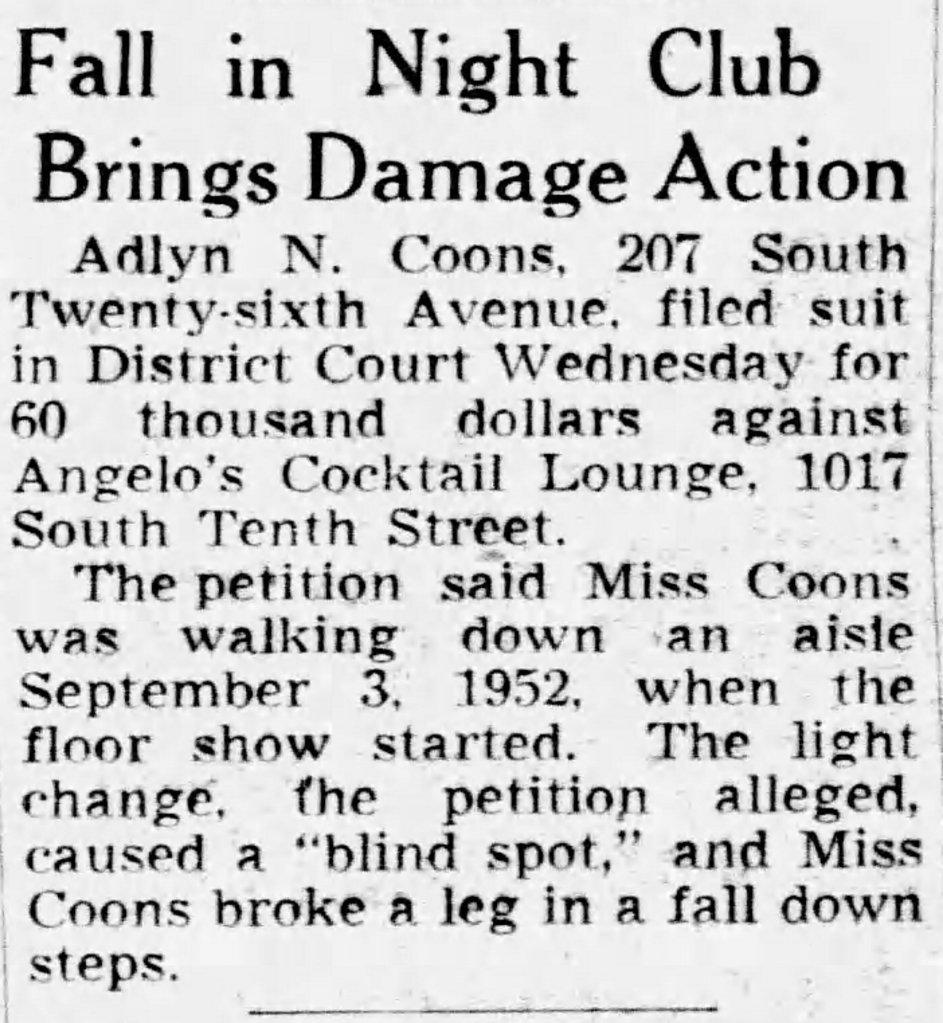
Unfortunately, Angelo’s at 1017 S 10th St closed in 1955. Following this, Angelo Di Giacomo filed for articles of incorporation for The Studio Inn Group. The goal was “to furnish the best in food and entertainment.
Westward Expansion: Studio Inn/West Side Inn
By the early 1960s, Di Giacomo expanded westward. He formally incorporated Studio Inn, Inc. with two partners: Nettie Di Giacomo and Samuel P. Caniglia The corporation’s stated purpose was “to furnish the best in food and entertainment,” signaling a move toward larger, more sophisticated venues.
Construction began on a supper club and motel at 707 South 72nd Street, designed to seat hundreds and offer multiple private rooms. This venue — later known as the West Side Inn — reflected both Omaha’s suburban growth and Di Giacomo’s desire to operate on a broader scale.
Angelo’s Entertainment Agency
Di Giacomo created the Angelo’s Entertainment Agency in 1965. Through this agency, he booked acts not only for his own venues but also for:
- The Inferno (Kansas City, MO)
- The Flamingo Inn (South Sioux City, NE)
- East Hills Supper Club (Lincoln, NE)
The agency would later be headquartered inside his remodeled Pacific Street venue.
The Paradise Lounge & Restaurant
In 1964, Di Giacomo purchased the Paradise Lounge and Restaurant, Inc. for $18,000
Angelo’s Restaurant and Theatre Lounge
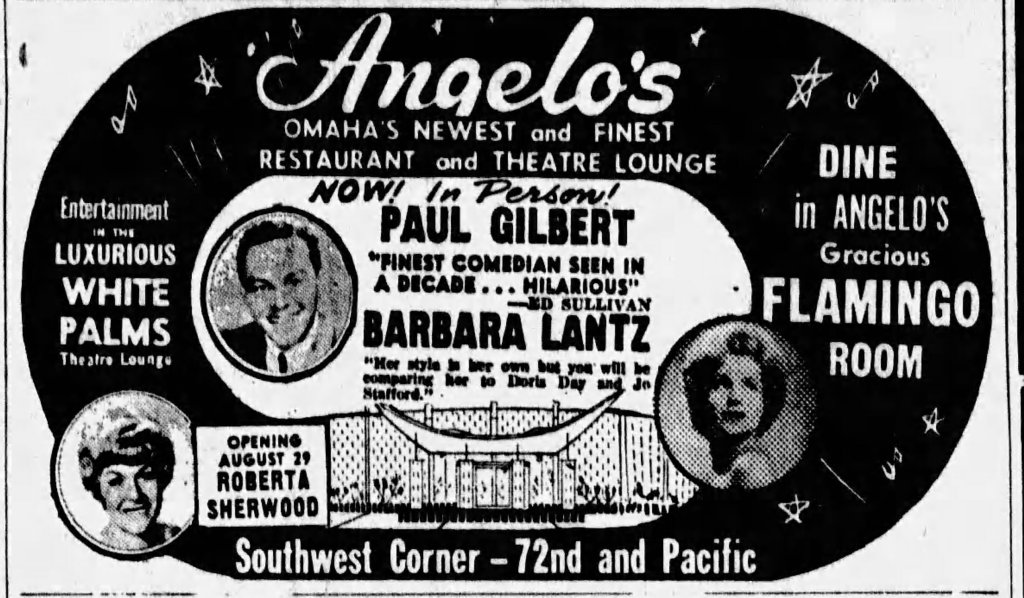
By the 1960s, the Angelo’s name was operating at 7150 Pacific Street. This suburban Angelo’s embraced the supper‑club model, offering dinner‑and‑show packages and booking major national acts.
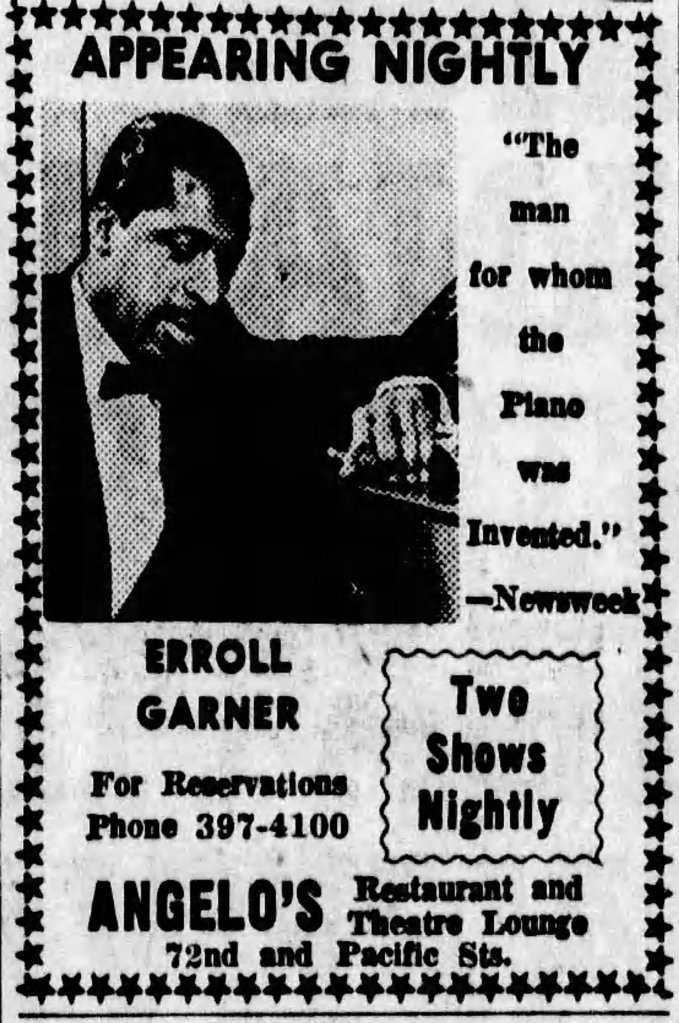
A 1967 ad featured Eartha Kitt, billed as “The World’s Most Exciting Woman,” performing her final two nights at the new location. The lounge also hosted acts like Roy Clark, Tony Martin, and Sam the Sham Revue.
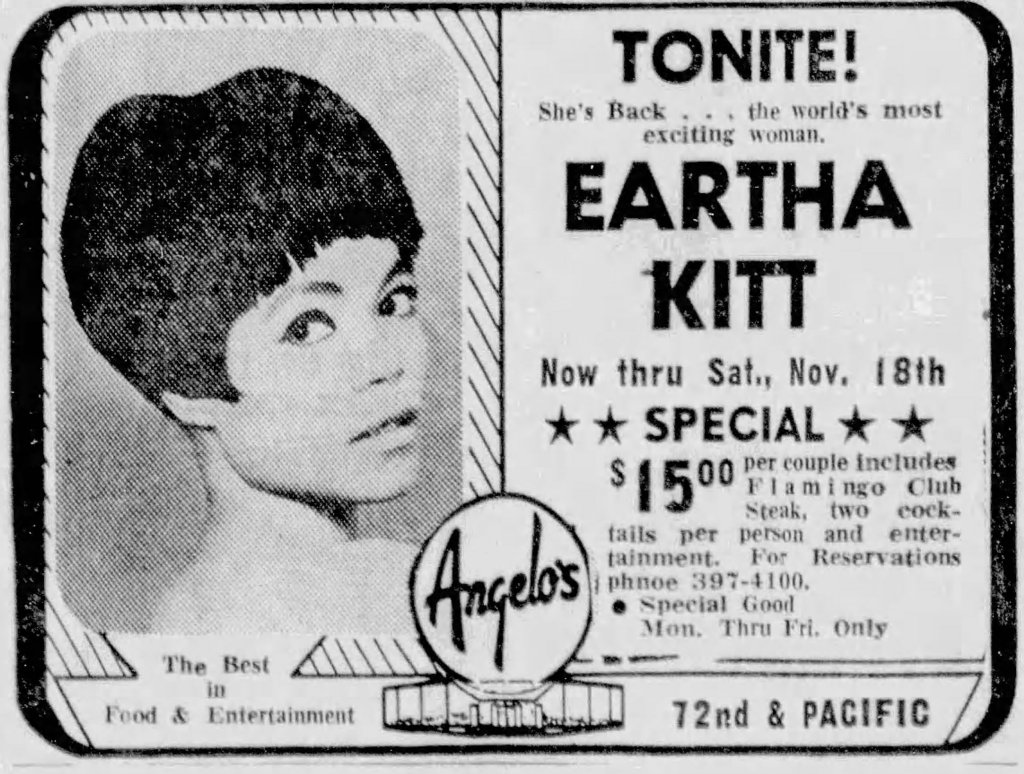
This version of Angelo’s catered to a broader, more affluent suburban audience while maintaining the glamour and name recognition the brand had built downtown.
Name Change: Richard’s Hullabaloo Club
In 1967, Angelo’s at 7150 Pacific Street was renamed Richard’s Hullabaloo Club, with management transferred to his son Richard Di Giacomo. The club housed Angelo’s Entertainment Agency, which continued booking acts for venues across the Midwest.
Burglary During Business Transition
In late 1967, Angelo Di Giacomo reported a burglary at his apartment at 1103 South 72nd Street, where jewelry, liquor, and furs valued at $3,270 were stolen. Di Giacomo and his wife discovered the theft upon returning from a trip on December 1, noting that the apartment had been entered, apparently with a pass key.
He delayed reporting the incident to police, explaining that he was in the midst of negotiating the sale of his nightclub at 72nd and Pacific Streets and wanted to avoid publicity until the deal was finalized.
Among the stolen items were:
- Two cases of liquor
- $425 in coins
- A mink stole
- A diamond ring
- A wristwatch
- Two sweaters
This incident not only highlights the risks faced by public figures in Omaha’s nightlife scene, but also confirms that Di Giacomo was actively selling Angelo’s (soon to be Richard’s Hullabaloo Club) at the time — reinforcing the timeline of the venue’s transition and his gradual exit from direct ownership.
A New Venue: Supper Club & Motel
Separate from the remodeled 7150 Pacific location, Di Giacomo prepared to break ground on a new development: a $750,000 supper club and motel on the southeast corner of 72nd and Pacific Streets.
According to the Omaha World‑Herald:
- This was a new establishment, not a remodel
- It included a 550‑seat restaurant
- And 36 motel rooms
- It was scheduled to open in September or October 1967
This project represented Di Giacomo’s continued expansion into the booming suburban entertainment corridor.
Amusement Tax Controversy
In 1967, Angelo Di Giacomo publicly opposed a proposed city amusement tax that would have added an 8% surcharge to admissions for theaters, dance clubs, sporting events, and other entertainment venues. The measure was being considered by the Omaha City Council as a way to address municipal budget shortfalls.
Di Giacomo, identified in the article as a nightclub proprietor, warned that the existing 20% federal cabaret tax had already damaged live entertainment in many clubs. He stated bluntly that he “won’t bring in more acts” if the city tax were passed — a clear signal that local policy could directly impact the viability of his booking strategy and venue operations.
This moment places Di Giacomo in the broader conversation about the survival of Omaha’s nightlife scene. Alongside theater managers and impresarios, he argued that taxing entertainment would hurt not only performers and venues, but also the city’s ability to attract visitors and support adjacent businesses.
Later Ventures: Windy’s and Suite 4 Lounge
By 1973, Angelo Di Giacomo was still active in Omaha’s hospitality scene, operating Windy’s at 10909 I Street through a corporation shared with his son Richard. The venue applied for a Class C liquor license following annexation into Omaha, supported by population growth in nearby apartment complexes.
Di Giacomo also held a license for Suite 4 Lounge at 209 South 72nd Street, which had been closed due to fire damage earlier that year. He declined to transfer that license to Windy’s, suggesting a strategic shift in focus. While no longer booking live acts, Di Giacomo remained engaged in bar and restaurant operations — marking a quieter phase in his career after decades of shaping Omaha’s entertainment landscape.
Legacy
Angelo Di Giacomo’s career traced the evolution of Omaha’s nightlife from smoky downtown jazz lounges to sprawling suburban supper clubs. He brought national talent to local stages, embraced theatrical spectacle, and continually reimagined his venues to meet changing tastes. Whether booking Ella Fitzgerald in 1952 or launching Richard’s Hullabaloo Club in the youth-driven 1960s, Di Giacomo understood entertainment as both art and enterprise.
By the early 1970s, his role had shifted. He was no longer booking acts or running showrooms but remained active in hospitality through ventures like Windy’s and Suite 4 Lounge. His public opposition to amusement taxes and his careful handling of business transitions — even amid personal setbacks like the 1967 burglary — reveal a savvy operator navigating the pressures of public life and policy. Di Giacomo’s legacy lives on not just in the venues he built, but in the cultural infrastructure he helped shape: a mid-century Omaha where nightlife was ambitious, theatrical, and deeply local.
Sources
- “Amusement Tax to Pass.” Omaha World‑Herald (Omaha, NE), 1967.
- “Angelo’s Restaurant and Theatre Lounge.” Evening World‑Herald (Omaha, NE), August 24, 1966.
- “Eartha Kitt at Angelo’s.” Omaha World‑Herald (Omaha, NE), November 10, 1967.
- “Ella Fitzgerald to Appear at Angelo’s.” Morning World‑Herald (Omaha, NE), December 7, 1952.
- “Late Report on Burglary.” Omaha World‑Herald (Omaha, NE), December 1967.
- “Liquor Sale After Annex Is Advanced.” Omaha World‑Herald (Omaha, NE), 1973.
- “Omaha After Dark: New Spot Aimed at Younger Set.” Omaha World‑Herald (Omaha, NE), March 1967.
- “Omaha’s Choice Nite Spot: Angelo’s Cocktail Lounge.” The Unionist (Omaha, NE), March 19, 1954.
- “Serena and Her Underwater Fantasy at Angelo’s.” Morning World‑Herald (Omaha, NE), June 11, 1954.
- “Woman Sues Angelo’s for $60,000 After Fall.” Morning World‑Herald (Omaha, NE), August 27, 1953.
- Advertisement for Angelo’s at 7150 Pacific Street (Eartha Kitt engagement). Evening World‑Herald (Omaha, NE), October 18, 1966.

Leave a comment