

In the heart of Kansas City’s vibrant Black entertainment scene, a dazzling troupe emerged in 1950 that blended rhythm, spectacle, and unapologetic showmanship: The Ebony Dancers. Composed of eight to ten dynamic performers—including singers, acrobats, and shake dancers—this ensemble captivated audiences with their electrifying stage presence and genre-blurring acts. From Kansas City nightclubs to cabaret stages in Minneapolis and Texas, they were more than a local sensation—they were a traveling showcase of Black excellence, glamour, and grit.
Origins
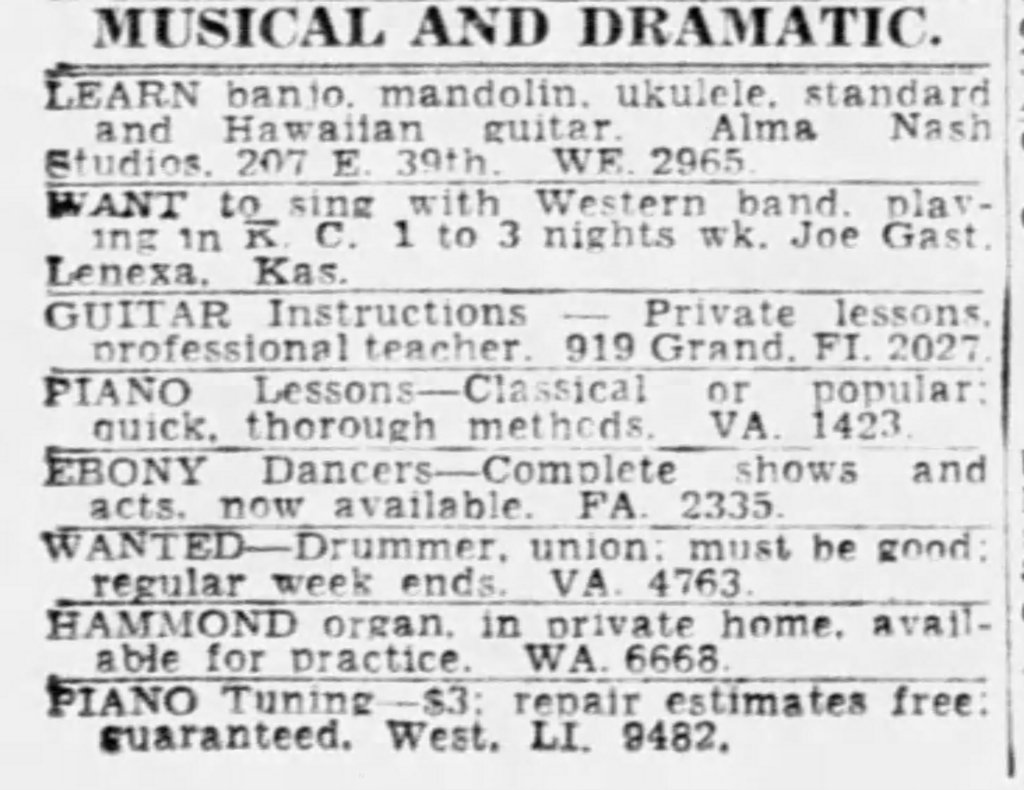
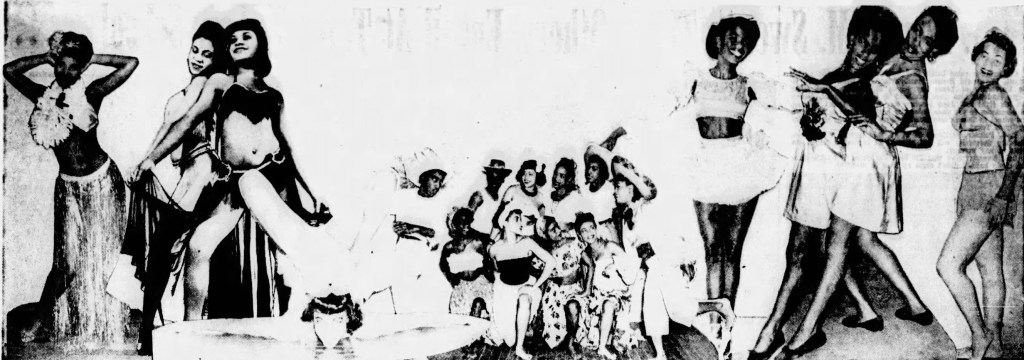
Founded in 1949, The Ebony Dancers emerged from Kansas City’s thriving postwar Black arts scene. With roots in the Mabel Williams School of Dance, the troupe brought together singers, acrobats, and shake dancers—many of whom had trained together since childhood. Their performances were a kaleidoscope of calypso rhythms, boogie beats, and interpretive dance, often closing with crowd-pleasers like Louis Jordan’s “Run Joe.”
In 1950 the Ebony Dancers performed at the Twin Cities Club in Minneapolis for a Monday night cabaret party hosted by the group. It was a sensational show of chorus girls, individual acts.
“The Ebony Dancers brought their entertainment ‘bill of fare’ to an end with a featured rendition of Louis Jordan’s ‘Run Joe.’ Wearing colorful costumes, the twinkle-toed artists gave vocal accompaniment as the band played in native West Indian calypso tempo.” – The Call. “Ebony Dancers Rock Twin Cities in Sensational Revue on Monday.” Z.J.W. Page 12. December 29, 1950)

“A bevy of beauties, the Ebony dancers, moved on stage for the second number on the ‘bill of fare.’ The motion was to the right and left, boogie was the beat. The chorus weaved a smooth pattern while going through the intricate dance routines. The Ebony Dancers’ almost overnight success can be attributed to their great exhibitionism, formidable technique and artistry.”
– The Call. “Kansas City Artists in Benefit Show for Hospitalized Vets.” Zack Weston. Topeka, KS. Page 8. April 27, 1951
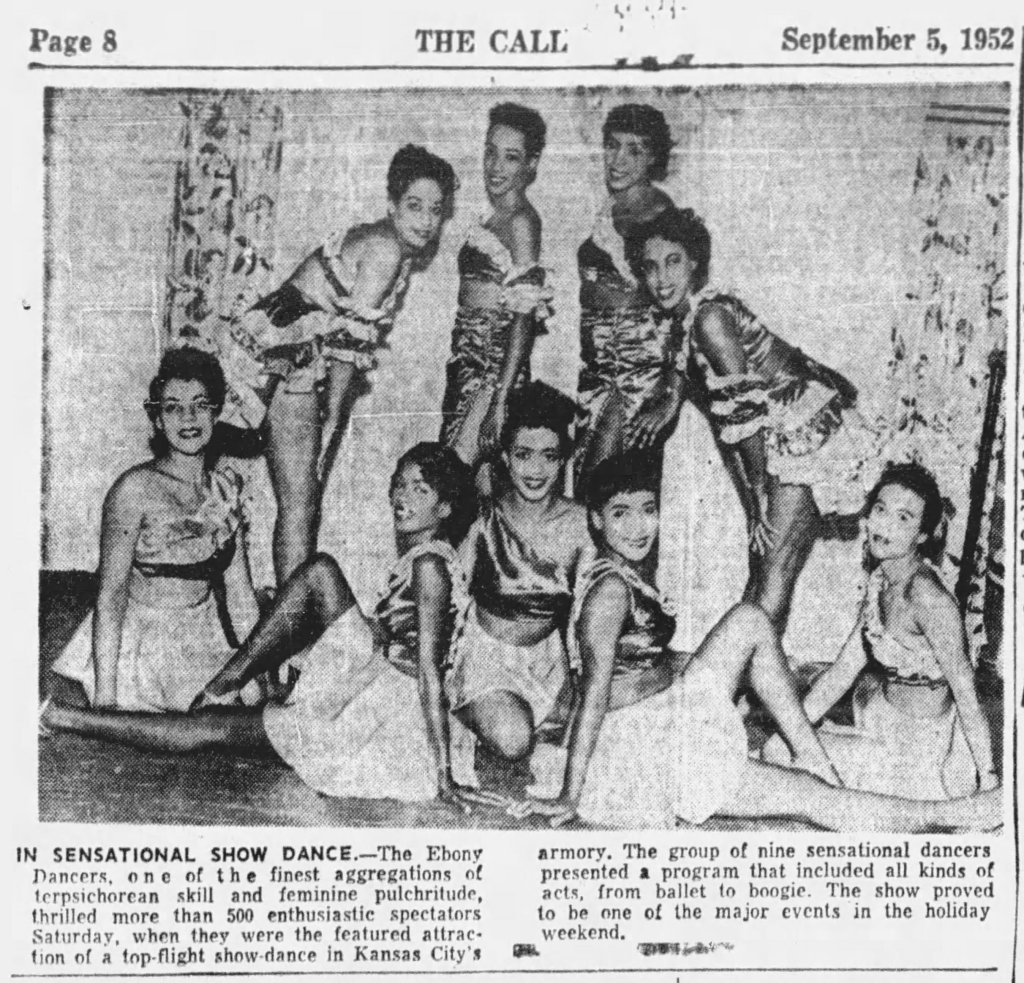
In Texas, they danced at the State Fair, earning glowing reviews in The Call and The Kansas City Star. Their shows were described as “formidable,” “twinkle-toed,” and “almost overnight successes,” praised for their artistry and exhibitionism.

In May 1954, the Ebony Dancers performed at the Carnation Ballroom in Omaha, Nebraska. The venue was owned by Mildred Brown, the publisher of the Omaha Star Newspaper.
After the group disbanded around 1955, many of the performers continued on in their entertainment careers, many opening dance studios of their own, to train the next generation of Black dancers.
Spotlight on Key Members
Evelyn Lee & Irene McLaurin | “The Slick Chicks”
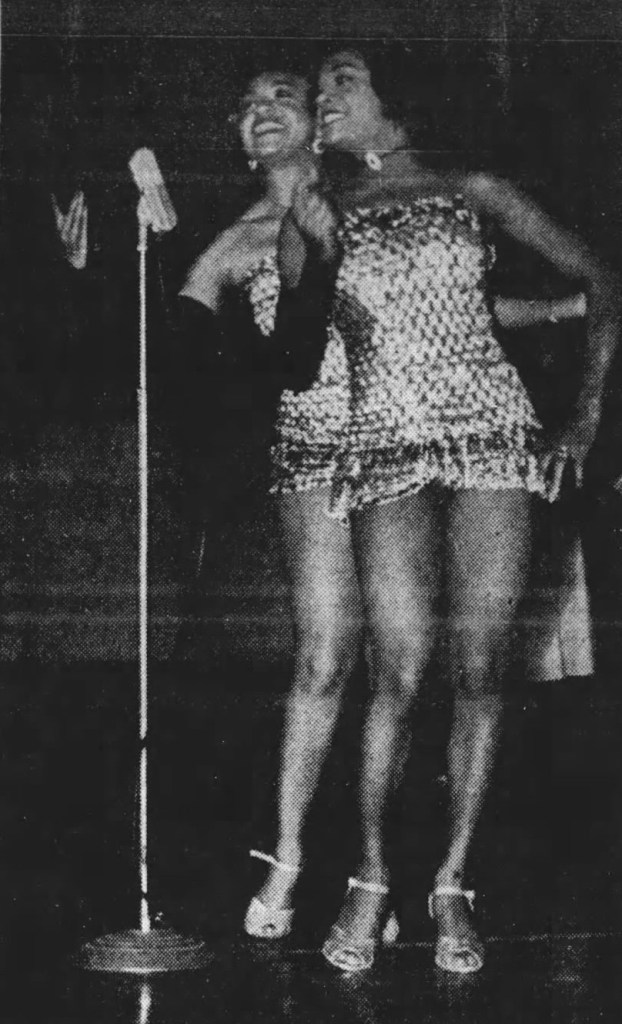
Evelyn Lee and Irene McLaurin were the stars of the Ebony Dancers. They were called “The Two Slick Chicks” of stage fame. They appeared as a team at many nightclubs and show houses across the country, giving rise to a reputation of grace and poise.
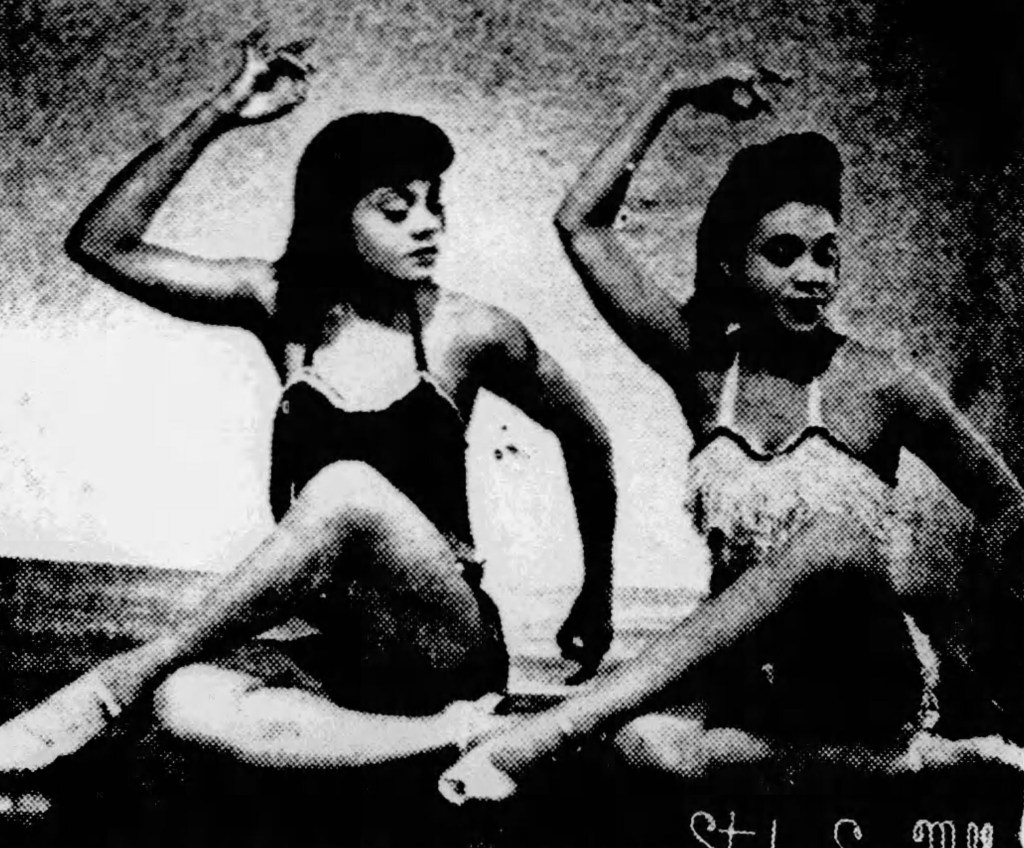
Both women had successful careers once the Ebony Dancers disbanded.
Irene McLaurin
Irene began dancing with the Mabel Williams’ School of Dance around 1932 as a child. This is where Irene would meet the other dancers that eventually became members of the Ebony Dancers.

In 1950, Irene was performing nightly at the Flamingo Club. She was listed as “curvaceous, vivacious Irene McLaurin!” She danced with Evelyn Lee in “Two Slick Chicks” where they sang and danced together. Then McLaurin would sing solo.
In 1951 Irene sang songs while dancing in numbers like “Let it Roll” and “Crazy He Calls Me.” In November 1955, Irene led the Ebony Dancers in a floor show for The Police Relief Association’s 18th Annual Policemen’s Ball.
By the summer of 1952, Irene had launched her own dancing school and hosted her first recital of her dancers at the Resident Theater. In addition, she was performing with Evelyn in the Ebony Dancers. By 1952, Irene was married to Roosevelt Williams.
Evelyn Lee

Evelyn Lee was born around 1925 in Kansas City and began dance classes at a young age. Her father was a drummer in a band. In 1936, at 11 years old, Evelyn played the “Princess” in an annual Hawaiian origin play in Honolulu at the Kaiulani School. Evelyn wore a dress of “early Hawaiian style.”

In 1941, at 16 years old, Evelyn became the dance partner of Robert Jenkins, an Adagio dancer. They were featured in “The Revel of the Seasons” extravaganza which was performed at a hospital benefit show. Both dancers were taking classes at the Mable Williams School of Dancing. Evelyn started performing solo in nightclubs and benefits as an “interpretative Dancer” in 1943.

She performed an interpretive dance depicting “native African rituals.” Her act “Similau” was a dynamic dance of “primitive dance.”
In 1949, Evelyn Lee and Irene McLaurin perform together as a twosome act “The Slick Chicks.” In June 1951, the Ebony Dancers performed in an Extravaganza. Evelyn performed “Beau Brummel stars His Day,” a “Baseball Pantomime,” “The Charleston,” and “Modern Interpretations.”

By 1952, Evelyn married Edward Biggins and retired from the Ebony Dancers. However, she continued her dancing career as a solo performer. In 1954, she spent a month in Los Angeles, where she attended and became an active member of the National Association of Dance and Affiliated Artists Inc. She studied new routines and dance styles. She also visited the Willie Covan Dancing School, a leading Black dance schools in the LA area. She also visited relatives before joining up with her husband, Edward, and her daughter, Renee.
The Evelyn Lee Dance Studio
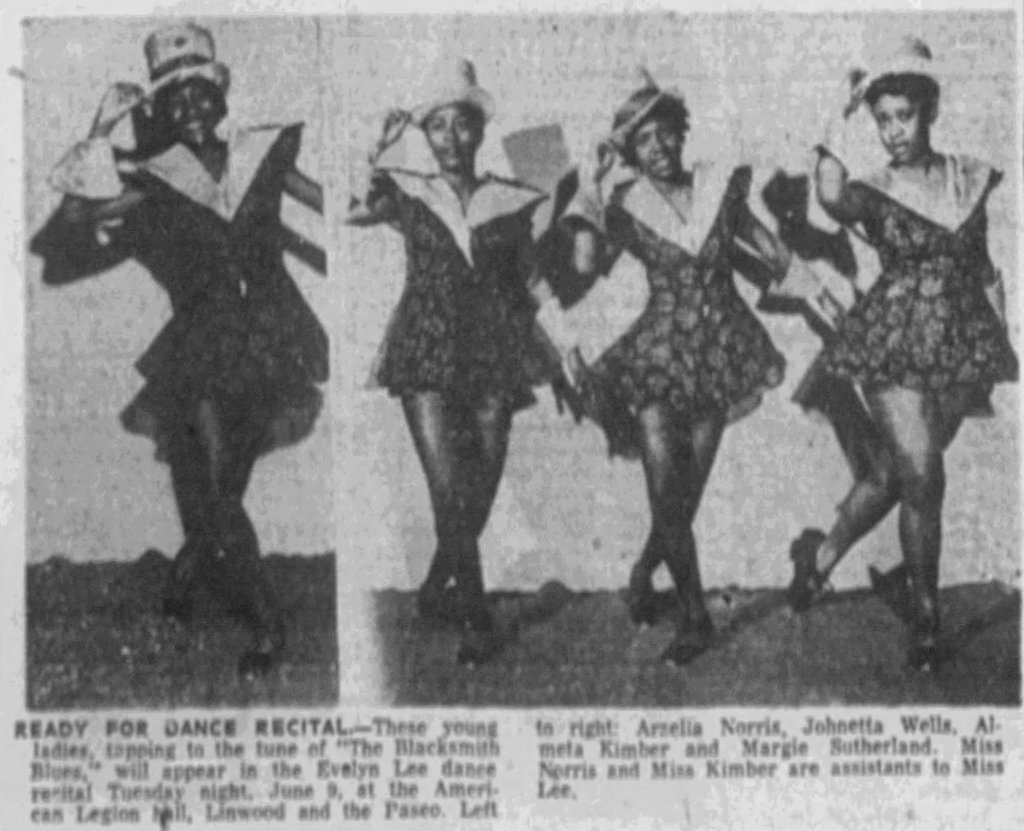
By 1950 Evelyn created the Evelyn Lee Dance Studio where she taught students and held annual recitals showcasing their talents.

Adah Jeanne Leake | Exotic Shake Dancer

Adah Jeanne (or Ada Jean) was an exotic shake artist who performed with the Ebony Dancers. She was the granddaughter of Ada Brown, late singing star of the stage and screen, who died in Kansas City in 1950. In 1947 she had a son named Paul Gray. Her mother owned a beauty shop in Kansas City.
Adah’s dancing teacher was Mable Williams of the Mable Williams dancing School. Adah began dancing when she was just 14. Her first stage job was at the Casaloma Club. In 1950 she performed to the song “Poincianna”. The Kansas City Call stated, “exotic Adah Jeanne gave body meaning to the famous Latin-American song hit of a few years ago.” (December 29, 1950)
Adah was extremely successful as a dancer and performed in Iowa, Oklahoma, Nebraska, and Missouri. In November 1953, Adah joined the Hortense Allen Dancing Group in Philadelphia, PA. She rehearsed with the group for a few weeks and then toured Canada for 6 weeks with Sugar Ray Robinson’s show. Then the tour went on to Paris. Adah was listed as a “curvaceous exotic dancer.”
In 1956, Adah toured Honolulu, Hawaii after an extended engagement at Dot’s Wahiawa, a suburban supper club, in Honolulu. She also performed at Ranchito Escondida in Juarez, Mexico and held a yearlong residence at Joe’s Ringside in Las Vegas, NV. That same year, she married Elbert Caldwell and had a child with him. By this time, the Ebony Dancers had disbanded, but most forged ahead in the field of professional entertainment.
Zella Mae Moten

Zella was the daughter of Bennie Moten, a nationally famous band leader from Kansas City. She began performing as a dancer of the Mable Williams School of Dance, like a few other members of the Ebony Dancers. She performed an acrobatic solo at the School’s 1950 recital. In addition to begin an Ebony Dancer, Zella was also an instructor at the Mable Williams Dancing School by 1952.
Final Bow
By the mid-1950s, many members had launched solo careers, opened studios, or joined other touring acts. Though The Ebony Dancers eventually disbanded, their impact rippled through Black performance history—an embodiment of postwar glamour, resilience, and creative defiance. At a time when segregation still shaped the cultural landscape, The Ebony Dancers carved out space for Black artistry to shine, shimmy, and soar.
Sources
Newspapers
- The Kansas City Call. “Joins Hortense Allen Dancers.” Page 15. November 13, 1953
- The Kansas City Call. “Adah Jeanne Returns From Honolulu Tour.” Page 8. June 15, 1956
- The Kansas City Call. “To Dance at Texas Fair.” Page 11. October 6, 1950
- The Kansas City Call. “Ebony Dancers Rock Twin Cities In Sensational Revue on Monday.” Z.J.W. Page 12. December 29, 1950
- The Kansas City Call. “‘Stoppin’ Traffic’ Headliner.” Page 8. March 30, 1951
- The Kansas City Call. “In Benefit Show for Vets.” Page 8. April 27, 1951
- The Kansas City Call. “Kansas City Artists in Benefit Show for Hospitalized Vets.” Zack Weston. Page 8. April 27, 1951
- The Kansas City Call. “Top Artists in Beau Brummel Extravaganza.” Page 20. May 18, 1951
- The Kansas City Call. “Extravaganza Artists.” Page 8. June 1, 1951
- The Kansas City Call. “Extravaganza Gets Back-hand Slap.” Jack Weston. Page 9. June 8, 1951
- The Kansas City Call. “In Sensational Show Dance.” Page 8. September 5, 1952
- The Kansas City Call. “Running the Scale.” Bee Flatt. Page 9. September 12, 1952
- The Kansas City Call. “To Present Annual Ball.” Page 17. November 18, 1955
- The Kansas City Call. “Musical and Dramatic Ads.” Page 33. November 12, 1950
- Morning Free Press. “Evelyn Plays Part of Hawaiian Queen as Myth is Acted.” Page 15. January 25, 1936
- The Kansas City Call. “Dance in Wheatley Benefit.” Page 12. May 2, 1941
- The Kansas City Call. “Annual Dance School Recital Pleases with Many Unique Numbers.” Page 57. June 27, 1941
- The Call. Ad for Evelyn Lee at Roscoe Hall. Page 28. October 29, 1943
- The Call. “Running the Scale.” Bee Flatt. Page 9. June 27, 1952
- The Call. “Did You Know.” Page 9. June 13, 1952
- The Call. “Ready for Dance Recital.” Page 8. June 5, 1953
- The Call. “In Modern Jazz Sequence.” Page 17. June 5, 1959
- The Call. “L.A. Trip Pays Off in New Ideas for Evelyn Lee.” Page 9. August 13, 1954
- The Kansas City Call. “Miss Mabel Williams’ Pupils in Dance Revue.” Page 13. June 24, 1932
- The Kansas City Call. “Ninth Annual Dance Recital Mabel Williams’ Pupils In.” Page 8. June 22, 1934
- The Kansas City Call. “Kansas City Cuties.” Page 10. September 23, 1949
- The Kansas City Call. “Dancers, Singer on School Revue Here.” Page 8. June 8, 1951
- The Kansas City Call. “Dancers of Mabel Williams School Thrill Audience at Wichita Revue.” Page 11. December 22, 1950
- The Kansas City Call. “Talented Performer.” Page 10. December 26, 1952


Leave a reply to Iretha “Pepper Pot” Tucker – Iona Fortune Burlesque Cancel reply