

In the late 1990s and early 2000s, Des Moines, Iowa, found itself at the center of a heated cultural and legal debate—one that blurred the lines between erotic performance, artistic expression, and municipal control. At the heart of this controversy stood Big Earl’s Goldmine, a strip club just north of city limits, whose neon-lit stages became both a sanctuary and a battleground for dancers asserting their right to perform nude.
The Theater Loophole: Artistry vs. Ordinance
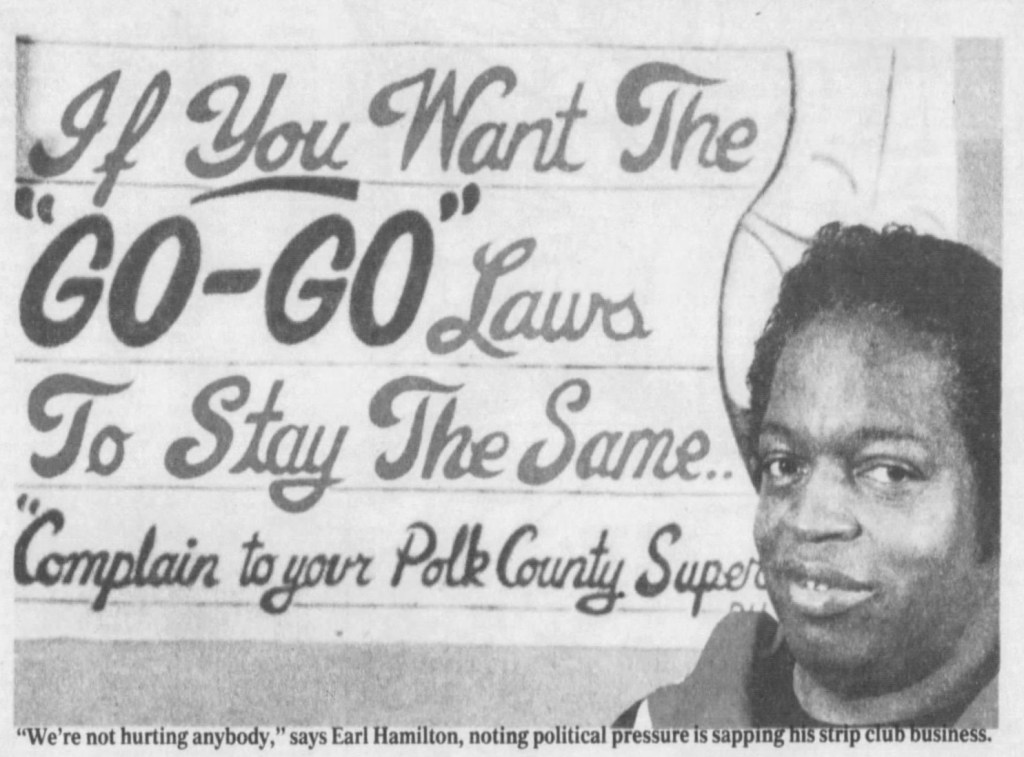
Big Earl’s Goldmine opened at 4745 NW 2nd St., Des Moines. The first advertisements for dancers were in 1990. The club was operated by Earl Hamilton, an African American man.
In 1990, Des Moines’ regulation of nude dancing reflected a broader national debate over whether erotic performance counted as protected expression under the First Amendment. At the time, Iowa already restricted nude dancing in bars that sold alcohol, a measure aimed at curbing “barroom-style” strip shows. These local rules were reinforced by national developments: in October 1990, the U.S. Supreme Court agreed to hear a case from Indiana that questioned whether states could outlaw all nude dancing in bars, even when performances were not obscene. The Court had previously acknowledged that nude dancing carried some expressive value, but only “marginal” protection, meaning municipalities like Des Moines could impose significant restrictions so long as they claimed a public interest in morality or order. This climate set the stage for Iowa’s later 1997 law, which banned nude dancing in any business with a sales tax permit—except those classified as theaters or art centers. In short, by 1990 Des Moines dancers were already navigating a precarious legal landscape, where their work was treated less as art and more as a public nuisance subject to regulation.
Iowa’s 1997 Nude Dancing Ban
Iowa’s 1997 law banning nude dancing in businesses with sales tax permits carved out a curious exception: venues “primarily engaged in performance art” were exempt. This loophole gave rise to a wave of clubs rebranding themselves as theaters, juice bars, or performing arts venues—Big Earl’s Goldmine among them.
Club owners like Ronald Farkas and Ron Bergeron leaned into this ambiguity, arguing that their establishments qualified as theaters under state law. Bergeron’s Playhouse Performing Arts Theater in Mills County, for instance, opened just months after a local ordinance attempted to ban nude entertainment. He claimed constitutional protection under free expression, setting the stage for legal showdowns that would ripple across the state.
Dancers as Defenders of Expression
The dancers themselves became powerful voices in this fight. Tracy Bedford, a 23-year-old performer at Big Earl’s, testified in federal court. Represented by the Iowa Civil Liberties Union, Bedford argued that her performances are a form of artistic expression and personal freedom. She emphasized her pride in her work, the financial investment she’s made in costumes- $10,000-$15,000 ($21,610.11-$32,415.17 in today’s buying power), her commitment to performing 4-5 times a week, and her role as a single mother supporting a young child.
“Dancing is an art,” she declared. Her testimony, supported by the Iowa Civil Liberties Union, helped temporarily halt enforcement of the anti-nudity law.
But the victories were uneven. In some counties, judges ruled in favor of clubs like Southern Comfort Free Theater in Davenport, while others upheld bans that forced dancers to wear pasties and thongs. The inconsistency underscored the law’s vagueness—and the precariousness of performers’ rights.
Culture, Crime and Controversy

Big Earl’s Goldmine wasn’t just a legal flashpoint—it was a cultural icon, a lightning rod, and at times, a site of tragedy. Promotional ads from the era boasted revue shows with 5 to 10 dancers and headliners like “Lotta Curves,” while classified listings promised entertainers $1,000-$5,000 a week ($1,854.94-$9,274.70 in today’s buying power).

Yet the club also made headlines for darker reasons: in 2010, a van emblazoned with the Goldmine’s name led police to mugging suspects in Cedar Rapids. In 2013, a fatal shooting outside the club reignited concerns about safety and regulation.
Various Headliners
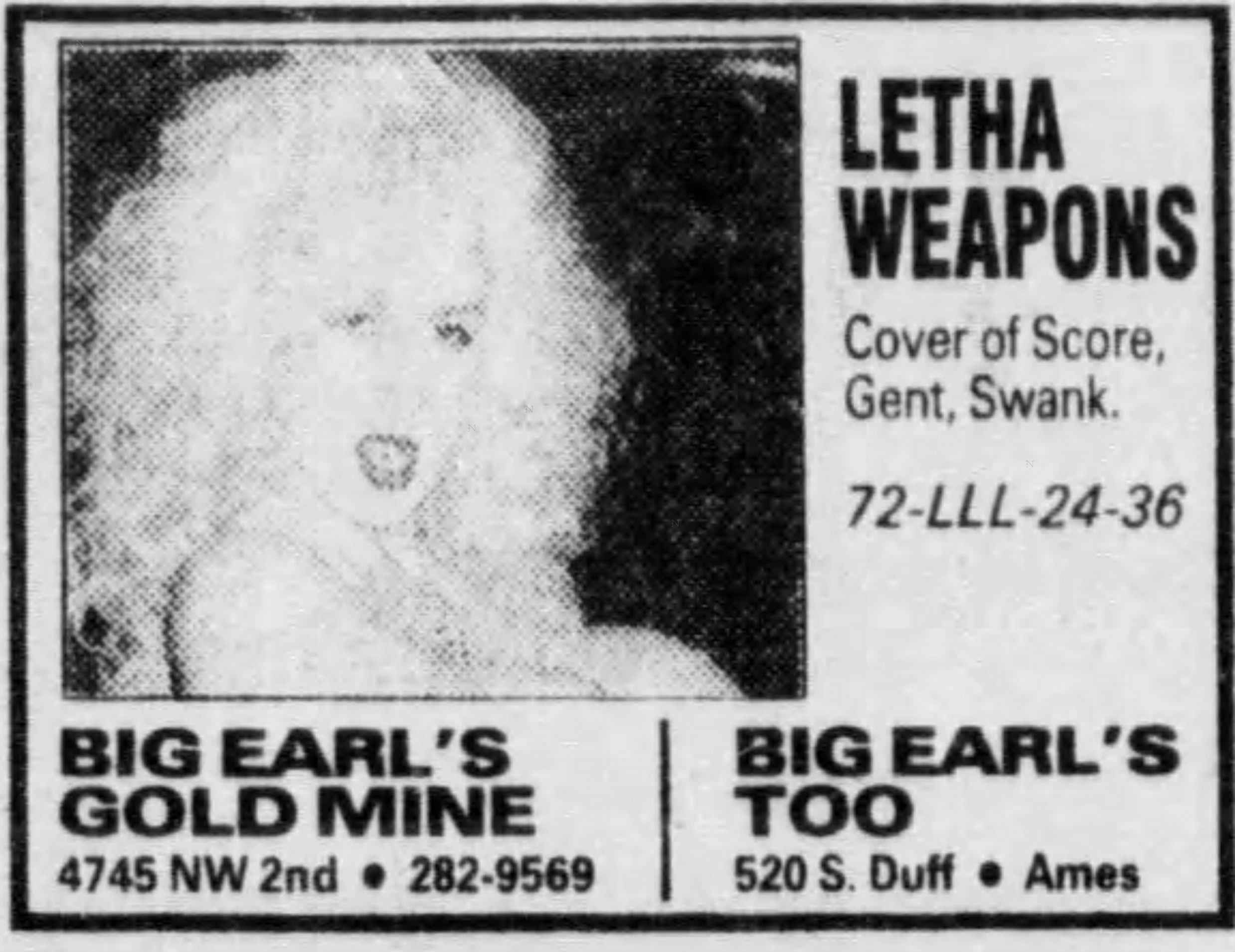


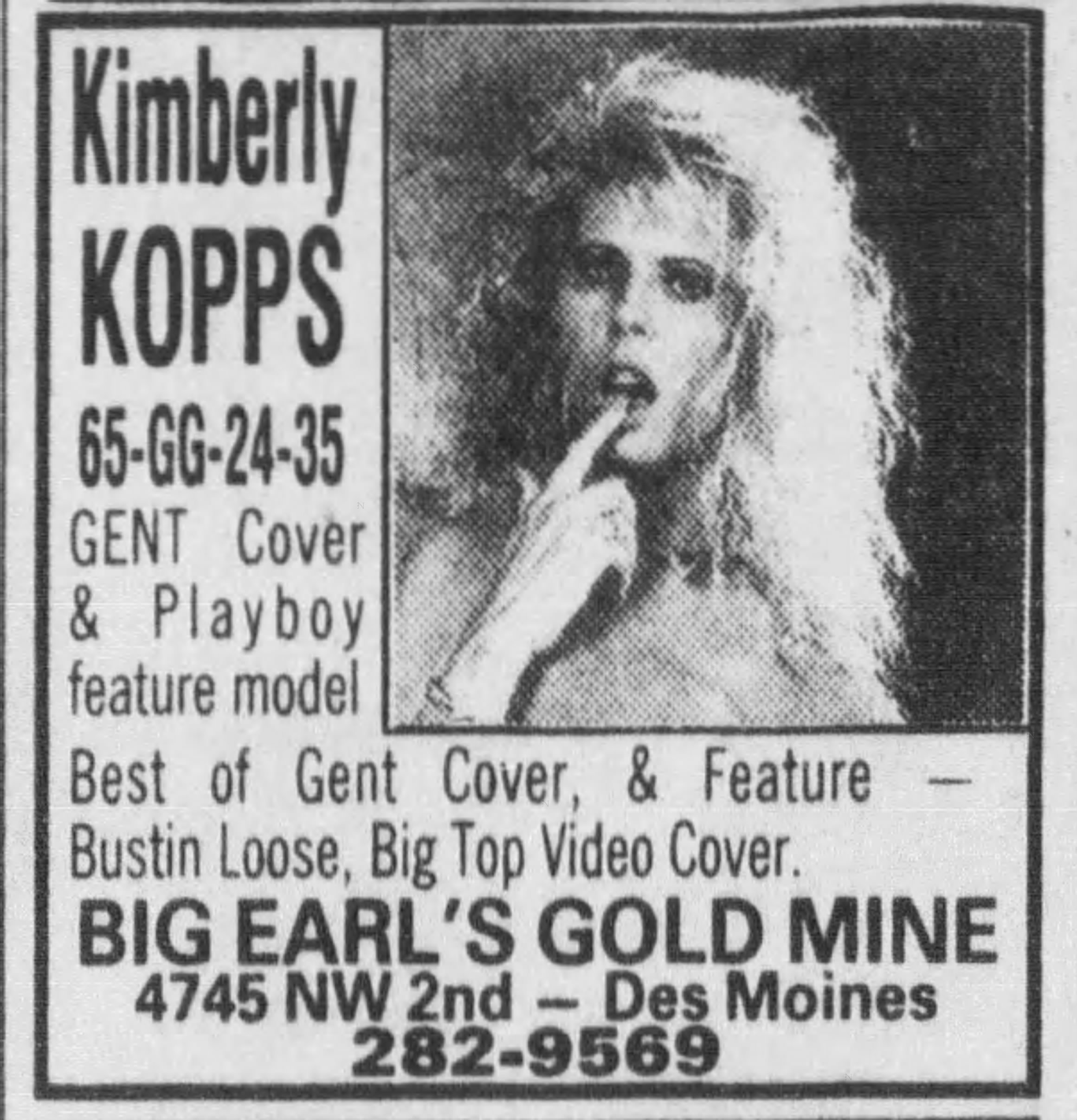


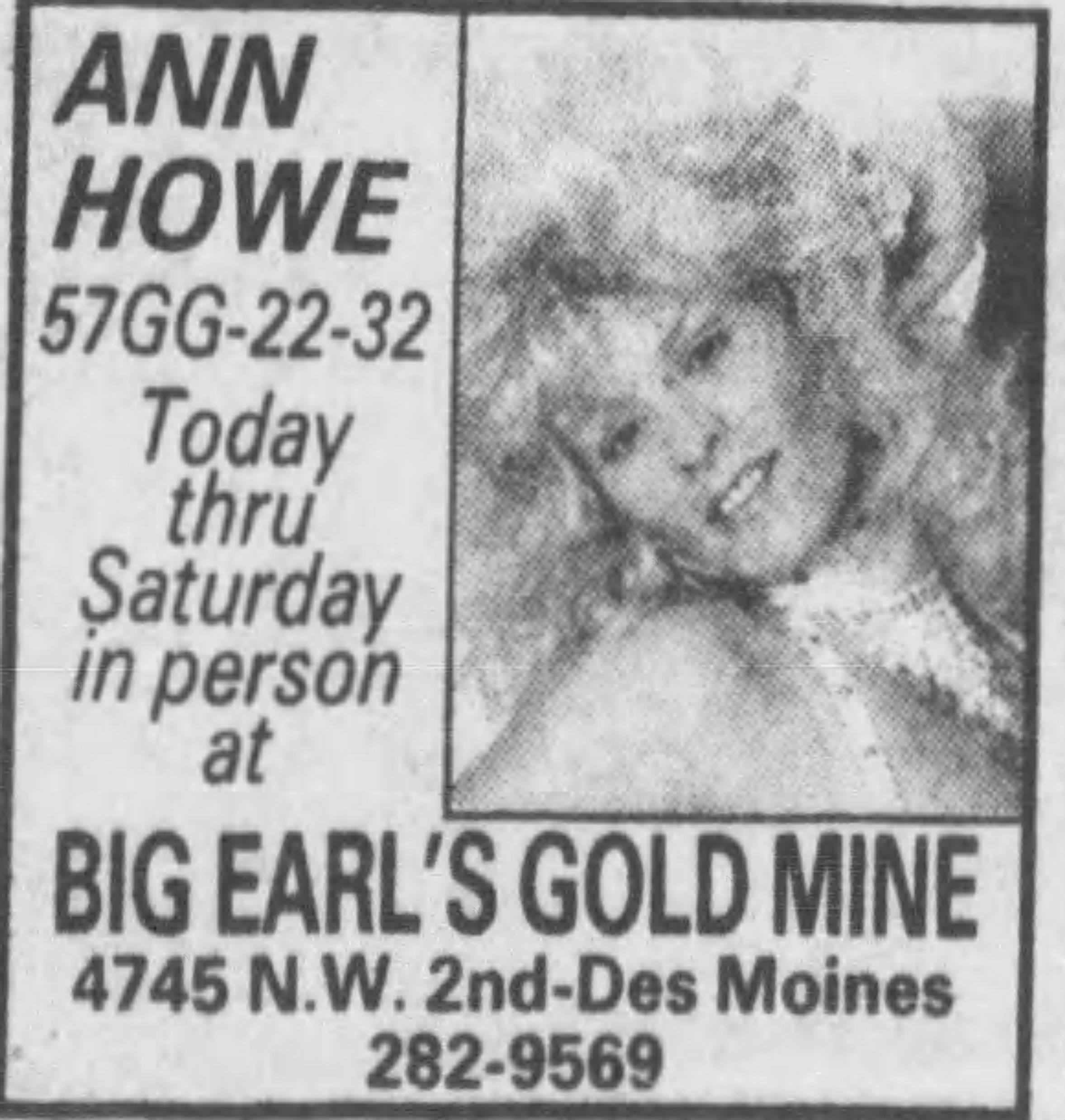
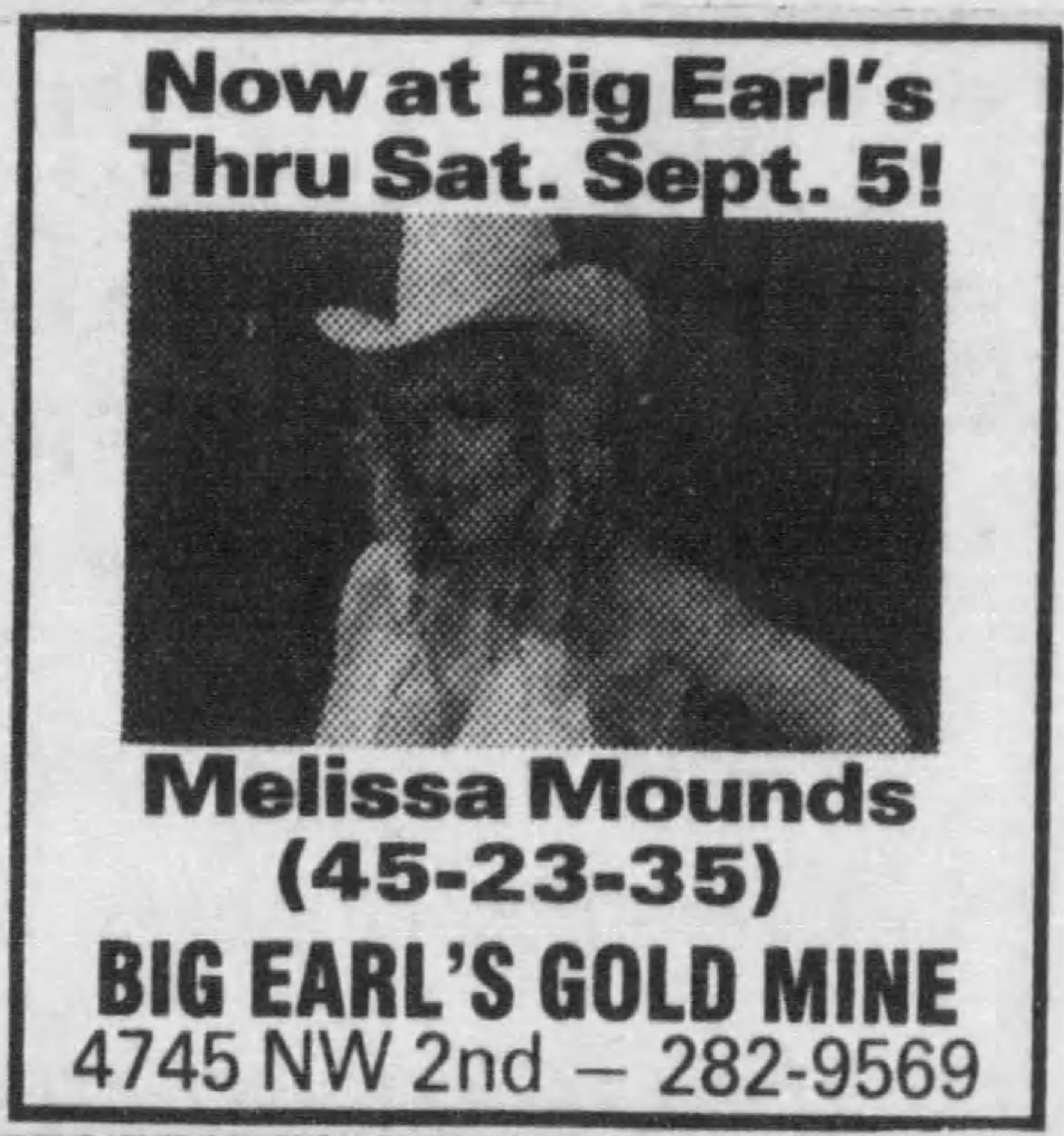

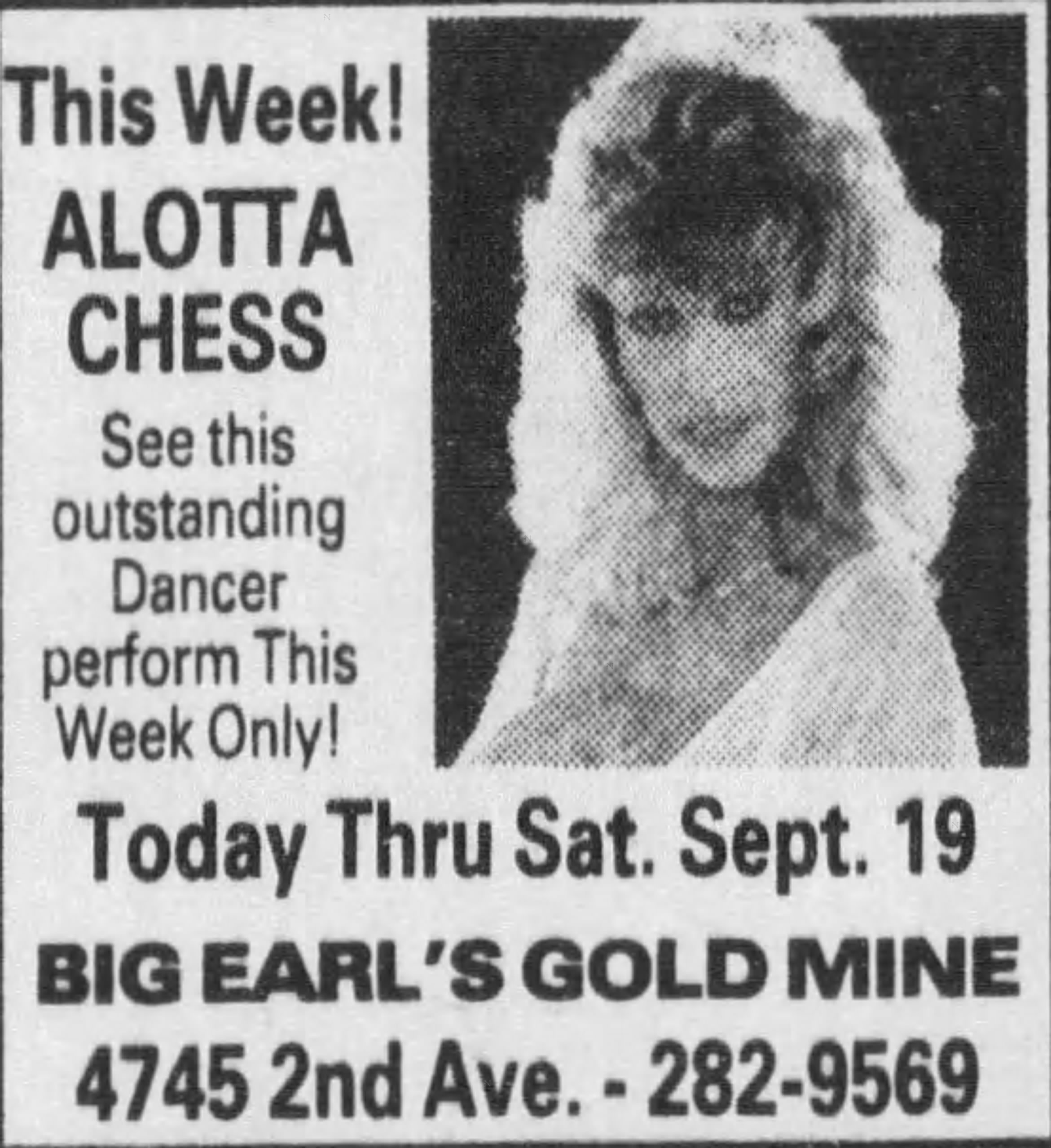

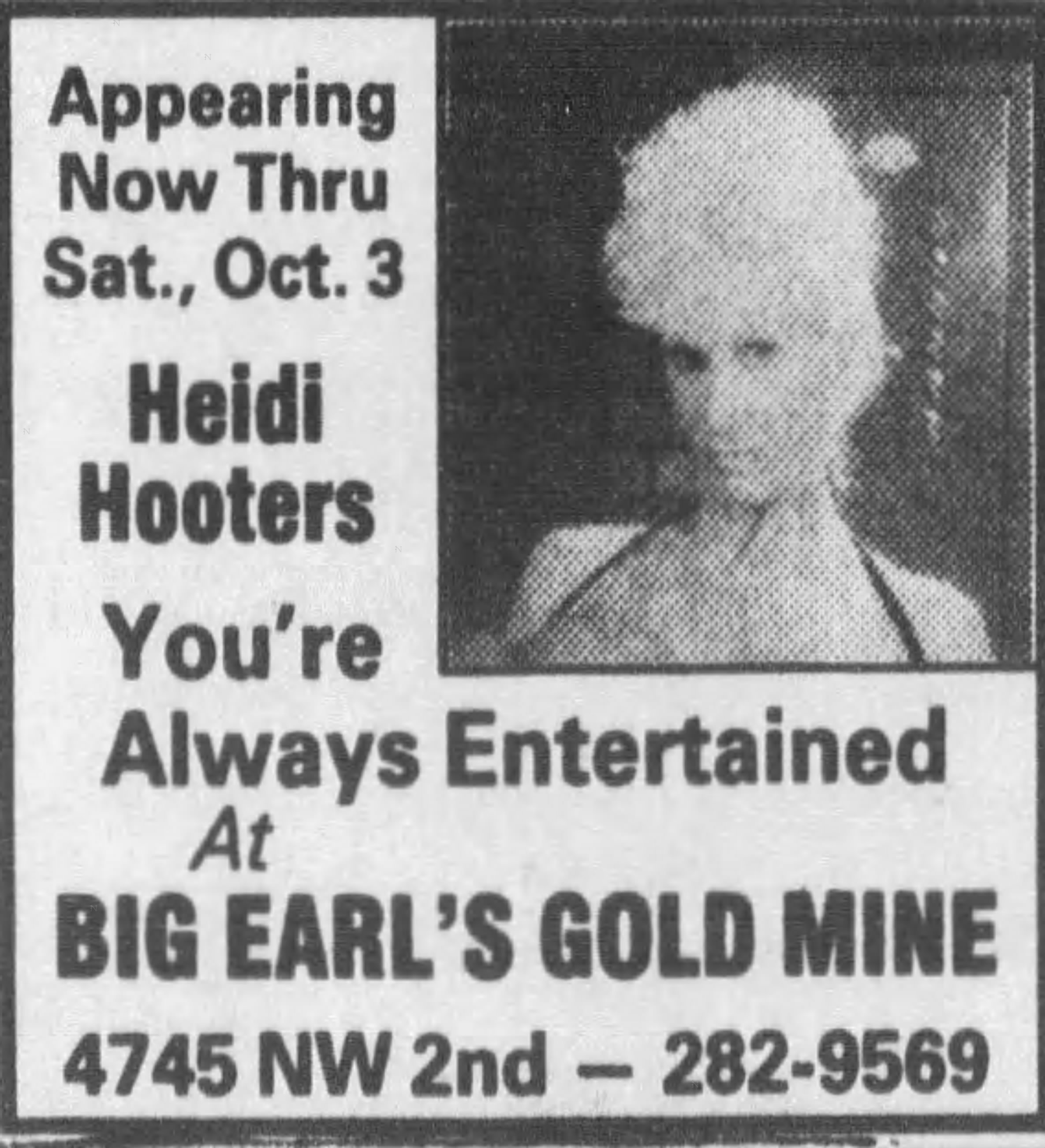
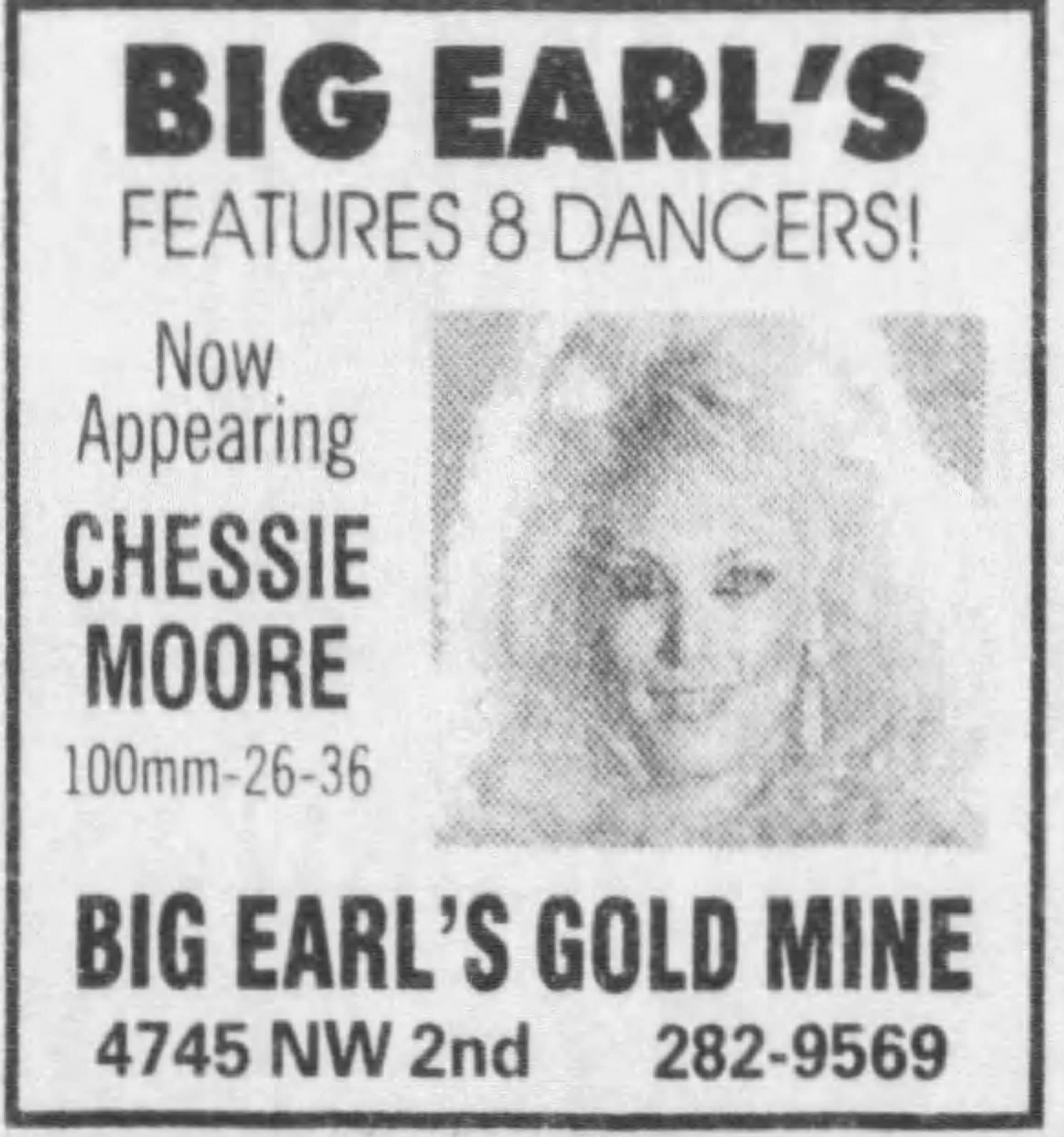
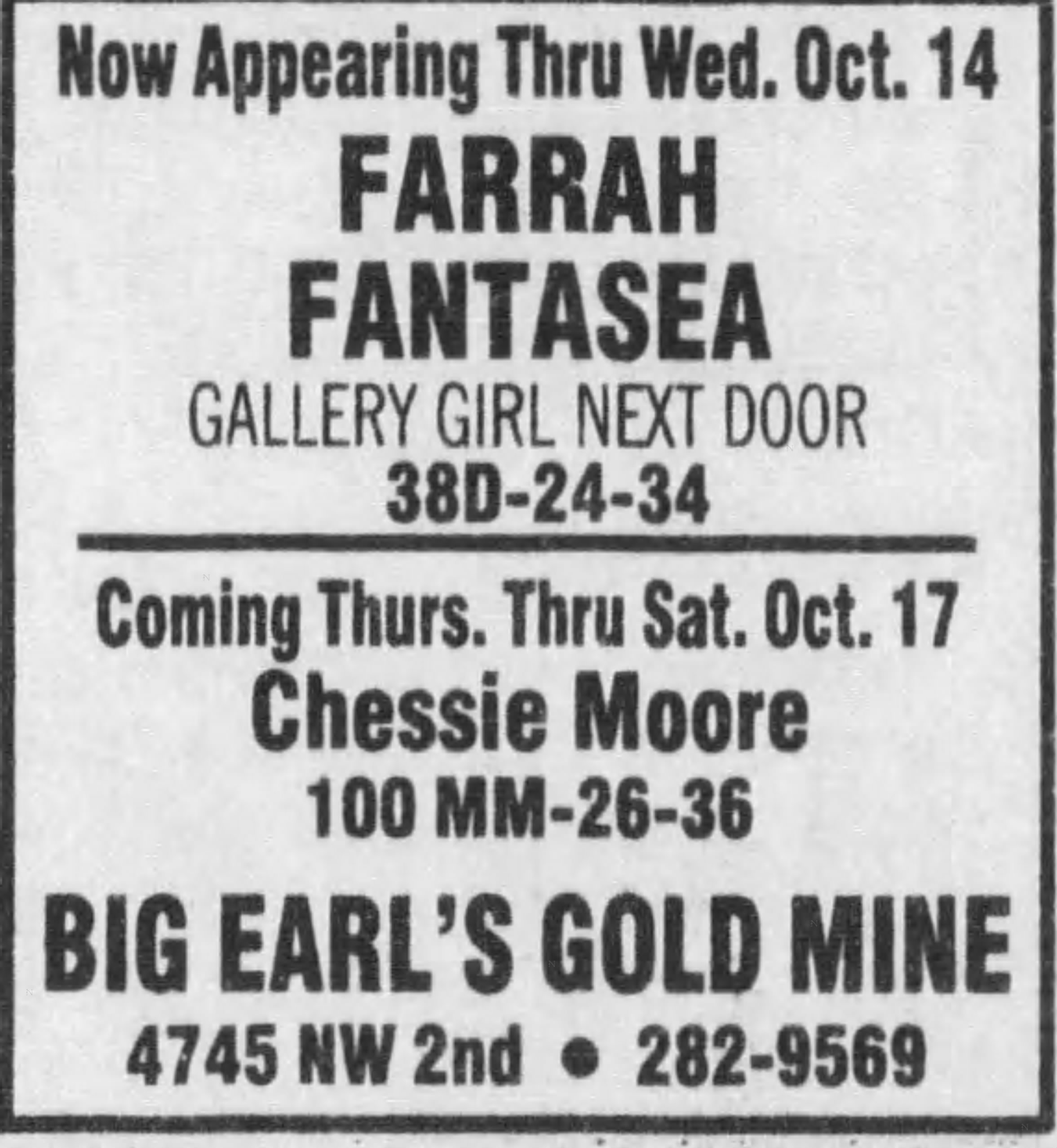
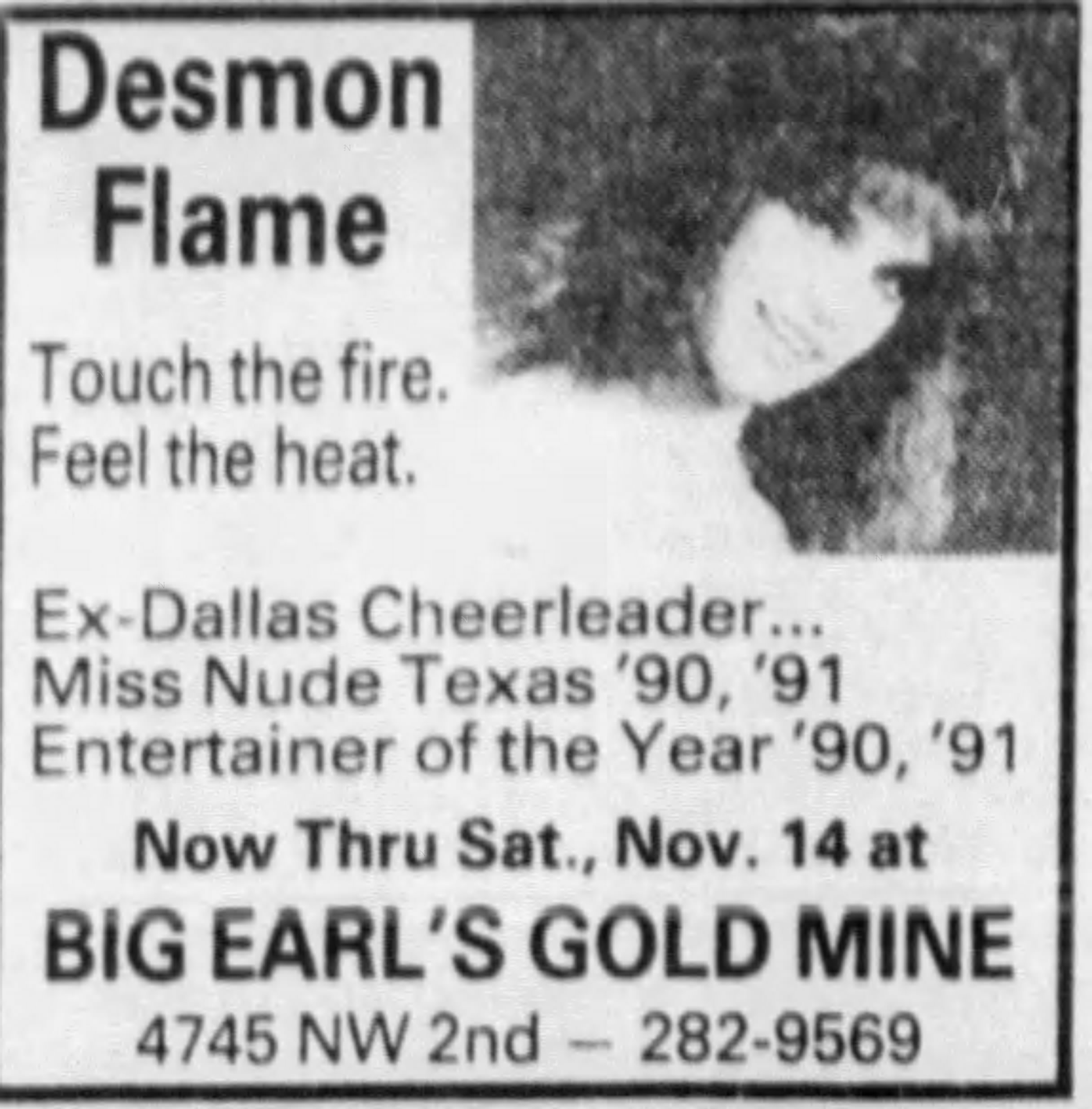
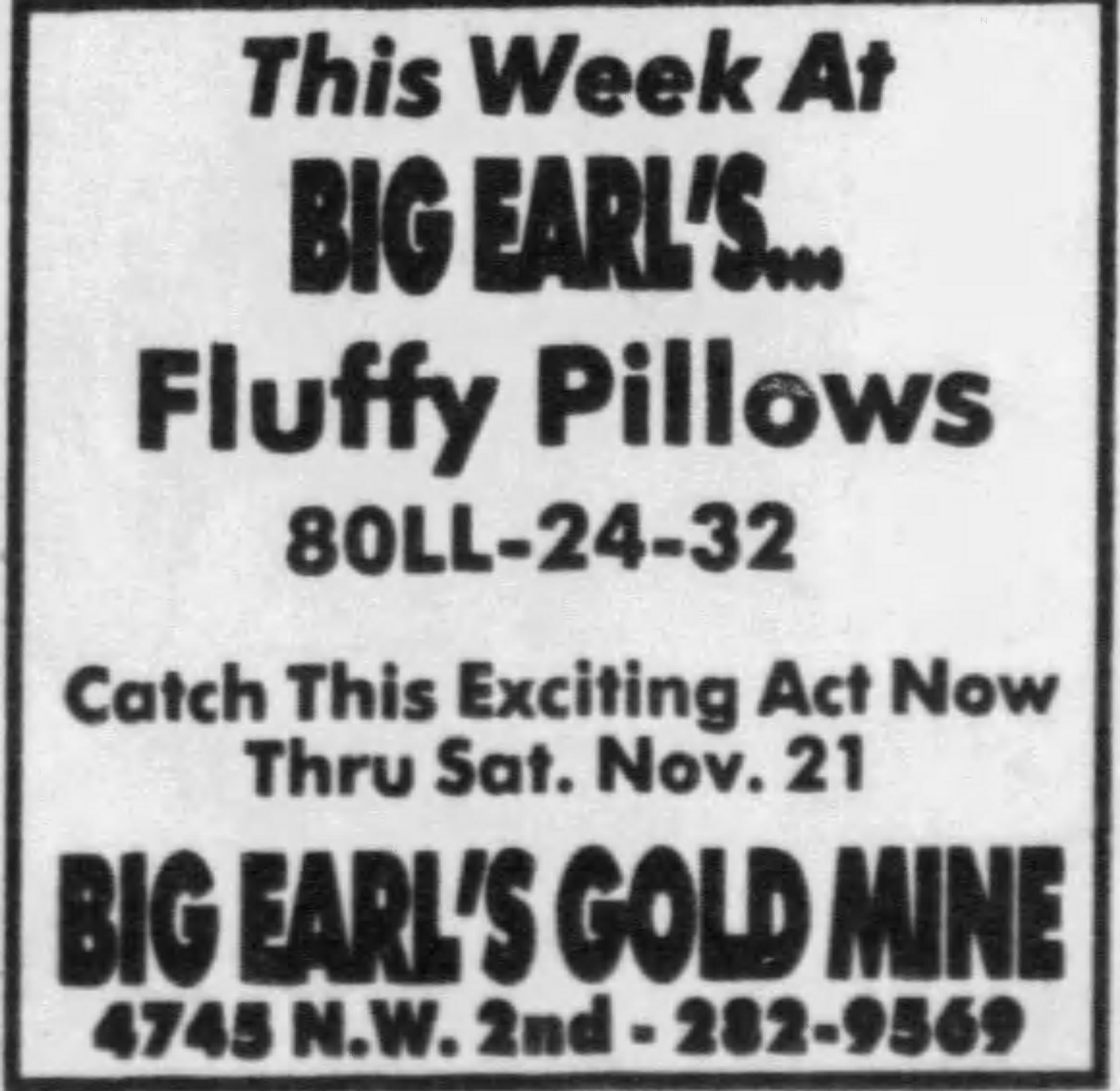
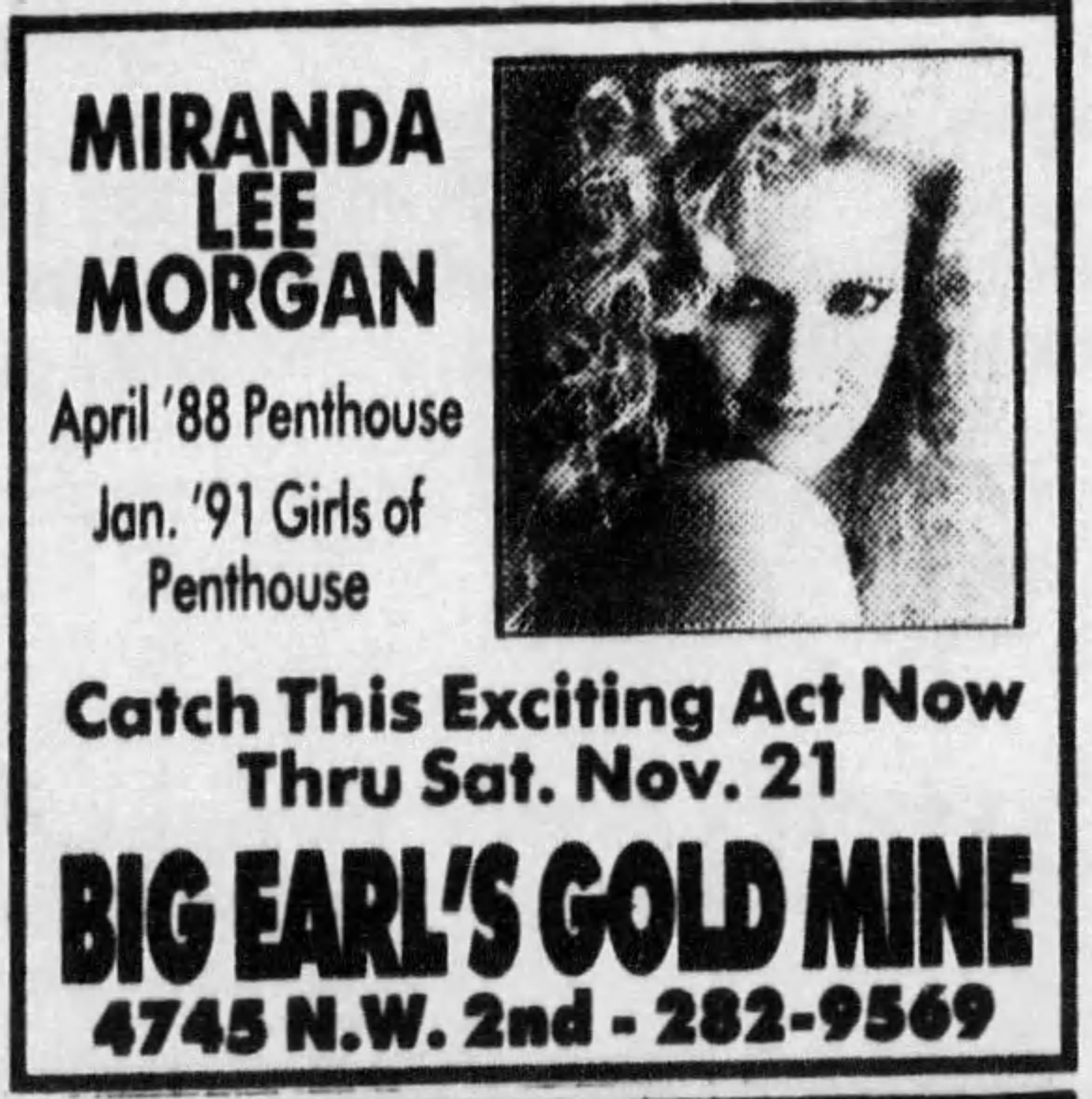
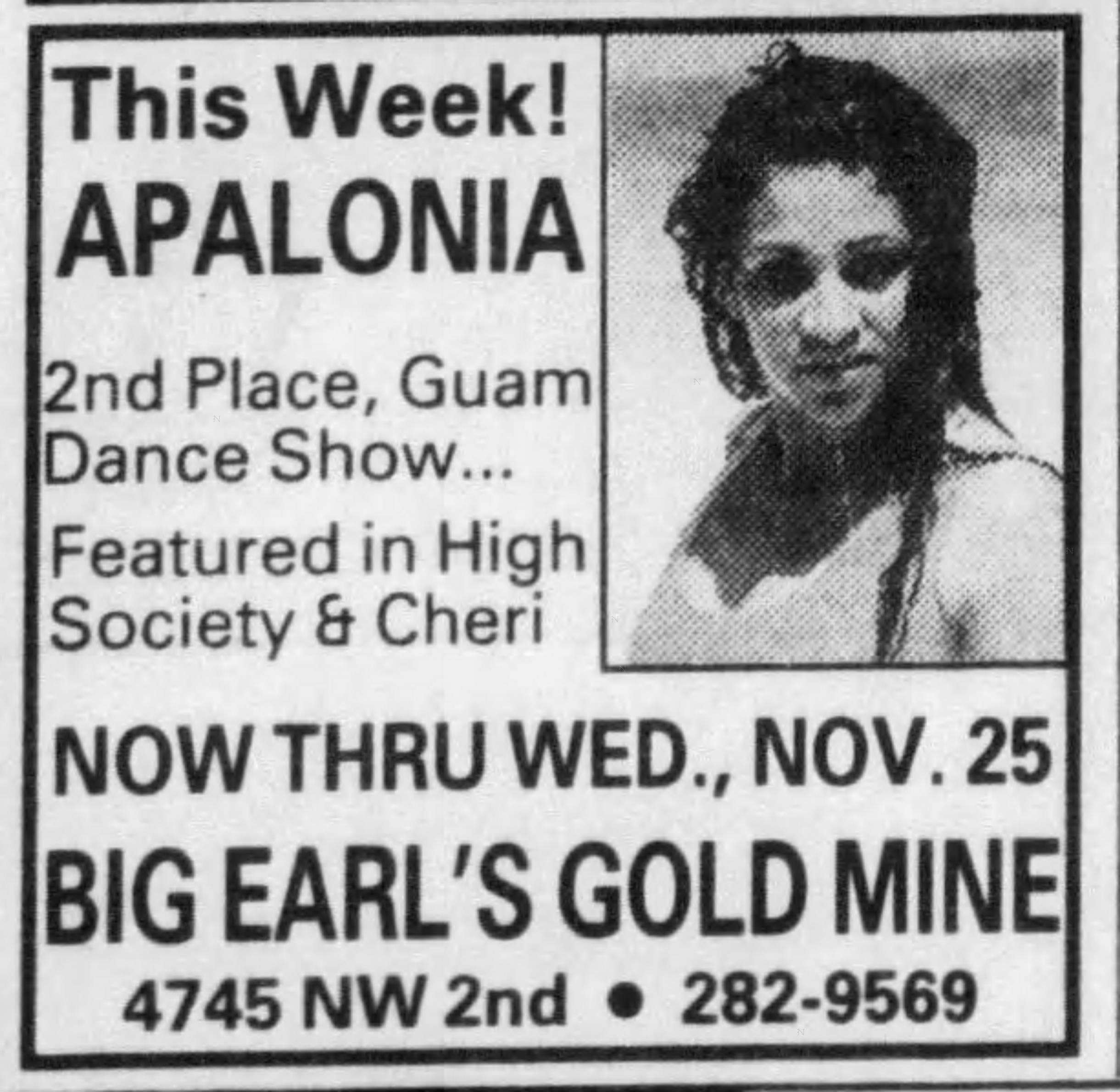
Various headliners performed at Big Earl’s in the 1990s. Dancers were listed in advertisements with their various titles/awards and body measurements (a trope carried over from the Golden Age of burlesque).
Here is a brief list of performers who graced the stage according to Des Moines Register newspaper advertisements:
- Indy Girls
- Colorado Girls
- Kiki Michaels
- Rachel “Florida Suntan Girl of the Year”
- Tisa Marie
- Sweet Dreams – Dance Revue with Ms. Nude Colorado
- Jessica Laine
- Amateur night with cash prizes
- Cristi Fontaine
- Melissa Mounds
- Honey Moons
- Brandy “Boom Boom”
- Kimberly Kopps
- Europe Dichan
- Lisa Gazambos
- Lulu Devine
- Monica London
- Susanne Steele and her “Technical Dreamscape”
- Ann Howe
- Bunny Glamazow
- Alotta Chess
- Ashley Bust
- Heidi Hooters
- Chessie Moore
- Farrah Fantasea
- Savannah Staxx
- Desmon Flame
- Fluffy Pillows
- Miranda Lee Morgan
- Apalonia
- Letha Weapons
- Lotta Curves
Burlesque Beyond the Strip Club
While Big Earl’s operated in the gray zones of legality and public perception, Des Moines’ burlesque scene has continued to evolve—embracing theatricality, satire, and sensual storytelling. Today’s performers blend vintage glamour with political edge, reclaiming the stage not just as a site of entertainment, but of empowerment.
The legacy of Big Earl’s Goldmine is complicated. It’s a story of dancers who refused to be silenced, of legal loopholes turned lifelines, and of a community that continues to push the boundaries of what performance can be. In Des Moines and beyond, burlesque remains a living archive—one rhinestone at a time.
Today, Big Earl’s Goldmine still stands just north of Des Moines’ city limits, a survivor of decades of legal battles, cultural debates, and shifting attitudes toward erotic performance. Its endurance is more than a curiosity—it’s a reminder of how performers, patrons, and advocates have continually reshaped the boundaries between art, entertainment, and law in Iowa. Whether seen as a strip club, a theater, or a contested cultural landmark, Big Earl’s embodies the resilience of stagecraft in all its forms. In the ongoing story of burlesque and performance in Des Moines, it remains both a flashpoint and a fixture—proof that the spotlight never truly fades.
Sources
Newspapers
- Omaha World Herald. “Strip club may be within law.” Christopher Burbach. Page 35-36. March 28, 2004
- The Daytona Beach News-Journal. “Orange City man killed in Iowa shooting.” Patricio G. Balona. Page 57. May 1, 2013
- The Des Moines Register. “Movers and shakers.” Bart Haynes. Page 36. April 4, 1991
- The Des Moines Register. “Rest easy: ‘Juice bars’ targeted.” Page 10. March 17, 1994
- The Des Moines Register. “Proud nude dancer: It’s my right.” Page 1. August 20, 1997
- The Des Moines Register. “Dancers cover up at Big Earl’s Goldmine.” Page 4. October 24, 1997
- The Des Moines Register. “Civil liberties union cheers nude-dancing decision.” Frank Santiago. Page 14. May 12, 1998
- The Des Moines Register. “Man found fatally hurt at club; Second man also shot at D.M. site; no suspects ID’d.” Ben Lucas. Page A3 & 5A. April 29, 2013
- The Log Cabin Democrat. “Ethan Ayers.” Page 10. August 26, 2010
- Advertisements for Big Earl’s Goldmine from the Des Moines Register. 1990-2001


Leave a comment